South Kivu : the State seeks to regain control, but who really holds the ground?
SOS Médias Burundi
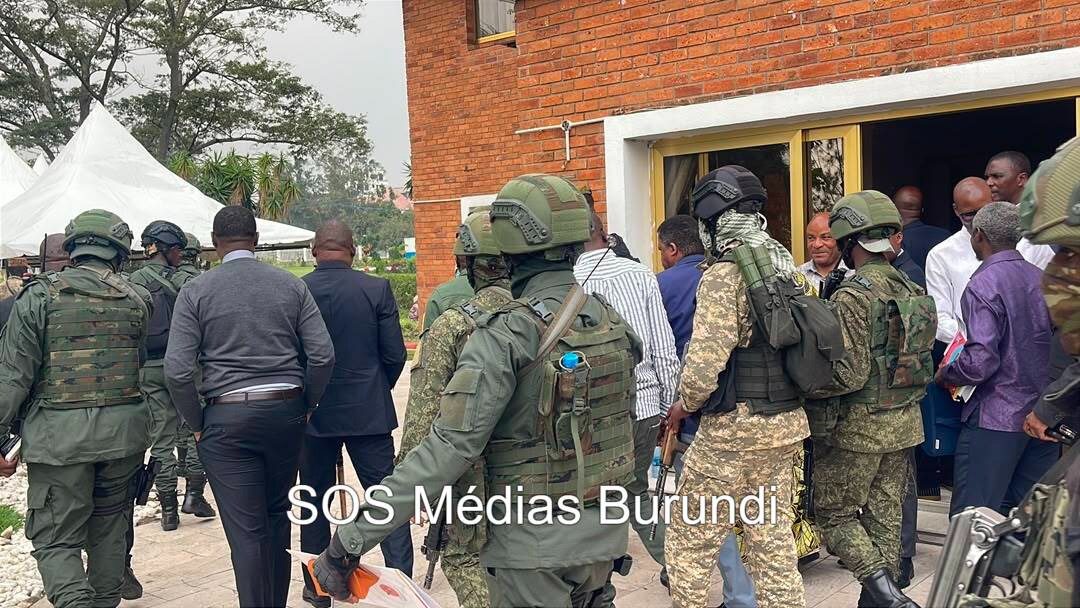
Uvira, September 25, 2026— The city of Uvira—which has temporarily hosted the South Kivu provincial government since the fall of Bukavu (the provincial capital) to AFC-M23 control in February 2025—hosted a workshop from September 21 to 23 dedicated to the rapid restoration of the state authority. The proceedings took place against a backdrop still marked by the presence of armed groups, roadblocks on certain routes, insecurity, and fragmented territorial control.
The workshop was opened by the Deputy Prime Minister and Minister of the Interior, Security, Decentralization, and Customary Affairs, Jacquemain Shabani.
According to the official presentation, discussions focused on the situation of areas affected by insecurity, the issue of armed groups, the safety of the population, and the rebuilding of social cohesion. The authorities’ stated goal is to strengthen the presence of public institutions in zones hit by the security crisis.
Yet, behind this ambition lies a central question : is the return of the administration enough to restore state authority when, on the ground, various actors continue to exert influence over security, movement, and sometimes even economic activities?
Gunfire during the workshop
On September 22—the second day of the workshop—Uvira residents reported hearing heavy and light weapons fire in several neighborhoods, notably Kasenga, Mulongwe, and near the city monument.
Local reports indicated possible clashes involving local “Wazalendo” militias backed by Kinshasa. Some accounts point to a specific incident involving a confrontation between fighters and a female trader over a demand for money.
However, it has not been possible to independently verify all aspects of these reports. The precise circumstances of the shooting, the identities of those responsible, and any potential casualties remain to be established.
Nevertheless, the incident illustrates the challenges authorities face when attempting to reassert their presence in an area where armed actors continue to play a role in security.
The contrast is striking : while authorities were meeting to discuss restoring state authority, residents were simultaneously reporting gunfire in several parts of the city.
Roadblocks : a challenge to state authority
The issue of roadblocks poses another major challenge.
Accounts gathered in recent weeks indicate the presence of several checkpoints manned by Wazalendo militias on certain routes in South Kivu, particularly in the Uvira region. Travelers report being asked for money when passing through.
Citizens and some officials condemn these practices, viewing such levies as an infringement on the prerogatives of public institutions.
The problem is not new. Calls have previously been made to remove roadblocks deemed illegal, while maintaining the checkpoints necessary for monitoring and securing the roads.
The issue therefore goes far beyond the question of a simple roadblock.
Who controls the roads? Who has the authority to control movement? Who is legally empowered to collect taxes or other levies?
In a functioning state, these powers belong to legally established public institutions.
Wazalendo militias dispute the accusations
However, Wazalendo militia leaders reject accusations that their roadblocks are primarily intended to extort money from the population. According to statements reported locally, these checkpoints are primarily intended to meet security needs : screening passengers, monitoring movements, and securing routes deemed sensitive.
This account is disputed by travelers and local residents, who claim they have been forced to make payments while traveling.
The controversy highlights a major institutional challenge. The Wazalendo militias are portrayed as participating in the defense of certain territories alongside government forces. However, their presence on the roads also raises questions regarding their command structure and the limits of their authority.
The issue, therefore, is also one of determining who is in command, who exercises control, and who is accountable for actions committed on the ground.
Multiple centers of power
However, restoring the state authority entails more than just removing checkpoints.
In several parts of South Kivu, provincial institutions must contend with the presence or influence of armed groups, while territorial control remains fragmented.
As of September, Bukavu remains under the control of the AFC-M23, while pro-government provincial authorities continue to govern from Uvira.
This reality complicates any claim that the state authority has already been fully restored across the province.
Restoring the state authority also means being able to administer the territory, deploy police and judicial services, ensure security, legally collect public revenue, and guarantee access to essential services.
How can these tasks be accomplished when the territorial control remains contested?
The justice system : another test of authority
The justice system’s ability to enforce official decisions is also a crucial factor.
Questions have been raised regarding the institutions’ capacity to effectively prosecute individuals involved in illegal acts or affiliated with armed groups.
When arrested individuals are released due to community or political pressure, it can reinforce the perception among some residents that the state struggles to enforce its decisions.
Restoring public authority therefore also requires a functioning judicial chain : lawful arrest, investigation, prosecution, adjudication, and the enforcement of court rulings.
Without this capacity, the physical presence of a state representative does not necessarily guarantee the effective exercise of authority.
Economic interests surrounding checkpoints
The economic dimension cannot be overlooked either.
In some areas, roadblocks can serve as a source of income for those who control them. Traders, transporters, and travelers may face multiple levies during a single journey.
Some observers also point to the possible existence of economic networks that benefit from maintaining mechanisms that allow for the circumvention of certain tax or customs obligations.
However, these allegations must be substantiated on a case-by-case basis. They do not justify the claim that all traders or economic actors support the checkpoints.
Nevertheless, they demonstrate that the issue of state authority is also linked to the control of resources and economic flows.
A challenge that extends beyond Uvira
The stakes go beyond Uvira alone.
The same questions arise in several territories of South Kivu : the presence of armed groups, control over roads, taxation, public safety, the justice system, access to public services, and the authorities’ capacity to enforce the law.
The return of the State cannot, therefore, be measured solely by the reopening of an administrative office or the appointment of a local official.
It must be reflected in the daily lives of the inhabitants.
The population will truly perceive the return of the State when roads are secure, illegal checkpoints dismantled, public services fully operational, the justice system accessible, and institutional decisions effectively implemented.
The real test begins now
The Uvira workshop provides a forum for reflecting on the restoration of public authority. Yet a workshop, however important, does not in itself constitute the restoration of the State.
The real test lies on the ground.
Key measures of success will include the authorities’ ability to eliminate illegal checkpoints, oversee the Wazalendo militias, guarantee the free movement of people and goods, ensure citizen safety, and restore public services in areas where they are absent or severely weakened.
The government has set a process in motion. The population now expects concrete results.
In South Kivu, the state authority will be measured neither by the number of meetings held nor by official statements, but by the ability of public institutions to effectively exercise their powers on the ground.
You might also like
Cibitoke : four bodies in FARDC military uniforms discovered near the Rusizi River
SOS Médias Burundi Cibitoke, December 18, 2025 – Four bodies in an advanced state of decomposition, dressed in military uniforms of the FARDC, the Congolese loyalist army, were discovered on
Buhumuza : a new site opened urgently to accommodate the influx of Congolese refugees
SOS Médias Burundi Ruyigi, December 11, 2025 — Since the afternoon of Tuesday, December 9, a significant influx of Congolese refugees has been observed in the province of Buhumuza, in

Bukavu : clashes between the Wazalendo and the FARDC, panicking the population
SOS Médias Burundi Bukavu, May 2, 2025 – Fighting broke out on Thursday between the Congolese army and Wazalendo militias in the heights of Uvira, South Kivu. The exchange of