Fuel shortage in Burundi : dry petrol stations, thriving black narket… who’s fueling the trade?
SOS Médias Burundi
Bujumbura, August 8, 2026—The persistent fuel shortage is paralyzing transportation and stifling the Burundian economy, while a thriving black market continues to supply fuel at exorbitant prices. In Bujumbura, residents queue for days at empty petrol stations while clandestine vendors offer the same product just a few meters away. This situation raises the question : who is really fueling this parallel market?
In the commercial capital, clandestine fuel vendors are now visible in several downtown neighborhoods, in outlying areas, and along the main roads connecting Bujumbura to the interior of the country and the Democratic Republic of Congo.
According to several customers interviewed by SOS Médias Burundi, transactions are mainly conducted by telephone. After the order is placed, deliveries are made discreetly, sometimes directly to the buyers’ homes.
Fuel is sold in 1.5-liter units, commonly called “Kinju.” For some residents, these unlicensed vendors now resemble veritable mobile petrol stations.
This situation comes as official petrol stations continue to struggle to receive supplies.
Dry stations, endless lines
In Bujumbura, the commercial capital and the heart of Burundi’s economy, home to UN agencies and a large part of the central administration, witnesses say that no petrol station has dispensed fuel this week.
Several residents told SOS Médias Burundi that they have been waiting in long lines outside gas stations for several days.
“We’ve been waiting in an endless line for a week,” a resident said.
Bus drivers, particularly affected by the shortage, are also expressing their exasperation.
“We’re told every time that we should be served at any time, but it never happens,” several drivers interviewed by SOS Médias Burundi said, clearly disgusted.
Paralyzed transportation
The consequences of the shortage are particularly visible in the public transportation sector.
Since last weekend, residents of Bujumbura have sometimes had to wait for hours in parking lots in the city center and various neighborhoods without seeing a single bus arrive.
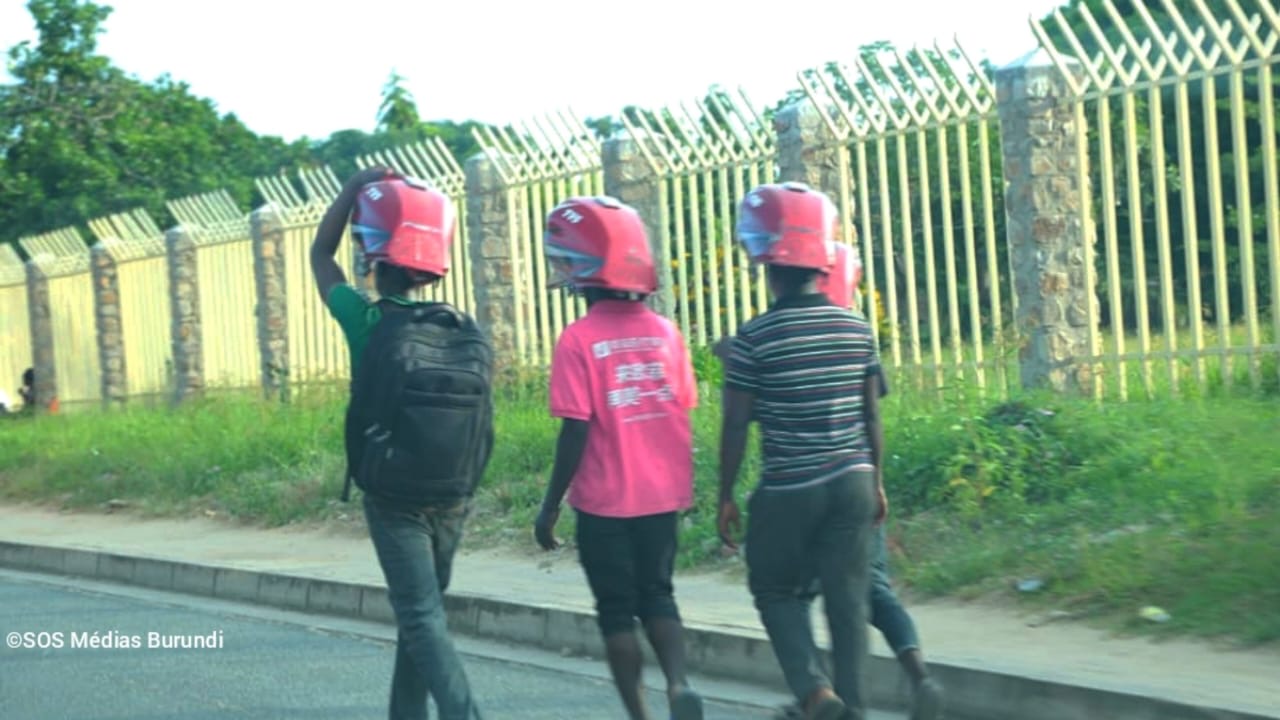
Due to the lack of transportation, many city dwellers walk long distances to get to work or back home.
Others, with greater financial means, turn to taxis. These taxis generally carry four to six passengers, each paying around 5,000 Burundian francs.
A taxi driver interviewed by SOS Médias Burundi admitted to buying his fuel on the black market.
According to him, a liter and a half of fuel currently sells for between 22,000 and 25,000 Burundian francs on the black market, a price that fluctuates daily depending on availability.
For comparison, the official price of a liter of gasoline is 4,000 Burundian francs. A liter and a half should therefore officially cost around 6,000 francs, compared to up to 25,000 francs on the parallel market.
The same driver indicated that a jerrycan was selling for between 260,000 and 270,000 Burundian francs on Sunday, according to vendors.
Where can one find fuel on the black market?
The availability of these quantities of fuel on the parallel market raises many questions among residents.
How can it be explained that clandestine vendors continue to offer fuel whereas official gas stations are empty?
The issue is more sensitive because, according to residents, some vendors operate just meters from petrol stations where long lines of vehicles form daily.
Buses wait for hours in front of the stations hoping to be refueled, with no guarantee of getting any.
For nearly six years, the small East African nation has been experiencing a fuel crisis with considerable economic and social consequences. The shortage is affecting transportation, increasing travel costs, and disrupting business.
To date, one question remains : where can the fuel sold at exorbitant prices be found when gas stations regularly run dry?
Allegations of parallel networks
Some in Burundi suggest that security officials, certain government representatives, and traders considered close to the ruling CNDD-FDD party may be involved in parallel fuel supply and distribution networks.
According to these allegations, fuel is being discreetly transported to Uvira, in eastern Democratic Republic of Congo, a city located a few kilometers from Bujumbura, on the other side of Lake Tanganyika.
Traffickers could then obtain supplies there before bringing the product back to Burundi to resell at prices far exceeding official rates.
These accusations, circulating among some residents and observers, could not be independently verified by SOS Médias Burundi. At this stage, no evidence has been found to establish the involvement of specific individuals in these alleged networks.
But for many residents, the very existence of a black market capable of supplying fuel while official stations remain dry is a paradox that demands explanation.
Shortages at the heart of governance criticism
President Évariste Ndayishimiye cites difficulties in accessing foreign currencies, particularly in a context marked by the suspension or reduction of certain external aid, to explain the country’s fuel supply difficulties.
Local and foreign observers, however, believe that the problems are not limited to a lack of foreign currencies.
They also point to mismanagement, weaknesses in economic governance, and the alleged existence of parallel networks that are profiting from the shortage.
According to these observers, as long as the authorities do not clarify the origin of the fuel sold on the black market and the channels through which it reaches Bujumbura, suspicions will continue to hang over the handling of this crisis.
Meanwhile, lines are growing longer at petrol stations, transportation prices are rising, and thousands of residents are forced to walk to work.
For both commuters and drivers, the same question remains : when will this shortage end, and who will finally explain why fuel is still unavailable at stations while it continues to circulate on the black market?
In the meantime, Bujumbura and other cities and urban centers are grinding to a halt, commuters are exhausted in the queues, and fuel, now a scarce commodity, continues to circulate at exorbitant prices in parallel markets.
You might also like
Burundi: lack of new banknotes of 5000 and 10000 which replace the old ones in some banks and microfinance
Since this Friday morning, banks and microfinances clients have responded to the Burundi central bank governor’s call. The BRB governor gave a ten-day-period to deposit the 5,000 and 10,000 Burundian

Bujumbura: two sites declared areas of public utility
According to decree number 100/008 of January 24, 2023, the Gasenyi site located in the commune of Mutimbuzi in the province of Bujumbura (western Burundi) and Gishingano in the commune

Burundi : a local organization calls for the resignation of the government
The Observatory for the fight against corruption and economic embezzlement, OLUCOME, called on the Burundian government on Tuesday to “make a courageous decision” and “resign” because it is unable to