“We want to go home” : Congolese teachers abandoned in Cishemere as the start of the school year approaches
SOS Médias Burundi
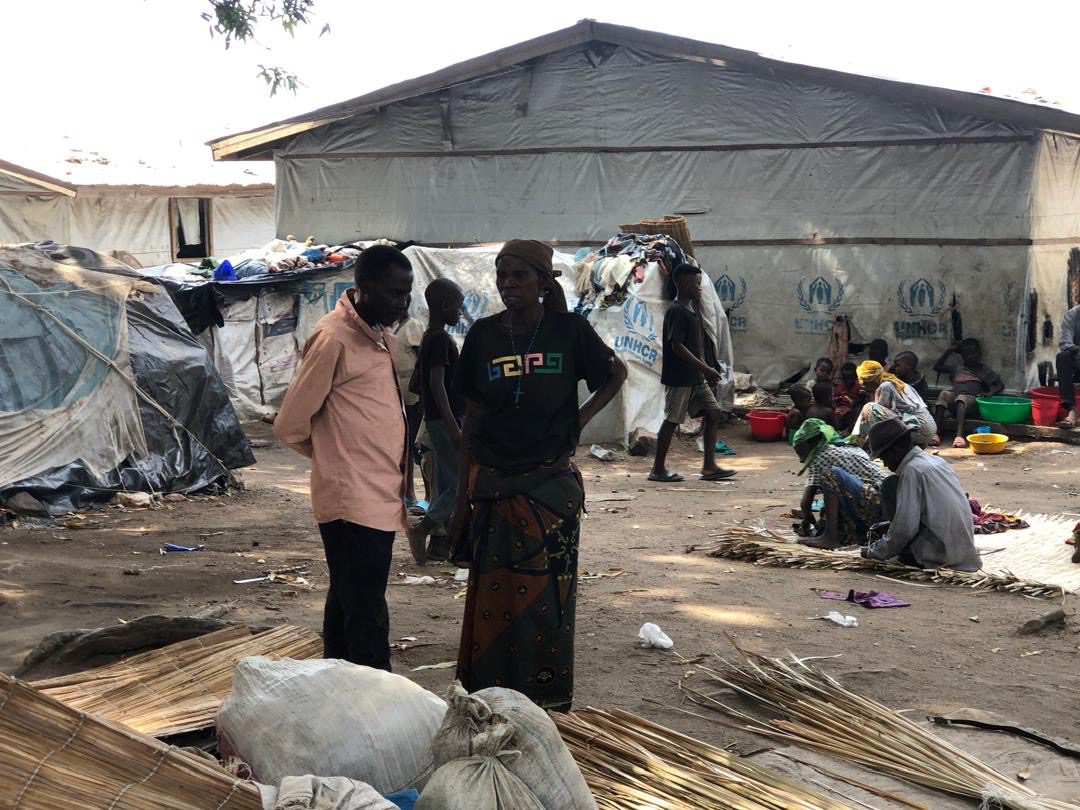
Cibitoke, August 27, 2026—With the start of the school year scheduled for early September, Congolese teachers who have taken refuge at the Cishemere transit center in the border district of Cibitoke, Bujumbura province, western Burundi, are appealing to the relevant authorities, the United Nations High Commissioner for Refugees (UNHCR), and the National Office for the Protection of Refugees and Stateless Persons (ONPRA) to facilitate their voluntary return to the Democratic Republic of Congo (DRC). After nearly nine months of hardship and uncertainty, some say they want to be reunited with their families and resume their positions in the schools where they taught before their displacement.
The appeal is being made in particular by the Union of Career Teachers (SEC). In a union statement, the organization asserts that several refugee teachers wish to return to their country to reunite with their families and resume their duties in the schools where they worked before their displacement.
According to the SEC (National Union of Education Teachers), some of the teachers concerned have already received invitations or documents calling them to return to their posts in the DRC. For these education professionals, returning is therefore not merely a personal desire : it is also linked to their professional obligations and the need to preserve their careers.
The union is thus calling on the UNHCR and the ONPRA (National Office for the Protection of Refugees and Stateless Persons) to diligently review the files of teachers who wish to return and to facilitate the administrative procedures necessary for their return.
The SEC also requests that appropriate support be provided to teachers with official documents authorizing their return to work, so that they can return to their areas of origin in safe and dignified conditions.
Nine months in precarious circumstances
Behind this demand lies a difficult humanitarian reality.
Speaking on condition of anonymity, a teacher at the Cishemere transit center says he has spent nearly nine months there in what he describes as particularly harsh conditions.
“I’ve been here for nine months. We’ve endured a lot of suffering. There’s been hunger, difficulty accessing healthcare, and living conditions that are becoming increasingly precarious. To this day, I haven’t even received refugee status at the center,” he testifies.
According to him, administrative uncertainty adds to the daily hardships. He now wants to return home to Luvungi, in South Kivu, to be with his family and, above all, to resume his teaching position.
“I want to go home, be with my family, and get back to work. I’m a teacher, and I want to return to my post. I don’t want to stay indefinitely in these conditions while my country and my school need me,” he adds.
His testimony illustrates the dilemma faced by some displaced Congolese civil servants : remain in an environment where humanitarian conditions remain difficult or seek to return as soon as security conditions and administrative procedures allow.
The start of the school year is approaching.
The question becomes more urgent as the school year approaches.
Just days before the announced start of classes, several teachers who fled the violence in eastern DRC are still in Burundi, while their schools of origin are preparing to resume classes.
The forced displacement has also severely disrupted the schooling of many Congolese children who fled to Burundi. For these families, the teachers’ eventual return could therefore represent not only a return to work, but also an important step towards normalizing school life in the areas of return.
For the teachers, the start of the school year thus constitutes an additional source of urgency. They want to return to their posts and avoid a prolonged interruption of their careers.
Voluntary returns already underway
The crisis in eastern DRC has led to the displacement of more than one million Congolese to neighboring countries. The UNHCR reports that Burundi has registered a significant influx of Congolese refugees, estimated at over 100,000 to date, while voluntary returns to the DRC are now underway.
The teachers’ request in Cishemere comes as the assisted voluntary repatriation process has already begun for Congolese refugees residing at the Busuma site in eastern Burundi. They are being sent to the Kavimvira transit center in the Uvira territory of South Kivu, in eastern DRC, before their return to their areas of origin.
The UNHCR had previously reiterated that returns must be voluntary, safe, and dignified.
However, in transit centers like Cishemere, the wait remains a concern for refugees wishing to return. The UNHCR has already reported a decrease in the population at some transit centers, notably Cishemere and Makombe in southwestern Burundi, due to spontaneous returns and movements back to the DRC.
Files still pending
For the teachers, this situation takes on a particular significance as the start of the school year approaches.
They want their cases processed with due regard for their professional responsibilities and the documents some already possess to resume their duties.
The SEC is therefore calling on relevant authorities, the UNHCR, and ONPRA to facilitate necessary procedures so that teachers who wish to return can do so safely.
Beyond their personal situation, these teachers believe their return could help meet the needs of the education system in their home communities, as several schools in eastern DRC prepare to reopen.
“We want to get back to teaching”
In Cishemere, the wait remains particularly difficult for these education professionals.
After several months away from their families and classrooms, they now want to return home, resume their work, and rebuild their lives in their communities.
As the start of the school year approaches, their message is clear : they want to return, reunite with their families, and get back to teaching in their classrooms.
You might also like
DRC : millions of civilians trapped, UN calls on AFC/M23
SOS Médias Burundi Goma, March 18, 2026 –The eastern Democratic Republic of Congo is gripped by a persistent humanitarian crisis, marked by armed violence, mass displacement, and limited access to
Giharo : intimidation and targeted exclusions during the district elections
SOS Médias Burundi Rutana, June 8, 2025 – Electoral tensions are skyrocketing in several localities in Giharo district, in Rutana province (southeastern Burundi). On the ground, numerous accounts reveal intimidation,

Fizi (DRC) : four people including 2 Chinese were killed by armed men
The four victims are made up of two Chinese, a soldier from the Congolese army and a civilian. They were shot dead by armed men in the village of Ngangula