DRC : Kinshasa closes universities in Goma and Bukavu, Mukwege warns of “slow epistemicide”
SOS Médias Burundi
Goma, August 27, 2026 — The Congolese government has suspended, until further notice, academic and para-academic activities in several public higher education institutions in Goma, North Kivu, and Bukavu, South Kivu. The decision comes amid a security crisis and institutional rivalry with the AFC-M23 political-military coalition, which controls both cities. It has sparked strong reactions, notably from Nobel Peace Prize laureate Denis Mukwege.
Academic activities are suspended for the 2026-2027 academic year in eleven public higher education institutions in the two cities. The measure was taken by the Minister of Higher Education, University Studies, Scientific Research, and Innovation, Marie-Thérèse Sombo.
In a decree signed on August 20, the Minister cited a particularly concerning security situation and stated her intention to preserve the continuity of academic programs and the value of academic degrees awarded by the Democratic Republic of Congo.
The suspension applies specifically to registrations and re-registrations, classes, assessments, deliberations, and any other academic activity that could lead to the awarding of a degree during the 2026-2027 academic year.
Eleven institutions affected
In Goma, the measure specifically affects the University of Goma (UOG), the Higher Institute of Commerce of Goma (ISC-Goma), the Higher Institute of Medical Techniques of Goma (ISTM-Goma), the Higher Institute of Applied Techniques (ISTA), and the Higher Pedagogical Institute (ISP-Goma).
In Bukavu, it notably affects the Official University of Bukavu (UOB), the Higher Institute of Science and Technology (ISC-Bukavu), the Higher Institute of Medical Sciences (ISTM-Bukavu), the Higher Pedagogical Institute (ISP-Bukavu), the Higher Institute of Rural Development (ISDR-Bukavu), and the Higher Institute of Arts and Crafts (ISAM-Bukavu).
The minister also emphasized the need to prevent academic activities from being carried out “outside the legal and institutional framework” of the DRC.
The AFC-M23 controls Goma and Bukavu
The AFC-M23 political-military coalition took control of Goma in January 2025 and Bukavu in February 2025. It has since established a parallel administration in several other strategic areas of North Kivu and South Kivu provinces and continues to expand its territorial control.
Led by Corneille Nangaa, former president of the DRC’s Independent National Electoral Commission (CENI), the AFC-M23 is accused by Congolese authorities of being supported by Rwanda.
Kigali denies these accusations, despite several United Nations reports indicating the presence of Rwandan soldiers alongside the movement.
For its part, Rwanda accuses the Democratic Republic of Congo and Burundi of supporting the Democratic Forces for the Liberation of Rwanda (FDLR), a Rwandan Hutu armed group, some of whose members are accused of participating in the 1994 genocide against the Tutsis in Rwanda.
This war of accusations between various regional actors continues to fuel the crisis in eastern DRC.
An exception for graduating pupils
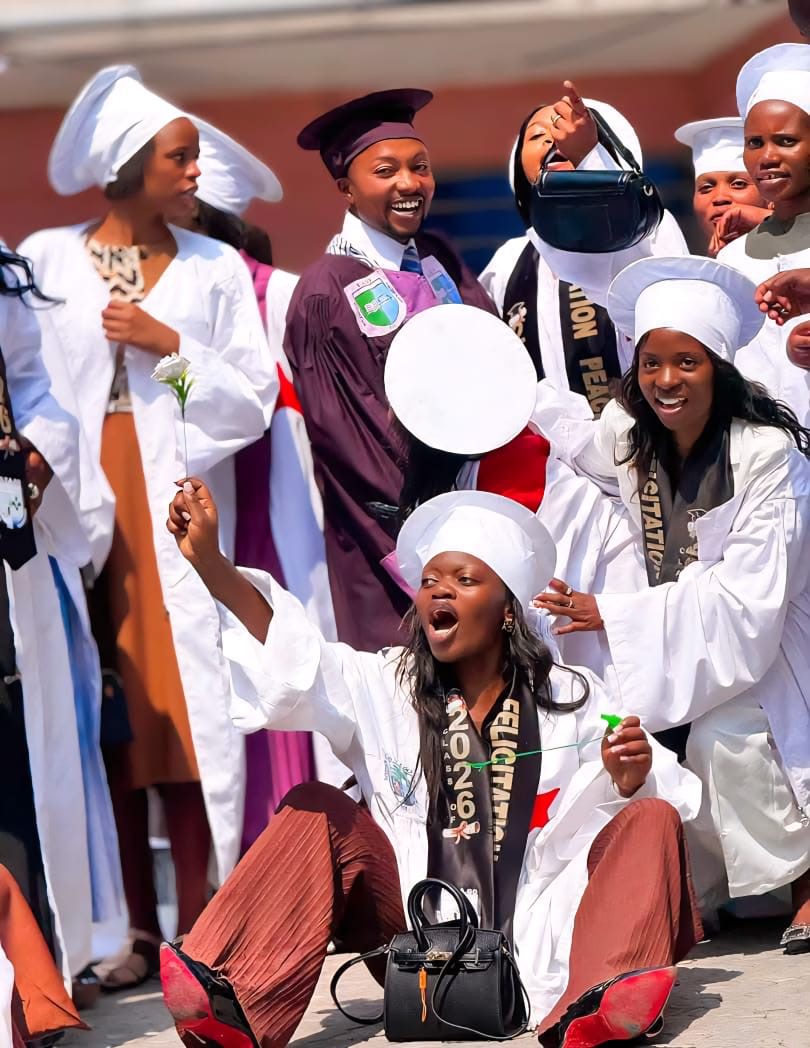
Pupils graduating in the 2025-2026 academic year, however, benefit from a special arrangement.
Those whose studies could not be completed can submit their assessments and undertake the necessary coursework at other higher education institutions, public or private, legally recognized by the DRC.
For other students, no resumption date has been announced.
This situation is causing concern among students, particularly those who lack sufficient financial resources to travel to other cities and continue their studies.
AFC-M23 denounces a “collective punishment”
AFC-M23 reacted strongly to Kinshasa’s decision.
In a statement published on August 26, the movement stated that it learned “with indignation” of the suspension of academic activities. It specifically rejects the security argument put forward by the Congolese government and asserts that the areas it administers are stable and secure.
For the AFC-M23, the decision risks jeopardizing the future of thousands of young people in North and South Kivu. The movement believes that education must be kept separate from political and military conflicts.
He also denounces what he calls “collective punishment” against the populations living in the territories under his administration.
This reaction comes as Kinshasa and the AFC-M23 are engaged in diplomatic processes aimed at ending the conflict in eastern DRC.
Denis Mukwege denounces a “slow epistemicide”
Kinshasa’s decision also prompted a reaction from Denis Mukwege, a Congolese gynecologist, 2018 Nobel Peace Prize laureate, and unsuccessful candidate in the 2023 Congolese presidential election.
In a statement dated August 26 and entitled “The education of our youth is sacred and non-negotiable,” Denis Mukwege condemns both the appointments of new academic authorities by the. AFC-M23 in the areas he describes as occupied and the suspension of academic activities decided by Kinshasa.
He believes that the closure of universities is “tightening the noose” on the populations of North and South Kivu, already affected, according to him, by the closure of airports and banks, restrictions on humanitarian aid, and limitations on population movement.
Denis Mukwege asserts that the future of Congolese youth cannot be sacrificed in the context of the conflict.
The Nobel Peace Prize laureate says he fears that after what he calls a “silent genocide,” the country is now facing a “slow epistemicide,” which he describes as a threat to knowledge, the capacity to think, to research, and to produce knowledge.
He therefore calls on those involved in finding a solution to the crisis to make education an absolute priority.
Denis Mukwege also calls for an end to the military’s manipulation and interference in the management of schools and universities, as well as the safe resumption of classes throughout the DRC, including in areas controlled by the AFC-M23.
Francine Muyumba calls on Kinshasa to reverse its decision
Former Congolese senator Francine Muyumba also calls on the Kinshasa government to reverse its decision.
According to her, education should not become another casualty of the conflict.
“We cannot combat the consequences of war by sacrificing the education of those who are already suffering from it,” she argues.
For the former senator, the suspension of academic activities risks exacerbating the difficulties faced by students in Goma and Bukavu, in a region already affected by several years of conflict.
Students face new uncertainty
In both cities, the decision raises questions about the academic future of thousands of students.
Some students might try to continue their studies in other regions of the DRC under the control of the central government. However, such a move entails significant costs related to transportation, accommodation, and daily living expenses.
For others, the suspension could lead to a prolonged interruption of their academic journey.
Beyond classes, the controversy now centers on the control of public institutions in territories administered by the AFC-M23 and on the recognition of certificates and diplomas issued in these areas.
No resumption date has yet been set. The minister states that the evolving security situation will be monitored to determine the conditions for a possible reopening of the institutions concerned.
In Goma as in Bukavu, the suspension of university activities thus appears to be another direct consequence of the conflict. For Kinshasa, the priority is to preserve security and the legal framework of higher education. For students, lecturers, and many political leaders, the challenge now is to prevent the security crisis from turning into a lasting disruption to education and the future of an entire generation.
You might also like
Nduta : a Burundian refugee murdered
Joseph Minani, 38 years old, was found dead in a field of sweet potatoes and cassava on Sunday afternoon. Circumstances of his death remain undetermined, according to the police. But
Minembwe : several deaths in the hostilities between the FARDC and Twirwaneho
Violent fighting broke out between the FARDC (Armed Forces of the Democratic Republic of Congo) and the Twirwaneho armed group. They took place in Minembwe in the province of South

Bururi: Man killed by his half-brother, population fears impunity
SOS Médias Burundi Bururi, April 25, 2025 – A family tragedy amid a land dispute turned deadly this Thursday, April 24, on Rushemeza hill in Bururi commune and province (southern