

Kakuma (Kenya) : a brutal categorization of refugees in a climate of widespread insecurity
SOS Médias Burundi
Kakuma, July 11, 2025 – The United Nations High Commissioner for Refugees (UNHCR) recently carried out a social categorization of all refugees in the Kakuma camp in northwest Kenya. This move, according to the UN agency, aims to adapt the humanitarian assistance to the context of reduced funding. From now on, only refugees considered “very vulnerable” will continue to receive aid. This controversial measure, strongly opposed by the refugees themselves, who denounce a discriminatory and inhumane policy in a climate already marked by growing insecurity.
All refugees in the camp are now divided into four categories. Only the first two, considered the most vulnerable, will continue to receive regular humanitarian assistance, particularly food. More than 70% of the refugees, the vast majority of the approximately 200,000 people living in Kakuma – including more than 25,000 Burundians – are therefore expected to fend for themselves. The UNHCR and the Kenyan government claim to want to encourage self-reliance by encouraging refugees to start small income-generating activities : businesses, agriculture, crafts, etc. The World Food Program (WFP), the UNHCR’s main partner in food aid, has been implementing this new policy since July.
But on the ground, the pill is hard to swallow. For the refugees, this is a disguised abandonment. Many denounce a decision that further instils precariousness in already vulnerable populations. The feeling of betrayal is strong, especially since the consequences are already being felt in other vital sectors. At the camp hospital, the supply of medication for chronically ill patients—particularly those suffering from HIV/AIDS or diabetes—has been suspended. “The UNHCR wants to inflict death on those it was supposed to protect,” accuses a Congolese refugee deprived of treatment.
In this context of poverty and uncertainty, insecurity is exploding. Last Tuesday, two Burundian refugees—a farmer and a motorcycle driver—were violently attacked and seriously injured by unidentified individuals suspected of being Sudanese. The victims were robbed of their belongings. Theft from households and crop fields is becoming commonplace, and tensions between communities are worsening. Camp authorities are struggling to contain this rise in violence.
Faced with growing anxiety, some refugees, particularly Burundians and Congolese, are now enrolling in the voluntary return program. But according to several community leaders, these departures are not the result of a free and informed choice. “This is not voluntary repatriation, it’s running away. They are returning because they no longer have a choice,” declared a Burundian leader.
At the same time, civilian security agents, who supported the police during night patrols, have suspended their work. The reason : more than six months of unpaid salaries. Their absence contributes to the prevailing insecurity, accentuating the refugees’ sense of abandonment.
Community representatives are calling on the UNHCR to reconsider its position on refugee categorization, which they consider brutal and inappropriate. They are also calling on the Kenyan government to strengthen security in the camp and honor its commitments to security agents.
In Kakuma, survival is now a daily struggle. The refugees’ future is becoming increasingly uncertain, in an environment where aid is dwindling, violence is increasing, and hope is dwindling.
You might also like
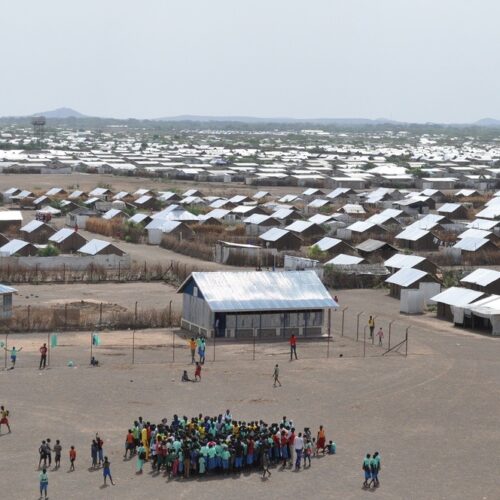
Kakuma : malaria kills silently in a camp in distress
SOS Médias Burundi Kakuma, May 20, 2026 — Refugees in the Kakuma camp in northwestern Kenya are facing an alarming resurgence of malaria. The disease is spreading rapidly in the
Nakivale (Uganda): torrential rains cause injuries and material damage
This week, heavy rains fell on the region where the Nakivale refugee camp in Uganda is located. In addition to the injured, the camp’s central market as well as several
 : a brutal categorization of refugees in a climate of widespread insecurity)
Nduta (Tanzania) : the camp flooded with human excrement
The Nduta camp administration opposed the reconstruction of filled latrines, just as it refused to have them emptied. The consequences were not long in coming, since the latrines overflowed, flooding