
Rumonge : Congolese refugees banned from renting houses outside the reception site
SOS Médias Burundi
Rumonge, December 14, 2025 — In Burunga province, southern Burundi, the district authorities of Rumonge, a port town, have decided to prohibit recently arrived Congolese refugees from renting houses outside the Mutambara emergency reception site. Presented as a security measure, this decision has sparked incomprehension and frustration among both the refugees and some residents.
Congolese refugees temporarily hosted in Mutambara village ll are now prohibited from moving into private residences outside the emergency reception center. The decision was made during a security meeting held on Friday, December 12. According to the Rumonge district administrator, Augustin Minani, this measure aims to preserve peace and security in the district, which has been facing the arrival of more than 3,000 Congolese refugees, primarily fleeing the town of Baraka in the Fizi territory (South Kivu), since Thursday, December 11.
The district authority also justifies this restriction by the need to better control the identity of those being received, in order to prevent any infiltration of armed elements among the refugees, and calls on the local population to remain vigilant.
Among the refugees, anger and distress are palpable. Many denounce precarious living conditions.
“We are forbidden from renting houses, so we spend the nights under the open sky. The children are starting to get sick, especially with respiratory illnesses, because they have nothing to cover themselves with,” one of them testifies.
The district of Rumonge is not an isolated case. In Bujumbura province, in the west of the small east African nation, the district administrator of Mugere, Adélaïde Hatangayo, also took a similar measure, prohibiting Congolese refugees from renting houses or being hosted by Burundian families, even if those families have ties of kinship, friendship, or acquaintance with those fleeing the fighting.
These decisions come as the influx of Congolese refugees continues at a steady pace. Last Thursday, the National Office for the Protection of Refugees and Stateless Persons (ONPRA) reported that it had already registered more than 20,000 Congolese refugees since the beginning of December, adding that these figures could double, as many Congolese continue to cross the border at unofficial points where the office does not have agents. Before this new influx, Burundi was already hosting more than 100,000 Congolese refugees, according to official figures.
This massive influx is directly linked to the rapidly deteriorating security situation in eastern Democratic Republic of Congo. The city of Uvira, which fell to the M23 on the night of December 9-10, is located just a few kilometers from Bujumbura, Burundi’s commercial capital, where the central administration and the main UN agencies are concentrated. For nearly three decades, the eastern DRC has been marked by a near-constant escalation of armed conflict involving a multitude of armed groups.
Reactivated in 2021, the M23, a movement composed primarily of Congolese Tutsis, now controls several cities in North and South Kivu, including Uvira. Kinshasa accuses Kigali of supporting this rebel group, while Rwanda denounces the alleged support of the DRC and Burundi for the FDLR, a Rwandan Hutu armed group whose members are accused of participating in the 1994 genocide against the Tutsis. Burundi, for its part, has deployed more than 10,000 soldiers to the DRC since 2023 to support the FARDC and the local Wazalendo militias, further complicating the situation.
Against this backdrop of heightened regional tensions, an agreement was signed in Washington on December 4, under the US mediation, between the DRC and Rwanda, with Burundi represented as an observer by its president, Évariste Ndayishimiye. The agreement notably provides for the disarmament of the FDLR—which Congolese President Félix Tshisekedi describes as a “residual force reduced to banditry”—as well as measures aimed at reducing tensions in the region.
Alongside the massive influx of civilians, Burundi continues to receive combatants fleeing the fighting. Congolese soldiers, as well as Congolese and Rwandan militiamen, have crossed the border in recent days. On Saturday, at least 700 of them were received in Rumonge, according to local sources.
Between security imperatives, increasing humanitarian pressures, and the direct repercussions of an increasingly volatile regional conflict, Burundian authorities face a major challenge, as reception capacities already appear to be largely exceeded.
You might also like
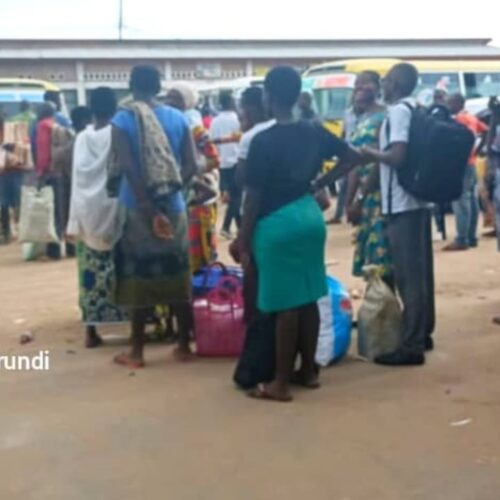
Rumonge : two drivers arrested for violating official transport fares
SOS Médias Burundi Rumonge, November 29, 2025 — Two public transport drivers, Jean-Claude Ndayirukiye and Seremani Amisi, were arrested on Friday and detained at the provincial police station in Rumonge,
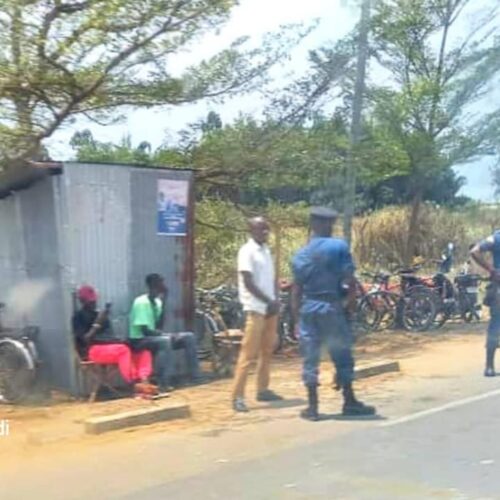
Burunga : the proliferation of police roadblocks paralyzes transportation, drives up fares, and revives suspicions of corruption
SOS Médias Burundi Burunga, July 6, 2026 — With new police officials recently taking office in several districts of Burunga province in southern Burundi, road checkpoints have significantly intensified. In
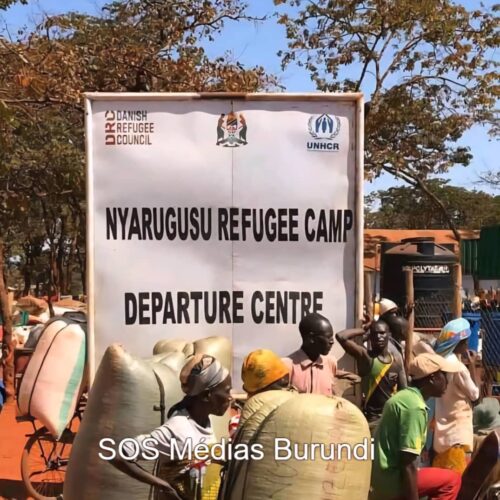

“Starve to death or return home” : the last Burundian refugees in Nyarugusu sound the alarm
SOS Médias Burundi Nyarugusu, Tanzania, July 8, 2026 — The Nyarugusu camp, which housed more than 50,000 Burundian refugees less than a year ago, is now almost empty. Fewer than