
Ruyigi : Busuma camp under tension after Christmas violence
SOS Médias Burundi
Ruyigi, December 27, 2025 – In Buhumuza province, eastern Burundi, the security and health situation at the Busuma refugee camp is causing serious concern.
The security and health situation at the Busuma refugee camp, located in the commune of Ruyigi in Buhumuza province, is causing serious concern. During Christmas celebrations, acts of violence and threatening behavior were reported, involving some recently arrived Congolese refugees.
According to several reliable sources, refugees threw stones at humanitarian partners and circulated armed with machetes, jeopardizing security within the camp and the coexistence with local communities.
In response to these incidents, the governor of Buhumuza province, Denise Ndaruhekere, called on the refugees to strictly respect the laws governing refugee status as well as those of the host country.
“The persistence of such behavior threatens peace and security and could jeopardize humanitarian assistance in the camp,” she warned.
In addition to the insecurity, authorities are alarmed by the deteriorating hygiene conditions within the camp. According to local health services, unsanitary conditions, the alarming state of the latrines, and the uncontrolled use of water points are contributing factors to the spread of waterborne diseases, particularly cholera, which has already been reported in some communes of the province.
Residents living near the camp are also reporting aggressive behavior.
“When some refugees go to the water points, they uproot crops and threaten those who try to protect their fields. This worries us greatly,” said Jean Niyonkuru, a farmer living near the camp.
Another resident confided :
“We understand the refugees’ needs, but violence is not a solution. We are afraid for our families and our children.”
The governor urged the refugees to actively participate in maintaining peace, security, and hygiene.
“Their health and that of the host communities depend on it. Respecting the rules is essential for living together,” she emphasized.
Until this Saturday, the Busuma camp was hosting more than 62,000 Congolese refugees who had arrived since early December from South Kivu province in eastern Democratic Republic of Congo. These people are fleeing the fighting between the FARDC, the Congolese loyalist army, supported by Burundian soldiers and the local Wazalendo militia, and the M23 rebels.
Faced with the advances of the M23 in the Rusizi plain since early December, Burundi has repatriated a large part of its troops deployed in the DRC since March 2023. The clashes continue despite the Washington agreement signed on December 4, 2025 between the DRC and Rwanda, under American mediation, an agreement in which Burundi participated as an observer, represented by President Évariste Ndayishimiye.
In this context, several Congolese authorities in South Kivu, including Governor Jean-Jacques Purusi, who had retreated to Uvira after the fall of Bukavu, the provincial capital, earlier in the year, fled to Burundi after Uvira was captured on the night of December 9-10, 2025. The rebels subsequently announced their withdrawal from this strategic city, located just a few kilometers from Bujumbura, Burundi’s economic capital, under certain conditions.
Reactivated in 2021, the M23, composed primarily of Congolese Tutsis, now controls several strategic locations in North and South Kivu, including their respective capitals, Goma and Bukavu, as well as significant mining areas.
Among these is the strategic Rubaya area in the Masisi territory (North Kivu), one of the world’s largest coltan deposits, supplying a significant portion of the tantalum used in the electronics industry and new technologies.
The movement is now part of the Congo River Alliance (AFC), led by Corneille Nangaa, former president of the Independent National Electoral Commission (CENI), which advocates for the establishment of a federal state in the DRC.
Kinshasa accuses Kigali of supporting the M23, while Rwanda denounces the alleged support of the DRC and Burundi for the Democratic Forces for the Liberation of Rwanda (FDLR), a Rwandan Hutu armed group whose members are accused of participating in the 1994 genocide against the Tutsis.
The small east African nation has already taken in nearly 90,000 Congolese refugees in December alone, adding to the more than 70,000 who arrived earlier this year, increasing humanitarian and security pressures in several provinces of the country.
You might also like
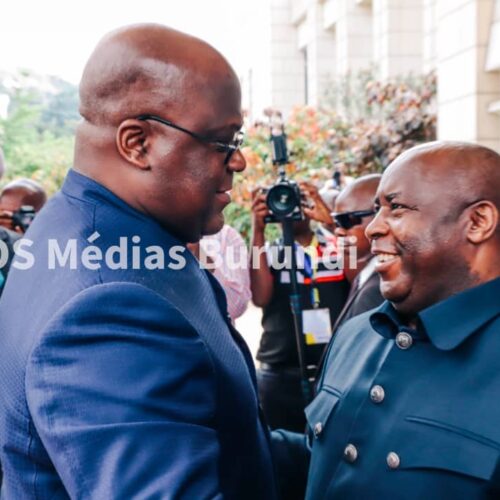
War in Eastern Congo : DRC will not bend, DRC will not back down (Tshisekedi statement)
The Rwandan defense forces, in support of their M23 puppets, are continuing their terrorist enterprise on our territory, sowing terror and desolation among our populations, accused Congolese President Félix Tshisekedi
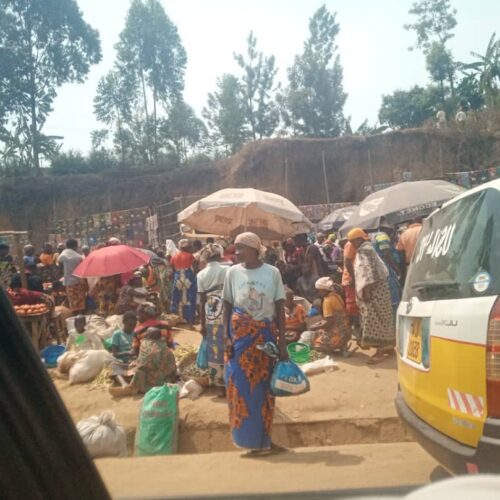
Gasarara massacre : harsh verdict in a tense trial
SOS Médias Burundi Bujumbura, July 8, 2025 – The Bujumbura First Instance Court delivered its verdict on Tuesday, July 8, in the case of the massacre of six people in
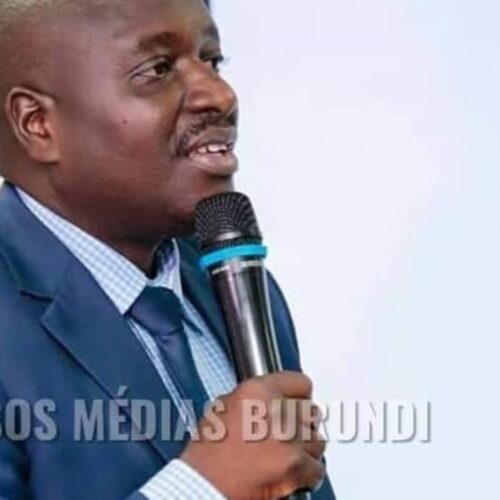

Burundi : Faustin Ndikumana cries conspiracy after weapons are discovered in his bar
SOS Médias Burundi Ngozi, June 5, 2026 – The discovery of weapons and military equipment in a bar belonging to human rights defender Faustin Ndikumana continues to raise strong reactions