
North Kivu : at least 7 civilians killed and more than 40 wounded in a drone strike in Masisi-Centre
SOS Médias Burundi
Goma, January 4, 2026 – An airstrike attributed to the Armed Forces of the Democratic Republic of Congo (FARDC) killed at least seven civilians and injured more than forty on Friday, January 2, 2026, in Masisi-Centre, in the rural district of the same name, Masisi territory, North Kivu province, eastern Congo, according to a still provisional toll.
According to several witnesses, it was around 1:00 PM local time when a Congolese army drone reportedly dropped an explosive device on a building hosting the sub-base of the NGO War Child. The blast also damaged several homes located in the immediate vicinity of the affected site.
This aerial operation caused widespread panic among the population and led to the temporary paralysis of socio-economic activities in the center of Masisi. The victims were primarily civilians who were going about their daily lives just meters from the site of the attack.
The MONUSCO strongly condemns the strike
The United Nations Organization Stabilization Mission in the Democratic Republic of the Congo (MONUSCO) condemned, on Saturday, January 3, 2026, the drone strike that occurred the previous day in Masisi-Centre.
“MONUSCO is deeply concerned by reports of a drone strike in Masisi-Centre. It strongly condemns any attack, including by drones, targeting or affecting civilians and civilian infrastructure,” the UN mission stated in a press release.
According to Doctors Without Borders (MSF), 42 people, most of whom were injured in the attack, are currently being treated at the Masisi General Referral Hospital.
MONUSCO also calls on all parties to strictly respect the ceasefire and the international humanitarian law, and urges them to prioritize the implementation of the peace agreements. It also demands an independent verification of the facts and the establishment of responsibility.
Masisi, a strategic territory at the heart of the conflict
The territory of Masisi, in North Kivu, is among the areas controlled by the M23. It notably hosts the Rubaya mining site, one of the world’s largest deposits of coltan, a strategic mineral that provides a significant portion of the tantalum used in the electronics industry and new technologies.
Reactivated in 2021, the M23, composed mainly of Congolese Tutsis, is part of the Congo River Alliance (AFC), led by Corneille Nangaa, former president of the Independent National Electoral Commission (CENI). The movement, which advocates for the establishment of a federal state in the DRC, now controls several strategic areas in the provinces of North Kivu and South Kivu, including Goma and Bukavu, the capitals of the two Kivus.
Fighting resumes despite diplomatic initiatives
A few hours after the Masisi airstrike, new clashes erupted on Saturday morning, January 3, 2026, between AFC/M23 rebels and Congolese government forces, supported by local Wazalendo militias backed by Kinshasa, in Bingaro, in the Katoy sector (Masisi territory).
According to several local sources, AFC/M23 fighters, reinforced from Kazinga, launched an offensive to retake villages lost approximately two weeks ago, including the main town of the Katoy sector. An attempt to advance towards Humura was repelled by loyalist forces and the Wazalendo, forcing the M23 rebels to retreat.
These clashes continue despite the Washington Agreement, signed on December 4, 2025, between the DRC and Rwanda, under US mediation. Burundi participated as an observer, represented by President Évariste Ndayishimiye. This agreement follows other diplomatic initiatives, notably the Doha Process, launched in March 2025.
Despite these commitments, both sides continue to accuse each other of provocations, while the security situation on the ground remains volatile.
Mass displacement and regional tensions
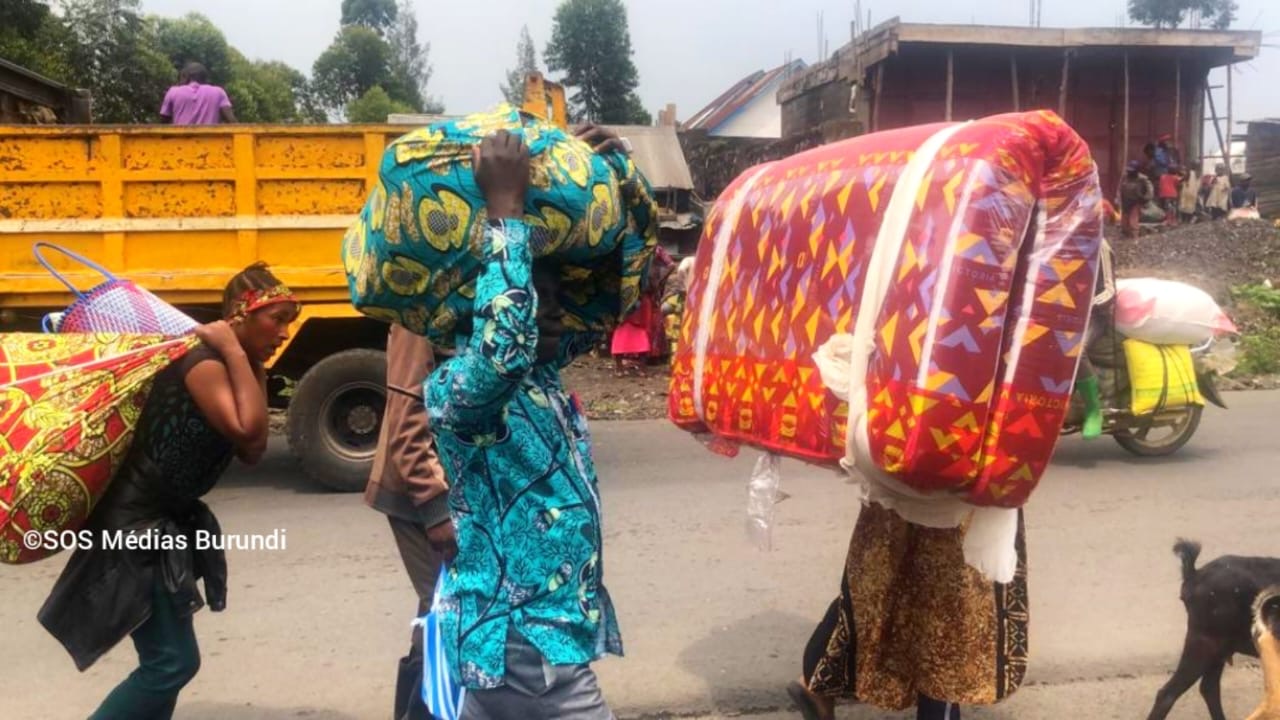
The fighting in December 2025 and early January 2026 caused the mass displacement of civilians. Approximately 90,000 Congolese have sought refuge in Burundi, adding to nearly 70,000 other refugees who arrived earlier in the year.
Regionally, Kinshasa accuses Kigali of supporting the M23, while Rwanda rejects these accusations and denounces the alleged support of the DRC and Burundi for the Democratic Forces for the Liberation of Rwanda (FDLR), a Rwandan Hutu armed group whose members are accused of participating in the 1994 genocide against the Tutsis. Despite repeated denials from Kigali, a report by the UN Group of Experts, which Rwandan authorities have dismissed as a “sham,” mentions the presence of 5,000 to 7,000 Rwandan soldiers alongside AFC/M23 fighters.
You might also like
Kajaga : fishermen fear a possible introduction of Ebola from the DRC
SOS Médias Burundi Bujumbura, June 25, 2026 – In Kajaga, a town on the shores of Lake Tanganyika near the lake border with the Democratic Republic of Congo (DRC), on
Burundi : intimidation, forced mobilization, and propaganda in Makamba : CNDD-FDD under fire
SOS Médias Burundi Makamba, May 27, 2025 – As Burundi’s legislative and elections elections approach, the campaign of the ruling CNDD-FDD party is raising serious concerns in Makamba province (southern

Kigoma : the hunt for Burundian refugees plunges camps and families into fear
SOS Médias Burundi Kigoma, April 8, 2026 — Tensions are rising in northwestern Tanzania. Authorities in the Kigoma region, home to the Nduta and Nyarugusu camps, have announced a large-scale