DRC : Burundian soldiers sent to their deaths — a hidden war, without compensation or truth
SOS Médias Burundi
Bujumbura, January 4, 2026 – While Burundian authorities continue to justify Burundi’s military presence in the Democratic Republic of Congo (DRC) through alleged “regional solidarity,” the Secretary General of the CNDD-FDD, Révérien Ndikuriyo, has confirmed that Burundian troops are still deployed on the Congolese soil. Behind this official narrative, hundreds of Burundian soldiers have been killed, wounded, imprisoned, or abandoned amid the State’s complete silence, according to information and documents consulted by SOS Médias Burundi.
According to an internal report from the Congolese Ministry of the Interior and Security, consulted by SOS Médias Burundi, 29,862 Burundian soldiers have been deployed to the DRC since the first official deployment, which took place on the night of August 14-15, 2022, followed by further waves in March 2023 and subsequently.
Even before these officially acknowledged deployments, the Burundi National Defense Force (FDNB) had already sent several contingents to South Kivu province, primarily to combat two Burundian armed groups active in eastern DRC : RED-Tabara and the National Liberation Forces (FNL) of self-proclaimed General Aloys Nzabampema. These troops were accompanied by members of the Imbonerakure, the youth wing of the CNDD-FDD, the former Hutu rebel group that has been in power in Burundi since 2005.
Killed on the front lines, wounded in silence
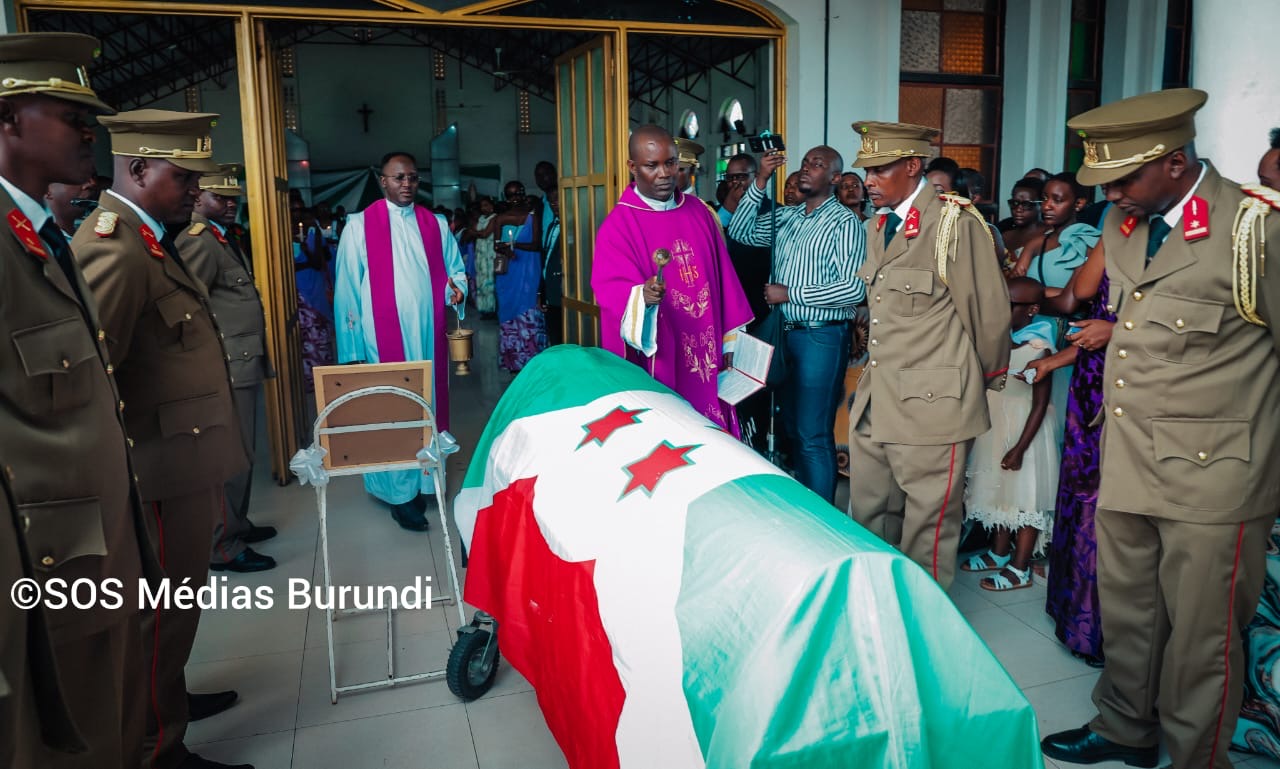
According to information gathered by SOS Médias Burundi, a significant number of Burundian soldiers, including at least two senior officers—a major and a colonel—have fallen on the Congolese soil. In December 2025 alone, approximately one hundred wounded soldiers were reported in several hospitals in Bujumbura, the country’s commercial capital. No official statement has been released regarding these losses.
Unlike Burundian soldiers deployed on peacekeeping missions in Somalia—whose families receive clearly defined compensation, estimated at around $100,000, distributed between the State and their beneficiaries—no official procedure exists for soldiers killed in the DRC. Families of soldiers killed or missing say they have been abandoned, without recognition or compensation.
Families deprived of mourning
SOS Médias Burundi has collected several testimonies from families claiming they have never received the promised compensation, some even stating they were prevented from holding funeral ceremonies. These are facts regularly denounced, but never officially acknowledged by the Burundian authorities.
Repression against reluctant soldiers
In December 2023, 272 Burundian soldiers who refused to be deployed to the DRC to fight the M23 were arrested, tried, and sentenced to terms of up to life imprisonment. They are currently held in Murembwe prison, in southwestern Burundi, according to multiple sources.
Withdrawal after the fall of Goma
Following the capture of Goma, the capital of North Kivu and the largest city in eastern Congo, by M23 rebels in January 2025, all Burundian troops withdrew to South Kivu.
In the DRC, the Burundian army is fighting alongside the FARDC, supported by the Wazalendo militias, which are funded by Kinshasa, against the M23 rebels. In some areas, this coalition also includes the Democratic Forces for the Liberation of Rwanda (FDLR), a Rwandan Hutu armed group, several members of which are accused of participating in the 1994 genocide against the Tutsis.
According to the same Congolese document, 19,872 Burundian soldiers have already returned to Burundi, suggesting that approximately 10,000 soldiers are still present in the DRC, although no official figures have been released by Gitega.
Blockade in Minembwe
In the Minembwe Highlands, predominantly inhabited by the Banyamulenge minority, Burundian soldiers have been accused of imposing a blockade on the local population. In November 2025, Brigadier General Gaspard Baratuza, spokesperson for the Burundian National Defense Force (FDNB), acknowledged that this measure targeted localities suspected of supplying the enemy.
Extreme fighting conditions and withdrawal via Lake Tanganyika
According to several testimonies gathered by SOS Médias Burundi, Burundian soldiers deployed in the DRC fought in extremely difficult conditions, often without adequate equipment and sometimes without food supplies for extended periods. In December 2025 alone, some forty Burundian soldiers were killed in South Kivu, precipitating a gradual withdrawal to Burundi. After the capture of Uvira by M23 rebels—a city located just a few kilometers from Bujumbura and the main crossing point for Burundian troops—the lakeside areas of Baraka and Mboko were chosen as the preferred withdrawal points.
Witnesses describe soldiers arriving via Lake Tanganyika in badly dilapidated uniforms and worn boots, sometimes resembling those worn by uncontrolled armed groups—an image completely at odds with the official narrative of military control.
Ndikuriyo takes responsibility, Ndayishimiye downplays it
On Friday, January 2, the Secretary General of the CNDD-FDD, Révérien Ndikuriyo, confirmed in Bujumbura that Burundian soldiers are still deployed in the DRC, asserting that the recent withdrawal observed in South Kivu did not constitute a disengagement.
“We are still present because it’s practically our home. We return whenever we want,” he declared.
President Évariste Ndayishimiye has also repeatedly defended this military presence. In December 2023, he stated :
“It’s normal for Burundian soldiers to be killed in the DRC, because they signed up for it.”
However, he shifted the blame for the M23’s advances onto the Congolese authorities :
“It’s up to Congo to explain how the rebels continue to gain ground while we went there to help them.Burundi is only providing support”.
A regional conflict spiraling out of control
Reactivated in 2021, the M23, composed mainly of Congolese Tutsis and integrated into the Congo River Alliance (AFC) led by Corneille Nangaa, former president of the Congolese Independent National Electoral Commission (CENI), now controls several strategic areas in North and South Kivu, including Goma and Bukavu, the capitals of the two Kivus, as well as the Rubaya mining site, one of the world’s largest coltan deposits, a strategic mineral supplying a significant portion of the world’s tantalum used in the electronics industry and new technologies. The AFC/M23 is advocating for the establishment of a federal state in the DRC.
Kinshasa accuses Kigali of supporting the M23, while Rwanda denounces the alleged support of the DRC and Burundi for the FDLR. Despite Rwandan denials, a report by the UN Group of Experts mentions the presence of 5,000 to 7,000 Rwandan soldiers alongside AFC/M23 fighters.
On the ground, clashes continue despite the Washington Agreement, signed on December 4, 2025, between the DRC and Rwanda. This agreement confirms the failure of diplomatic efforts and the considerable human cost of a war for which Burundian soldiers continue to pay the price, in the shadows and in silence. Burundi participated in this agreement as an observer, represented by President Évariste Ndayishimiye.
You might also like
Burunga : an arson attack at a traditional healer’s home, the instigator still at large
SOS Médias Burundi Makamba, August 14, 2025 – A man has been detained for nearly a month in the cells of the Makamba prosecutor’s office in Burunga province, southern Burundi.
Photo of the week : SADC troop withdrawal agreement, towards peace restoration
A crucial agreement was signed on Friday, March 28, between General Sultani Makenga, commander of the M23 rebels, an armed group affiliated with the Congo River Alliance (AFC) politico-military movement,

Grenade attack leaves one dead, several injured in Cibitoke
SOS Médias Burundi Cibitoke, July 23, 2025 – A family was violently targeted overnight from Wednesday to Thursday around 8 p.m. in Rusiga neighborhood, located in the zone and commune