

Nakivale (Uganda) : several cases of human trafficking reported, minors at the heart of an alleged network
SOS Médias Burundi
Nakivale, May 13, 2026 — At least eleven cases of “child trafficking” have been recorded in just a few weeks in the village of Kabazana, the most populated in the Nakivale refugee camp in southwestern Uganda. Local authorities describe the situation as alarming and have announced investigations, while several suspects have already been arrested and brought to justice.
Minors aged 12 to 16 targeted
The alleged victims are children aged 12 to 16, primarily from refugee families. According to several testimonies gathered on site, these minors are allegedly “recruited” and sent to different regions of Uganda, and even abroad, particularly to Kenya, Tanzania, and Rwanda, under the pretext of seeking work.
In the village of Kabazana, located in the urban center of the Nakivale camp, eleven cases were reported to the police in less than a month.
Families without news of their children
“My son left two weeks ago. He is 15 years old. He told his brothers he was going to look for work. We don’t know exactly where. He himself didn’t know, except that he had a promise and a guide. Since then, we haven’t heard from him and we are very worried,” testifies a Burundian refugee who contacted the police.
A suspect arrested and accomplices suspected
One of the alleged “guides” was arrested by the police. He is suspected of human trafficking involving two minors. According to judicial sources, his case file was quickly compiled before his transfer to detention.
During his interrogation, the suspect reportedly mentioned the existence of accomplices both inside and outside the camp, according to information gathered on site.
Authorities call for vigilance
The police and camp administration have launched a large-scale investigation and are urging families to report any suspicious disappearances.
Authorities also remind everyone that anyone who has lost contact with a minor who has gone “to work” must immediately alert the relevant authorities.
According to the police, poverty and the difficult living conditions in the camp are the main causes of this phenomenon, pushing some young people and families to accept risky offers.
Enhanced prevention measures
Security measures have been put in place to try to curb these suspicious departures. No minor is allowed to leave the camp alone without parental or guardian authorization. Regular checks are also carried out in the surrounding areas.
However, the authorities acknowledge the difficulty of fully controlling movement in an open, unfenced camp, which fosters social integration but also unregulated movement.
A vast and difficult-to-secure camp
Nakivale is considered one of the largest refugee camps in the region, with more than 150,000 refugees from over a dozen nationalities. The Burundian community there is estimated at over 33,000 people.
The camp is located in the Isingiro district, a border area near Tanzania, known for its significant agricultural activity, particularly the production of bananas (matooke), coffee, and cattle. This economic activity also attracts undocumented workers, further complicating the control of population movements.
Local authorities are continuing their investigations to dismantle what could be an organized human trafficking network operating in and around the camp.
You might also like
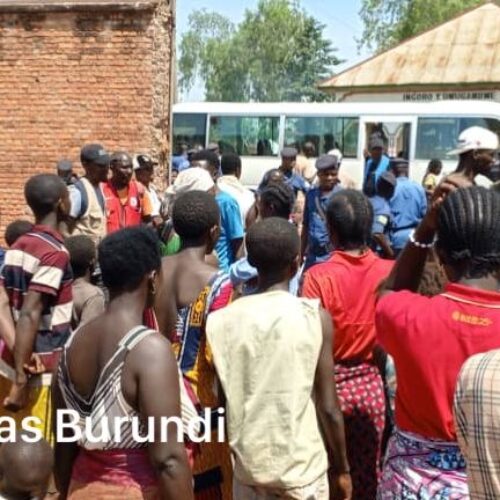
Photo of the week : Congolese refugees from Rugombo reject their transfer to Giharo
For several days, tensions have persisted at the Congolese refugee site in Rugombo, in Cibitoke province, northwest Burundi. Around 40,000 refugees are refusing to be transferred to the Musenyi site,
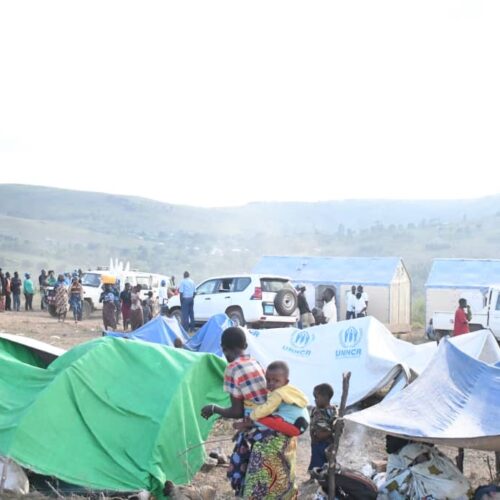
Buhumuza : a new site opened urgently to accommodate the influx of Congolese refugees
SOS Médias Burundi Ruyigi, December 11, 2025 — Since the afternoon of Tuesday, December 9, a significant influx of Congolese refugees has been observed in the province of Buhumuza, in
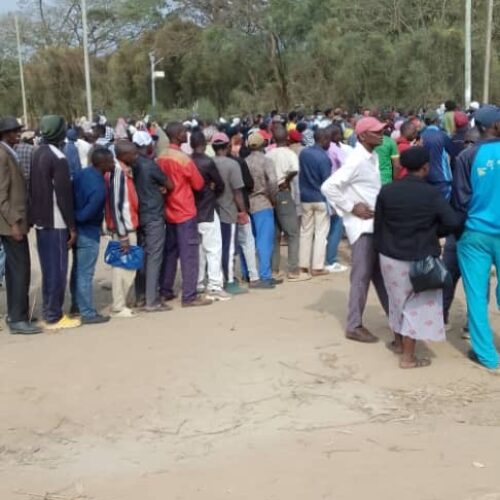
 : several cases of human trafficking reported, minors at the heart of an alleged network)
Nakivale (Uganda) : 3,000 refugee households targeted for $1,000 cash assistance by an American NGO
SOS Médias Burundi Nakivale, July 9, 2025 – A direct humanitarian aid project is generating both hope and tension in the Nakivale refugee camp in southwestern Uganda. The American organization