Six years after Pierre Nkurunziza’s death, questions and controversies persist
SOS Médias Burundi
Gitega, June 8, 2026 – Six years after the death of former Burundian President Pierre Nkurunziza, questions surrounding the circumstances of his death continue to fuel debate in Burundi. While authorities commemorated the anniversary of his death on Monday with several official ceremonies in the political capital, Gitega, his political legacy remains at the heart of deep divisions.
Pierre Nkurunziza, a former Hutu rebel leader who became a major political figure, came to power as part of the process stemming from the Arusha Agreement signed in August 2000. He died on June 8, 2020, after being hospitalized for four days at the “Natwe Turashoboye” Fiftieth Anniversary Hospital in Karusi, in east-central Burundi. Admitted on June 5, 2020, he died a few months before the end of his third term, in an already extremely tense political climate. The authorities announced at the time that he had succumbed to cardiac arrest, without providing further details about his condition.
Six years later, a segment of public opinion continues to question the official version and demands greater transparency regarding the exact circumstances of his death. These questions persist despite the commemorations organized annually by the authorities.
A controversial political legacy
Pierre Nkurunziza’s third term, won in 2015 amidst high political tensions, plunged Burundi into a major crisis. Demonstrations, an attempted coup in May 2015, and severe repression against opponents and some civil society organizations marked this period.
In this context, several independent media outlets were suspended or destroyed, while numerous journalists, activists, and opposition members went into exile. According to several estimates, nearly half a million Burundians left the country at the height of the crisis.
A situation still debated under the current administration
While President Évariste Ndayishimiye’s rise to power in June 2020 raised expectations for change, many observers and organizations believe that the country’s political and socio-economic situation remains marked by numerous difficulties.
They cite, in particular, the persistent fuel shortage that has lasted for more than five years, difficulties in obtaining essential goods, and the decline in household purchasing power. In several localities, long lines at petrol stations have become a recurring reality.
On the political front, critics denounce a severely limited democratic space. The National Assembly is largely dominated by the CNDD-FDD, the ruling party, and the opposition is virtually absent from the main institutions. Several political parties and civil society organizations continue their activities from exile.
Human rights organizations alert
Human rights organizations, including the Iteka League, continue to document cases of alleged violations. They report, in particular, the regular discovery of bodies in rivers, forests, and on hillsides in various regions of the country.
These reports, regularly disputed by the authorities, are fueling a climate of tension between the government and human rights organizations.
Official ceremonies in Gitega
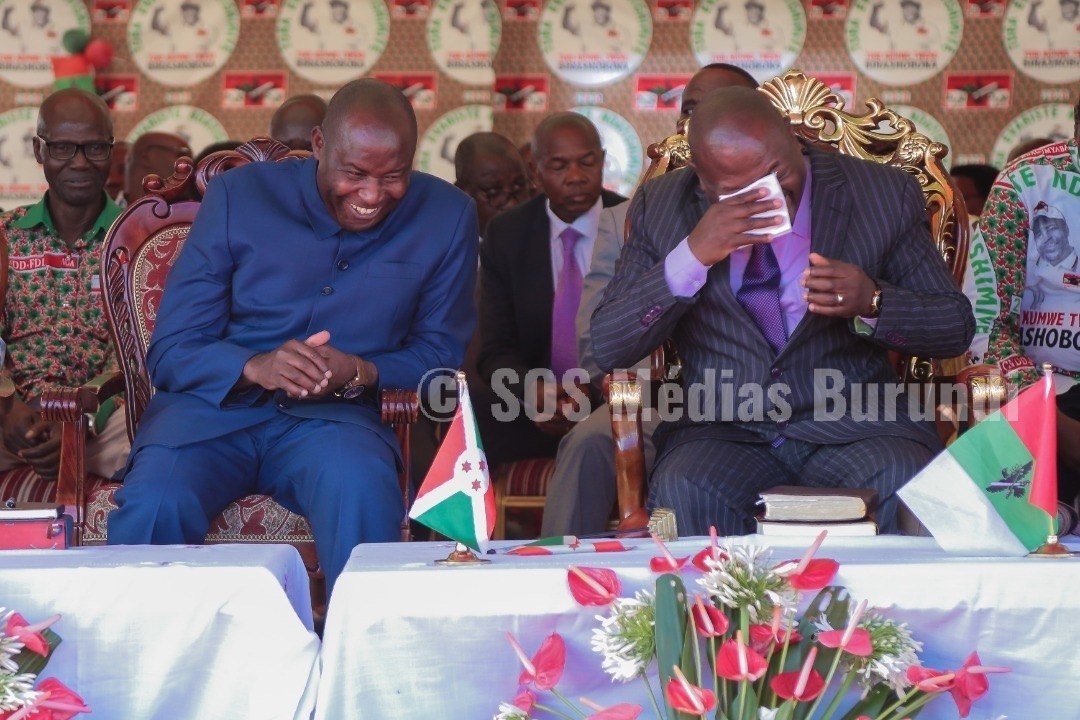
On Monday, ceremonies marking the sixth anniversary of Pierre Nkurunziza’s death took place in Gitega, the country’s political capital, where several official activities were organized. Three wreaths were laid on his grave : one by President Évariste Ndayishimiye and his wife, one by the family of the former head of state, and one by the diplomatic corps accredited to Bujumbura.
These commemorations also coincided with the celebration of the National Patriotism Day. On this occasion, President Ndayishimiye led a moral education session for senior government officials at Ingoma Stadium.
In his speech, the head of state addressed the divisions inherited from colonization, stating that these divisions continue to influence the Burundian society.
A still divisive figure
Six years after his death, Pierre Nkurunziza remains a central and controversial figure in Burundi’s recent history. Between official tributes, political criticism, and ongoing debates about his legacy, his name continues to deeply divide the Burundian public opinion.
You might also like
Fizi : mapigano kati ya kundi la Mai Mai na Twirwaneho
Mapigano makali yanaripotiwa tangu asubuhi ya jumatatu hii kati ya kundi la Mai Mai Biloze Bishambuke dhidi ya wapiganaji wa kundi la silaha la Twirwaneho linaloundwa na vijana Banyamulenge. Makundi
Burunga : the opposition is gagged, the CENI looks the other way
SOS Médias Burundi Burunga, May 26, 2025 – The electoral campaign in the new province of Burunga (southeastern Burundi) is turning into an unbalanced confrontation between the government and the

Photo of the week : journalists struggle to leave Bujumbura to cover elections
SOS Médias Burundi Bujumbura, June 9, 2025 — Last Wednesday, June 4, 2025, on the eve of the June 5 legislative and district elections, several Burundian journalists were still stranded