
Burundi : patriotism celebrated in Gitega amid political tensions
National unity speeches and governance debates on June 8th
SOS Médias Burundi
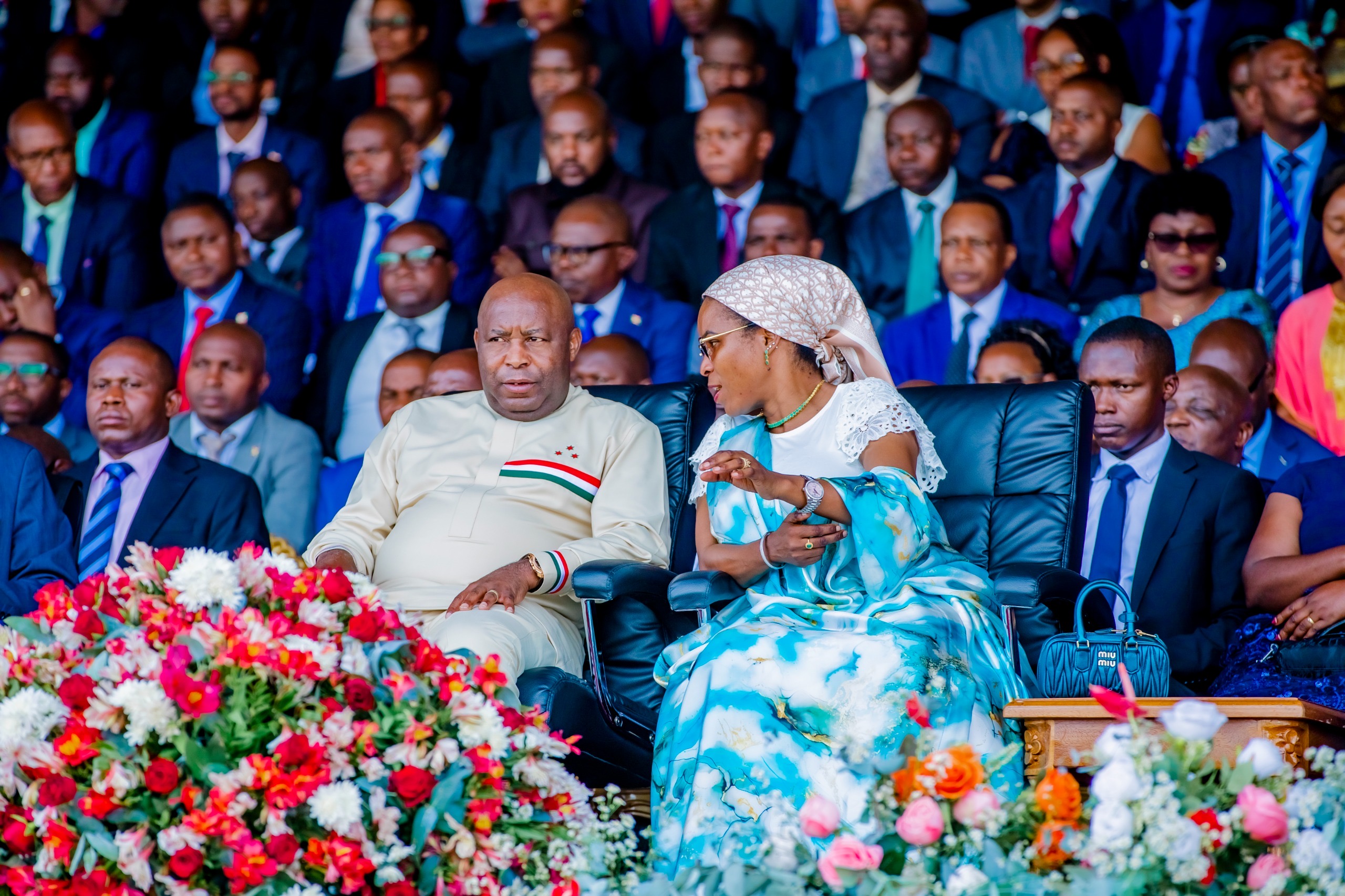
Buhumuza, June 8, 2026 – The festivities marking the National Patriotism Day were celebrated on Monday in the political capital, Gitega, in the presence of President Évariste Ndayishimiye and several high-ranking state officials. Established in memory of former Head of State Pierre Nkurunziza, who died on June 8, 2020, of a heart attack according to the official Burundian government version, this commemoration is presented as a moment to promote national unity and civic values. However, it takes place against a backdrop of debates on governance, political inclusion, and the living conditions of the population, between adherence to the official narrative and criticisms expressed throughout the country.
Established to strengthen patriotism, social cohesion, and participation in development, Patriotism Day was marked by official ceremonies, institutional messages, and calls for mobilization around the country’s development goals.
The authorities emphasized the need for citizens to preserve national unity, strengthen civic discipline, and become more involved in ongoing economic and social initiatives.
An official celebration with strong political significance
The ceremony held in Gitega brought together representatives of public institutions, the defense and security forces, and members of the administration. The Head of State reiterated the role of patriotism as the foundation of national stability and the driving force behind development.
The official speeches also highlighted domestic production and citizen engagement in community projects, presented as essential for improving living conditions.
Citizens caught between commitment and social expectations
On the ground, the notion of patriotism is generally shared, but it is often linked to concrete expectations related to living conditions.
In several districts in the north and east of the country, particularly in Ngozi, Cankuzo, and Ruyigi, residents believe that patriotism must translate into concrete actions for development. “We love our country, but we also want to be able to point out the problems that hinder development,” says a young graduate in Ruyigi.
“Being patriotic means protecting public property, working honestly, and contributing to the development of one’s community,” explains a teacher encountered in Muremera, in the district of Ngozi.
Other citizens emphasize that this commitment must be accompanied by economic opportunities, especially for young people and women.
Political criticism of the concept of patriotism
On the sidelines of the festivities, several political leaders expressed reservations about how patriotism is interpreted and applied.
The chairperson of the CNL party believes that patriotism should not be confused with loyalty to a political party. He denounces a tendency to equate the ruling party with the State, which, according to him, runs counter to the principles of multiparty democracy.
He advocates for an inclusive conception of patriotism based on respect for political diversity, tolerance, and the protection of fundamental freedoms. He also calls for concrete measures, including the return of refugees and political exiled people, the release of prisoners, and the fight against corruption and impunity.
The chairperson of the APDR party, for his part, deplores the persistence of socio-economic difficulties and governance problems. He calls for sustainable solutions to improve the living conditions of the population.
The chairperson of the Forum of Political Parties believes that patriotism is primarily expressed through economic production. He encourages citizens to strengthen productive activities in order to support national development.
He also recalls that the Arusha Agreement constitute a historical landmark of Burundian patriotism, having enabled the establishment of an institutional balance based on power-sharing.
Between official discourse and social realities
For many observers, the Patriotism Day highlights a disconnect between institutional rhetoric and the daily concerns of citizens. While the authorities emphasize national unity and mobilization for development, a segment of the population and the political class are highlighting governance issues and living conditions.
Despite these differences, a consensus remains that patriotism is a central value in the national discourse. However, his interpretation continues to spark debate about how to reconcile national unity, citizen participation, and addressing the country’s socio-economic challenges.
You might also like
Rugombo : two young motorcycle taxi riders kidnapped
Justin Nirema and Yves Nsanzurwimo have not been found since last Saturday. They were kidnapped while taking food to their brothers studying in the DRC, according to witnesses.Intelligence suspected them
Rwanda commemorates 31st anniversary of genocide with message of defiance and unity : Kagame to countries sanctioning Rwanda – “Go to hell”
SOS Médias Burundi KIGALI, Rwanda — On Monday, Rwandans began commemorating the 31st anniversary of the 1994 genocide against the Tutsi, in which more than a million people were brutally

Bubanza : three Imbonerakure arrested after the murder of a peer educator in Karinzi
SOS Médias Burundi Bubanza, September 10, 2025 – In Bubanza, Bujumbura province (western Burundi), police arrested three members of the CNDD-FDD youth league, suspected of participating in the fatal lynching