
Minembwe : drones, gold, and the Burundian army at the heart of a war engulfing the Great Lakes Region
SOS Médias Burundi
Bukavu, June 11, 2026 – Violent clashes have raged since Monday between the Armed Forces of the Democratic Republic of Congo (FARDC), supported by the Burundian army and the Wazalendo militias backed by Kinshasa, and forces of the Twirwaneho movement, allied with the AFC-M23 political-military coalition, in the highlands of the Fizi and Mwenga territories of South Kivu.
The fighting is concentrated mainly in the localities of Kakenge, Mikenge, and Ilundu, where each side claims to have made advances on the ground.
In a statement released Tuesday, the FARDC claimed to have regained control of Mikenge, Kalingi, and Kakenge after several days of fighting. For its part, the Twirwaneho movement claims to have repelled an offensive led by the FARDC (Armed Forces of the Democratic Republic of Congo), supported by Burundian soldiers and Wazalendo militias backed by Kinshasa, towards Ilundu and Kakenge.
According to several local sources contacted by SOS Médias Burundi, the clashes are marked by an increased use of reconnaissance and attack drones by the various belligerents, a development that would demonstrate the growing sophistication of the conflict in this region.
“Drones have become ubiquitous on the front lines,” a local source in Minembwe stated.
Congolese security sources also maintain that Kinshasa promised Burundi benefits related to gold mining in Minembwe and other mining areas in the Fizi territory, in exchange for military support aimed at regaining control of areas held by the AFC-M23 forces and their allies. This information has not been officially confirmed by either Congolese or Burundian authorities.
The same sources also claim that drones have been supplied or shared with certain Burundian contingents engaged in military operations in the highlands of South Kivu.
A war with regional ramifications
According to several security observers, Burundian forces, in coordination with the FARDC (Armed Forces of the Democratic Republic of Congo) and the Wazalendo militias supported by Kinshasa, have been conducting several offensives since January 2026 aimed at regaining control of Minembwe and the surrounding areas.
These operations reportedly involve the use of heavy weapons, drones, and military reinforcements deployed in several sectors of South Kivu.
The Burundian army has recently carried out further redeployments in the region amid heightened tensions following the withdrawal of AFC-M23 rebels from the strategic city of Uvira, located just a few kilometers from Bujumbura, Burundi’s commercial capital.
The rebels had occupied Uvira for nearly a month between December 2025 and January 2026 before withdrawing. More recently, local sources also report that AFC-M23 elements have withdrawn from some positions in the Rusizi Plain under international pressure, particularly from the United States and other partners committed to regional de-escalation.
AFC-M23 and Twirwaneho at the heart of the conflict
The March 23 Movement (M23) is now one of the main components of the AFC-M23 political-military coalition, led by Corneille Nangaa, former president of the Independent National Electoral Commission (CENI) of the DRC.
In South Kivu, this coalition relies in particular on the armed group Twirwaneho, composed mainly of young people from the Banyamulenge community.
Congolese authorities regularly accuse Rwanda of supporting the AFC-M23 and its allies, accusations that Kigali systematically rejects. Rwanda, for its part, accuses Kinshasa of collaborating with the FDLR, an armed group formed by former Hutu leaders involved in the 1994 genocide against the Tutsis.
Burundi also accuses Rwanda of supporting armed groups operating against its territory and of harboring ambitions to annex certain areas in eastern Democratic Republic of Congo. Kigali dismisses these accusations, while in turn accusing Burundi of collaborating with the FDLR as well as other armed groups hostile to Kigali.
In this context of persistent tensions, the March 23 Movement (M23), a former predominantly Tutsi rebellion that resumed hostilities in late 2021, accusing Congolese authorities of failing to honor their commitments to reintegration, controls several strategic areas in North and South Kivu. This includes important localities and economic hubs, as well as provincial capitals, in a context of persistent instability since January 2025.
Fighting continues despite several regional and international diplomatic agreements and initiatives aimed at defusing the crisis in eastern DRC, which have so far failed to achieve a lasting de-escalation on the ground.
Alarming humanitarian situation
According to several humanitarian organizations, the fighting has already caused further mass displacement of civilians in the territories of Fizi and Mwenga.
Local sources report the destruction or damage of numerous homes, schools, churches, and health facilities as a result of the clashes.
Humanitarian organizations are calling on all parties to the conflict to respect international humanitarian law and to protect civilians.
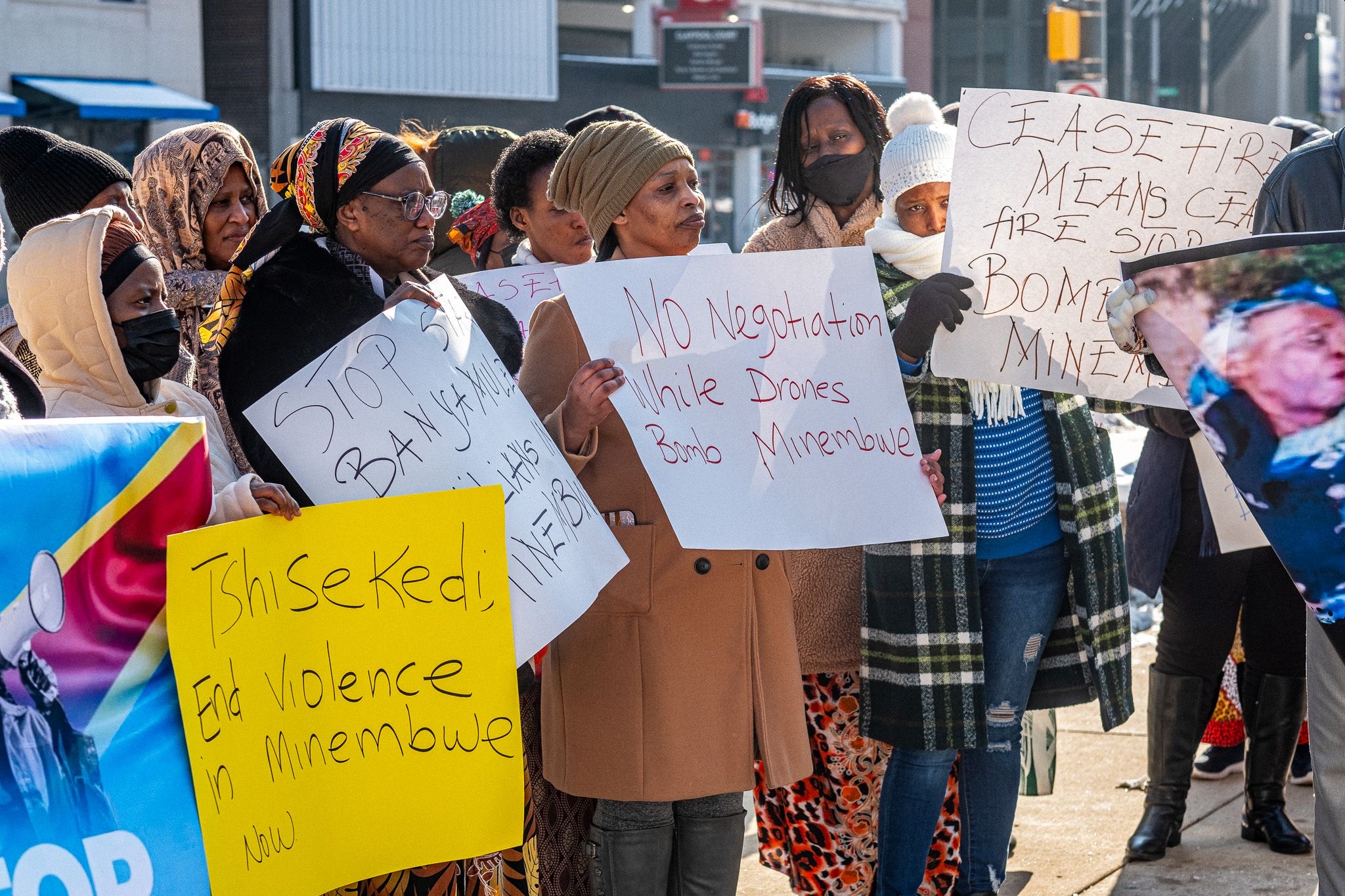
In recent months, the Banyamulenge community has organized several demonstrations in various countries, including the United States, Canada, Kenya, and Europe, to denounce what it calls the use of drones against civilians in the Minembwe region.
For their part, Congolese military sources claim that the AFC-M23 and its allies also used drones against positions held by the FARDC and the Burundi National Defense Force (FDNB) in the Muramvya, Point Zero, and Mikenge sectors during the month of May.
As the fighting continues, the South Kivu highlands remain one of the most complex and unstable epicenters in the Great Lakes region, where security, political, and economic issues are dangerously intertwined.
You might also like
Gitega : a man stabbed to death after being brutally beaten in Bugendana, a suspect arrested
SOS Médias Burundi Gitega, August 29, 2026—A 35-year-old man was killed on the night of Friday, August 28, 2026, in Gerangabo village, in the district of Bugendana, Gitega province, in
Goma : about thirty deaths and more than 3,800 people affected by the monkeypox epidemic in North Kivu
At least 3,843 cases of Mpox have been recorded in the province of North Kivu in the east of the Democratic Republic of Congo. This was stated by the head

Cibitoke : forced closure of the Congolese refugee transit site in Rugombo – a risky return to the DRC
The Congolese refugee transit site in Rugombo, in Cibitoke province (northwestern Burundi), was abruptly closed on Tuesday, March 25. Faced with their refusal to be relocated to Musenyi, in Rutana