Burundi : in Geneva, the UN Special Rapporteur denounces a persistent human rights crisis ahead of the 2027 presidential election
SOS Médias Burundi
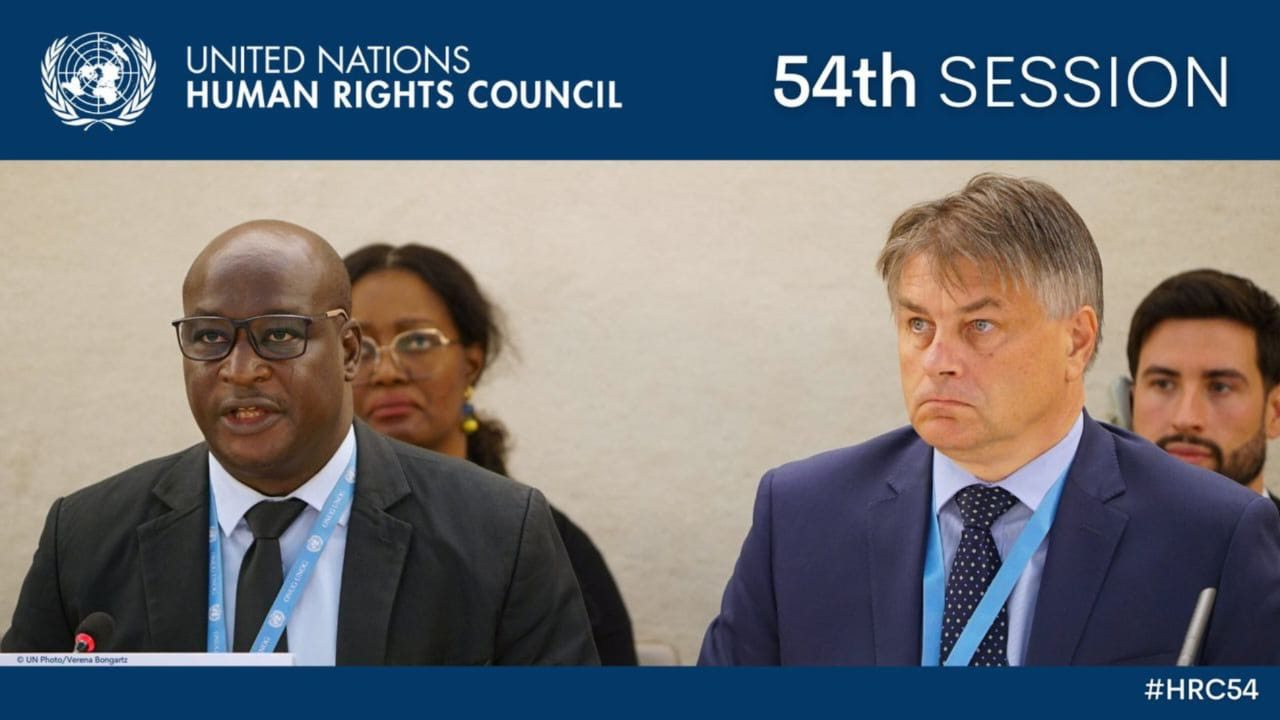
Bujumbura, July 1, 2026 – The United Nations Special Rapporteur on the situation of human rights in Burundi, Fortuné Gaëtan Zongo, has painted a particularly worrying picture of the human rights situation in the small East African nation. During the 72nd session of the UN Human Rights Council in Geneva, he stated that no structural improvements had been observed despite some ad hoc measures taken by the Burundian authorities. The Burundian government rejected these findings, denouncing a mechanism it considers “hostile” and “politicized.”
The Special Rapporteur reiterated that his mandate, established in October 2021 and renewed in 2025, is “neither a mandate of accusation nor of condemnation,” but a mechanism for monitoring, dialogue, and support designed to help Burundi fulfill its international human rights obligations.
“Since my appointment, I remain available to engage in constructive dialogue with the Burundian government in any form it deems appropriate,” he stated.
A persistent human rights crisis
Fortuné Gaëtan Zongo noted that Burundi has been experiencing a profound human rights crisis since April 2015.
According to him, the 2025 legislative and district elections, won by the CNDD-FDD party, which has been in power since 2005 following the implementation of the Arusha Peace and Reconciliation Agreement signed in 2000, with 96.5% of the vote, took place in an atmosphere marked by intimidation, arbitrary arrests, and restrictions on fundamental freedoms.
The rapporteur also expressed his concern about the militarization of the CNDD-FDD youth wing, the Imbonerakure, whose paramilitary training has reportedly been documented in several provinces. In his view, this situation increases the risk of violence in the lead-up to the presidential election scheduled for 2027.
A persistently difficult economic situation
The Special Rapporteur also emphasized the deteriorating socio-economic conditions.
He noted that inflation, which peaked at 45.5% in April 2025, remained high at 20.8% in May 2026, more than double the average observed in the East African Community.
He also mentioned the chronic fuel shortages that continue to disrupt transportation, healthcare services, and the economy, while more than 70% of Burundians live below the poverty line.
Continued violations
Fortuné Gaëtan Zongo denounced the restrictions imposed on freedom of expression, noting that journalists, bloggers, and human rights defenders continue to be prosecuted under criminal provisions relating in particular to “undermining the integrity of the national territory” or “spreading false information.”
According to him, the independence of the judiciary remains severely compromised.
Information gathered during his mandate indicates that more than 400 people have been killed and more than 200 victims of enforced disappearances since 2020.
The rapporteur also noted that a joint communiqué issued on September 1, 2025, by several United Nations special procedures documented 605 extrajudicial killings, 892 arbitrary detentions, 62 cases of torture, and 200 cases of sexual violence.
“No serious investigation has been conducted. No accountability has been established. No justice has been served,” he stated.
He nevertheless welcomed the provisional release of several detainees, including journalist Sandra Muhoza, Kenny Claude Nduwimana, and former Prime Minister Alain-Guillaume Bunyoni, while maintaining that these measures remain insufficient to constitute lasting progress.
Refugees remain a major concern
The Special Rapporteur also spoke at length about the situation of Burundian refugees.
He noted that returns from Tanzania have accelerated since the beginning of 2025, while stating that he has credible information indicating various forms of pressure being exerted on refugees to accept their repatriation.
Fortuné Gaëtan Zongo emphasized the importance of respecting the international principle of non-refoulement.
“No State can return a person to a country where they risk torture, enforced disappearance, or extrajudicial execution,” he declared.
He also called on international donors to mobilize without delay the $82 million needed to finance the joint repatriation and reintegration plan.
Elisa Nkerabirori rejects the accusations
Speaking on behalf of the Burundian government, Burundi’s ambassador to the United Nations Office at Geneva, Elisa Nkerabirori, rejected the Special Rapporteur’s conclusions.
She asserted that the mechanism dedicated to Burundi is a European Union initiative aimed at keeping her country under surveillance for the past eleven years.
According to her, the Human Rights Council has become a forum where certain powers exploit human rights for political and geopolitical ends, in disregard of the principle of state sovereignty.
The diplomat stated that Burundi is unjustly relegated to item 4 on the Council’s agenda, while other crises, particularly in the Great Lakes region, deserve greater attention.
She also defended the progress made by her government in the areas of peace, stability, economic development, and national reconciliation, while denouncing what she considers the exploitation of the refugee issue.
The National Independent Human Rights Commission (CNIDH) highlights the reforms undertaken
Speaking in turn, the National Independent Human Rights Commission (CNIDH) acknowledged certain challenges but commended the government’s efforts.
It specifically mentioned judicial reforms, measures that have reduced the prison population by 14%, and the commitment made by 32 political parties on May 15, 2026, to a transparent and peaceful presidential election in 2027.
The Commission nevertheless encouraged the authorities to further strengthen civil liberties, improve the support provided to refugees and returnees, and continue policies in favor of women, young people, and children.
Opposing positions within the Council
During the interactive dialogue, the European Union, the Benelux countries, and the Nordic and Baltic states reaffirmed their support for the Special Rapporteur’s mandate. They called on Burundi to reopen the office of the UN High Commissioner for Human Rights, to allow visits from the Special Rapporteur, and to guarantee a favorable environment for journalists, human rights defenders, and the civil society before the 2027 presidential election.
Conversely, Venezuela, South Sudan, and the Democratic Republic of Congo advocated for the termination of the specific mandate dedicated to Burundi, arguing that dialogue, technical cooperation, and respect for national sovereignty are the most appropriate means of supporting the country.
In conclusion, Fortuné Gaëtan Zongo appealed to the international community not to turn its attention away from Burundi.
“I am thinking of the farmer on his hill, the young woman waiting for medical care, the families searching for their missing loved ones. It is the Burundian people, in their quest for justice, whom this Council cannot abandon,” he concluded.
You might also like
Rumonge : a wave of arrests of traders accused of speculating on Brarudi products
SOS Médias Burundi Rumonge, July 27, 2025 – Law enforcement continues its hunt for speculators in products from the Burundi Brewery Factory (Brarudi) in Burunga province, in the south of
Nakivale (Uganda) : polygamy claims victims
In the Nakivale camp in Uganda, several households are broken up, women preferring to leave their husbands who no longer have the means to take care of their households. Men

Cibitoke : two bodies in Burundian military uniforms found in the Rusizi River, following a similar discovery in May
SOS Médias Burundi Cibitoke, July 14, 2025 – Two corpses in an advanced state of decomposition, dressed in FDNB (Burundi National Defense Force) uniforms, were discovered on Monday morning on