
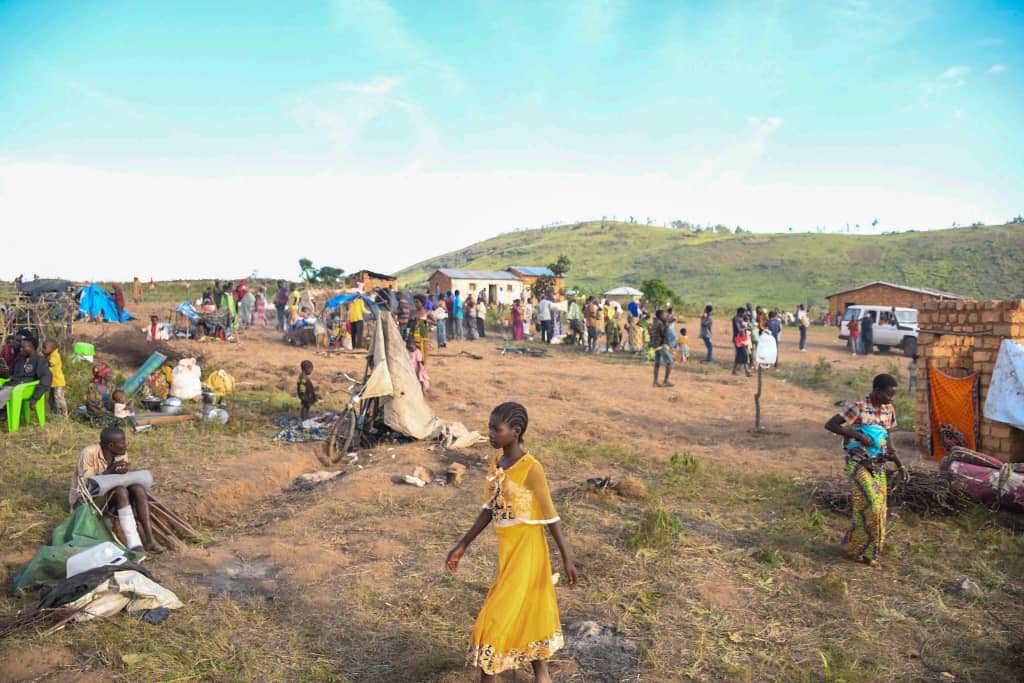
15,000 francs for a single trip : Bwagiriza refugees strangled by rising transport costs
SOS Médias Burundi
Ruyigi, July 21, 2026—For Congolese refugees in the Bwagiriza camp, located in the district of Ruyigi, Buhumuza province, in eastern Burundi, as well as for the surrounding host communities, reaching the center of Ruyigi has become increasingly difficult. The rise in motorcycle taxi fares, linked to the persistent fuel shortage and restrictions imposed on drivers, is increasing household expenses and limiting access to essential services.
To get to the center of Ruyigi, the residents of Bwagiriza rely almost exclusively on motorcycle taxis. But for several weeks now, the cost of transportation has increased sharply, according to numerous accounts gathered from refugees and drivers.
Previously, a motorcyclist could transport two passengers for a fare between 10,000 and 15,000 Burundian francs. Today, with new security measures limiting transport to one person per motorcycle, each passenger must pay approximately 15,000 Burundian francs.
This increase represents a significant burden for families already facing numerous economic hardships.
Ruyigi, an essential hub for refugees
The main town of the Ruyigi district remains a crucial transit point for Congolese refugees from the Bwagiriza camp and the host communities living in the surrounding area.
It is in this town where they go to buy supplies at the central market, access more specialized healthcare, take buses to other provinces of Burundi, complete administrative procedures, conduct financial transactions, or carry out business activities.
But the increase in transportation costs is now complicating these journeys, according to several residents.
Small refugee business owners see their incomes decline
For refugees running small businesses, this situation presents an additional obstacle.
Feza, a Congolese refugee living in the Bwagiriza camp, regularly goes to the Ruyigi central market to buy goods for resale within the camp.
“Before, I spent about 10,000 Burundian francs for the round trip to the Ruyigi market. Now, I have to budget nearly 30,000 Burundian francs, especially when I’m transporting goods. It’s a very high cost for us,” she explains.
She says this price increase significantly reduces their profits.
“Once at the camp, we resell these products in a context where the purchasing power is very low. Many customers buy on credit and take a long time to repay. Our profits are decreasing more and more, and it’s becoming difficult to support our families,” she testifies.
Motorcycle taxi riders also speak of their difficulties.
Motorcycle taxi riders also say they are suffering the consequences of the fuel shortage and the new restrictions.
A motorcyclist, speaking on condition of anonymity, explains that they are often forced to buy fuel on the black market, where prices far exceed official rates.
“Finding fuel has become a real struggle. We are very often forced to buy it on the black market in Ruyigi, where prices are extremely high,” he says.
According to him, the restriction to one passenger per motorcycle has also disrupted their business.
“Before, when we transported two passengers, each paid part of the fare, which made transportation more affordable. Now, with only one passenger, we are forced to raise the price to cover the cost of fuel, motorcycle maintenance, and other expenses related to our work. We understand the difficulties faced by our customers, but we too are facing a very complicated situation,” he adds.
A situation that exacerbates
vulnerability
Residents of Bwagiriza believe that the increase in transportation costs is exacerbating their economic and social vulnerability. Some traders are now limiting their travel, while others are postponing medical appointments due to a lack of sufficient funds.
The Bwagiriza camp, located in the district of Ruyigi, Buhumuza province, hosts Congolese refugees who rely heavily on the urban center of Ruyigi for many essential services.
Along with the Nyankanda camp and the Busuma site, Bwagiriza is one of the places whose residents regularly travel to Ruyigi for their daily needs.
For many refugees and members of host communities, the increase in transportation costs represents an additional hardship in a region where economic opportunities remain limited.
You might also like
DRC (Bijombo) : Banyamulenge civilians hunted down, thousands displaced in a new spiral of violence
SOS Médias Burundi Bukavu, April 6, 2026 — The security situation is rapidly deteriorating in the Bijombo area, located in the Uvira territory of South Kivu province, in eastern Democratic

Ngozi: Musasa refugee camp gets a new maternity building
The Congolese refugee camp of Musasa in the province of Ngozi in northern Burundi has a new maternity building. Congolese refugees, like other inhabitants of the Musasa area, say they

Returned but threatened : refugees accuse political and security networks of blocking land restitution
SOS Médias Burundi Makamba, May 31, 2026 – Behind the mass return of Burundian refugees from Tanzania lies a reality far more complex than the official rhetoric of “voluntary return”