
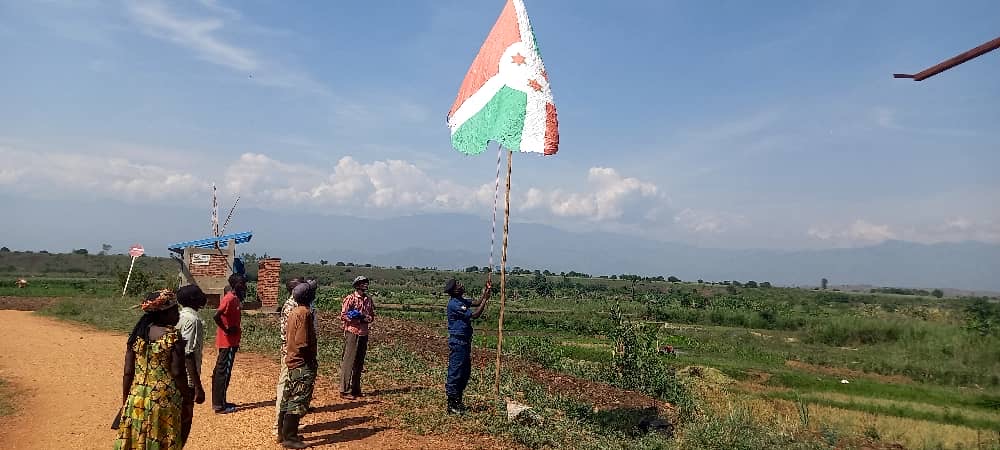
Is the Burundian border receding? Authorities point to erosion and human activity
SOS Médias Burundi
Bujumbura, August 6, 2026 – Burundian authorities are raising the alarm about the risks of gradual changes to the natural borders with Rwanda and the Democratic Republic of Congo (DRC). They cite riverbank erosion and certain human activities which, according to them, could affect the territorial boundaries along the Rusizi and Ruhwa rivers.
In a letter dated August 3, 2026, addressed to the district administrators of Ntahangwa, Mpanda, Bukinanyana, Cibitoke, and Mugina, the governor of Bujumbura province, located in western Burundi, Aloys Ndayikengurukiye, reports a situation deemed worrying. The communes concerned border Rwanda in the northwest and the Democratic Republic of Congo (DRC) in the west and northwest of the country.
According to this document, the National Commission for Border Demarcation conducted an inspection mission along the Rusizi and Ruhwa rivers from July 13 to 16, 2026. This mission reportedly observed that several activities carried out on the riverbanks could contribute to changes in the riverbeds and gradually alter the border areas.
Human activities accused of exacerbating erosion
The letter indicates that the Rusizi and Ruhwa rivers have changed their course and now flow more towards Burundian territory. This natural evolution is allegedly exacerbated by certain practices observed by the riverside communities.
Among the activities cited are farming on the riverbanks, artisanal gold mining, brickmaking, the lack of bank protection, and other practices likely to accelerate erosion. The authorities also deplore the fact that some administrative officials have turned a blind eye to these activities, or even authorized them.
Measures to protect borders
To preserve the integrity of national borders, several measures have been announced.
Joint missions bringing together administrative officials, security services, and defense forces will be organized in the affected municipalities to assess the situation and make coordinated decisions.
The governor also calls for the strict application of Article 5 of Law No. 1/02 of March 26, 2012, concerning the Water Code, which stipulates a 25-meter buffer zone along riverbanks.
The planting of bamboo, reeds, and other plant species capable of stabilizing riverbanks is recommended. All activities likely to damage the riverbanks must be prohibited. District administrators are urged to raise public awareness about laws relating to the protection of the environment and waterways.
Regular monitoring must be ensured, with reports being submitted to the relevant authorities. Sanctions are also announced against administrative officials who fail to comply with these directives.
An issue that reignites the border debate
This decision, however, reignites discussions on the management of Burundi’s borders. Some observers question the importance given to changes in riverbeds along the border with Rwanda and the DRC, while historical issues related to the delimitation of certain borders, particularly in the Bugufi region on the border with Tanzania, continue to fuel debate.
These questions reflect a complex history of borders in the Great Lakes region, marked by historical, legal, and diplomatic dimensions. Resolving these issues requires dialogue between the states concerned, in accordance with international law.
You might also like

Gasorwe : a CNL member kidnapped
Viateur Nzigo, member of the CNL party (National Congress for Freedom) was kidnapped from his home in the district of Gasorwe in Muyinga province (northeastern Burundi) on the morning of

Bubanza: two Imbonerakure including a hill leader beat up a septuagenarian
A septuagenarian is in bed at his home on Gahwazi1 hill without any medical care following the violence inflicted on him by two Imbonerakure (members of the CNDD-FDD party’s youth


Burunga : the opposition muzzled even before the village elections
SOS Médias Burundi, Burunga, August 11, 2025 – In Burunga, in the south of the country, while some candidates registered for the village elections have been campaigning for nearly a