
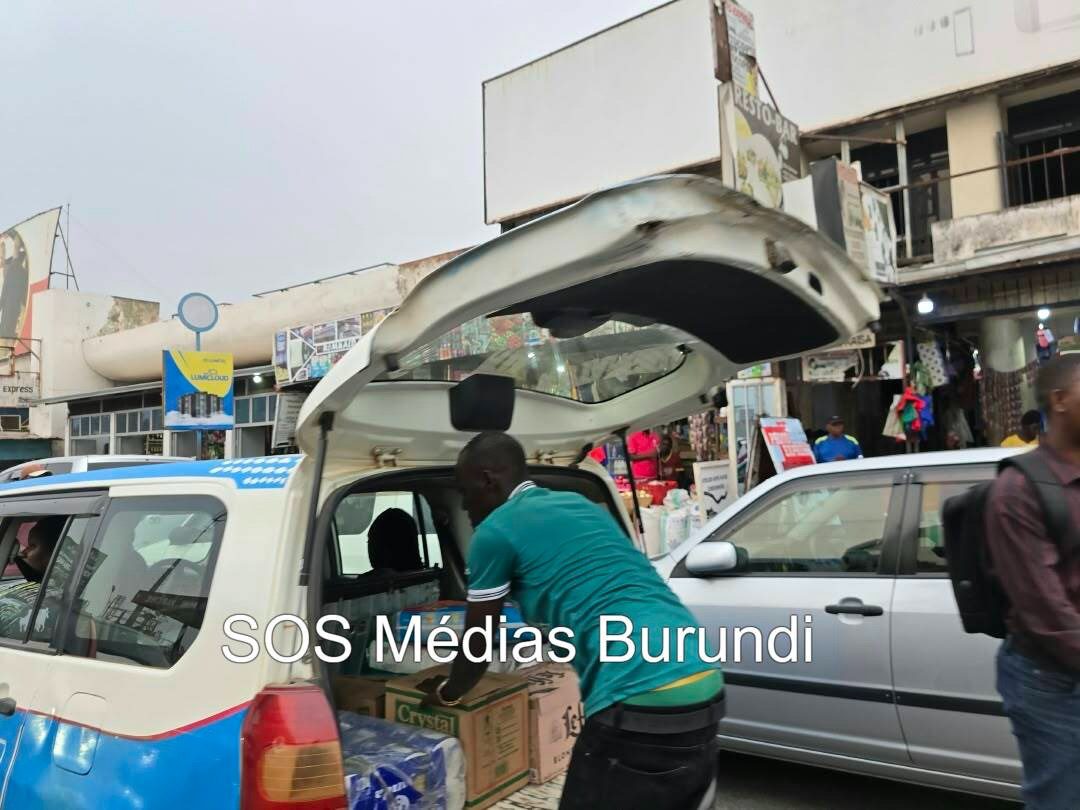
Bujumbura : 5,000 francs to operate—”canga canga” drivers denounce extortion
SOS Médias Burundi
Bujumbura, September 16, 2026—In Burundi’s commercial capital, home to the country’s main commercial activities and a large share of its services, a persistent fuel shortage continues to disrupt commuting. Shared taxis, commonly known as “canga canga,” serve as a makeshift solution for thousands of residents facing a scarcity of buses. However, for many drivers, this line of work also brings tensions with the police and demands for informal payments—practices they strongly denounce.
Police officers are stationed at various downtown parking areas to regulate traffic and transport. Yet, with buses becoming scarce, many taxi drivers are banding together to transport multiple passengers at once and share costs. This practice allows residents with limited means to travel to and from work at a lower cost than a private ride.
The situation has been complicated by official crackdowns on private cars used to carry passengers. These vehicles are not authorized to operate as public transport; owners are expected to use them for personal travel—specifically for “business and leisure.”
Drivers accuse the police
Drivers interviewed in the capital claim they are frequently chased away from certain locations by police officers who accuse them of parking in prohibited areas.
According to several accounts gathered by SOS Médias Burundi, some drivers must pay at least 5,000 Burundian francs per vehicle to continue operating without harassment. Those who refuse to pay risk having their registration documents confiscated and facing fines, particularly during checks by the Special Traffic Police (PSR).
“We are asked for money to be allowed to work.” “If you don’t pay, they take your documents,” says a driver speaking on condition of anonymity.
If confirmed, these accusations point to a system of informal levies that places a direct burden on drivers and, consequently, on passengers.
Passengers foot the bill
In a context where public transport is already inadequate, every additional expense is passed on to the fares charged to users.
Residents sometimes spend hours waiting for a bus. “Canga canga” vehicles thus represent one of the few alternatives for those who absolutely must travel. However, rising operating costs and the informal payments reported by some drivers drive up the cost of transport.
Residents also lament that private individuals attempting to give free rides to stranded people are prevented from doing so, even as the shortage of transport options affects a large segment of the population.
A lingering crisis
This situation unfolds against the backdrop of recurring fuel supply difficulties that Burundi has faced for several years. The crisis directly impacts transport, as well as the prices of goods and services and economic activity.
In Bujumbura, queues at gas stations and a scarcity of buses have profoundly altered commuting habits. For many residents, finding transport has become a daily ordeal.
Against this backdrop, “canga canga” drivers believe they are helping to alleviate the hardships faced by city dwellers. They are calling on the authorities to establish clear regulations that would allow them to operate legally, without—as they claim—being subjected to informal payments.
The question now is how the authorities can balance the regulation of public transport and the fight against illegal practices with the urgent mobility needs of a population grappling with a persistent fuel shortage.
You might also like

Nyanza-Lac : five persons in detention
Since Wednesday, two employees of the Nyanza-Lac hospital in Makamba province (southern Burundi) and three security guards have been detained in the custody of the Makamba provincial prosecutor’s office. They
Bubanza : Regideso’s open manholes become “gravelands” for passersby
SOS Médias Burundi Bubanza, August 13, 2026 — Several manholes belonging to the Water and Electricity Production and Distribution Authority (Regideso), located on public roads in the center of Bubanza,

Burundi: the World Bank intends to revive the country
The World Bank has promised to give nearly half a billion US dollars to the Burundian government to improve the living conditions of the Burundian citizens, said the Burundian finance