DRC : Joseph Kabila takes the lead of a politico-military front to overthrow Tshisekedi
SOS Médias Burundi
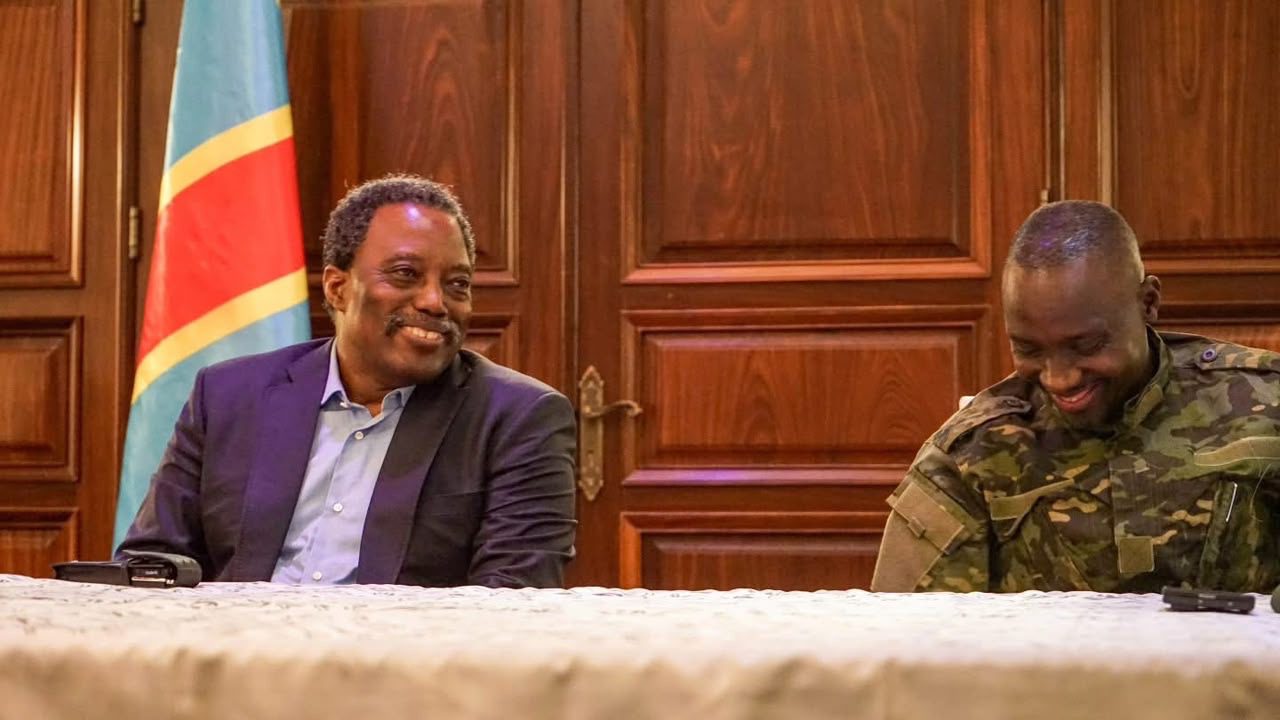
Goma, October 13, 2026 — Former Congolese President Joseph Kabila has taken the helm of the Front for the Refoundation of the Nation (FRN), a new politico-military movement announced Monday, October 12, in Goma, the capital of North Kivu province and until now the headquarters of the AFC/M23 politico-military coalition. The movement announced the dissolution of the Congo River Alliance (AFC), of which it describes itself as the successor, and declared its ambition to end President Félix Tshisekedi’s rule, including by force.
The new structure was announced following meetings held on October 10 and 11 in Goma. This marks a new stage in the political and military realignment surrounding the AFC/M23, which controls several strategic areas in eastern Democratic Republic of Congo (DRC).
Joseph Kabila at the top of the movement
Joseph Kabila takes the helm of the FRN. Corneille Nangaa and Bertrand Bisimwa are appointed vice-presidents, without distinction of rank between the two. Major General Emmanuel Sultani Makenga, Chief of Staff of the Congolese Revolutionary Army (ARC), the armed wing associated with the AFC/M23, is also among the leaders of the new movement.
Freddy Kaniki becomes Secretary General, Benjamin Mbonimpa Deputy Secretary General, and Désiré Rukomera Permanent Secretary of the founders’ council.
The founders of the FRN accuse the government of Félix Tshisekedi of constitutional violations, corruption, embezzlement of public funds, repression, and violence against civilians. They also denounce the deterioration of public services and the worsening of community tensions.
They further accuse the Kinshasa authorities of collaborating with the Democratic Forces for the Liberation of Rwanda (FDLR), a Rwandan Hutu armed group, some of whose members are accused of participating in the 1994 genocide against the Tutsis, as well as with the Allied Democratic Forces (ADF), an armed group of Ugandan origin that has pledged allegiance to the Islamic State.
The founders invoke Article 64 of the Congolese Constitution to justify their actions. They assert their intention to use all means, including force, to end the regime of Félix Tshisekedi. They promise, in particular, the restoration of institutions, respect for fundamental rights, a more equitable distribution of wealth, national reconciliation, and the return of refugees and those forced into exile.
“There is danger; to not act is to betray,” they declare.
Mixed reactions
The announcement of the creation of the FRN has sparked numerous reactions on social media and in WhatsApp groups among Congolese, Burundians, and Rwandans, both in the country and in the diaspora. Several international media outlets have also reported on this new political realignment.
Some observers criticize Joseph Kabila’s return to the forefront of the political and military scene. “We need to distinguish ourselves. He is the first former president in the world to become a rebel again after 18 years in power,” says an activist.
Others consider this development predictable. In June 2016, United Nations experts had already addressed, in a report on the situation in the DRC, Joseph Kabila’s role and his alleged links with the AFC/M23.
President of the DRC from 2001 to 2019, Joseph Kabila gradually clashed with his successor, Félix Tshisekedi. In a speech on October 9, he again criticized the way the country was being run by the government in power.
In September 2025, the Congolese High Military Court sentenced him to death in absentia, notably for treason and supporting an insurrection. The former president denies the charges against him.
The future of the AFC/M23 in question
The announcement of the AFC’s dissolution does not automatically mean the disappearance of the M23 or the ARC, its associated armed wing. The concrete consequences of this restructuring on the functioning of the coalition and the conduct of military operations remain to be seen.
The AFC/M23 controls several strategic areas in eastern DRC, particularly around the Rubaya mining site in North Kivu, considered one of the world’s major coltan deposits. The areas under its control extend from Bunagana, on the Ugandan border, to several localities in South Kivu near Burundi.
The coalition seized Goma in January 2025, then Bukavu in February of the same year. In December 2025, its fighters also occupied Uvira, in South Kivu, before announcing their withdrawal in January 2026, amid strong international pressure, particularly from the United States.
Located near Bujumbura, Burundi’s commercial capital, Uvira occupies a strategic position due to its proximity to the Burundian border. Bujumbura is home to several United Nations agencies and central government offices. The coalition also announced the withdrawal or repositioning of its fighters in certain areas of the Rusizi Plain.
The AFC/M23 is also allied with Twirwaneho, an armed group composed mainly of Banyamulenge, a Congolese Tutsi community.
Kinshasa accuses Rwanda of supporting the AFC/M23, which Kigali denies. United Nations experts have, however, documented evidence of Rwandan support for the coalition. For its part, Rwanda accuses Congolese authorities of collaborating with the FDLR, an accusation rejected by Kinshasa.
On the ground, Congolese government forces rely in particular on the Armed Forces of the Democratic Republic of Congo (FARDC), Wazalendo fighter groups, and Burundian soldiers deployed alongside the Congolese army.
The creation of the FRN thus opens a new political and military phase in the Congolese crisis. It raises questions about the future of the AFC/M23, the role now assumed by Joseph Kabila, and the consequences of this realignment for peace efforts.
As political and military realignments continue, civilians continue to pay a heavy price in the conflict, facing forced displacement, armed violence, loss of life, and a worsening humanitarian crisis in eastern DRC.
You might also like
Musasa : after months of thirst, water returns… but the crisis threatens to continue
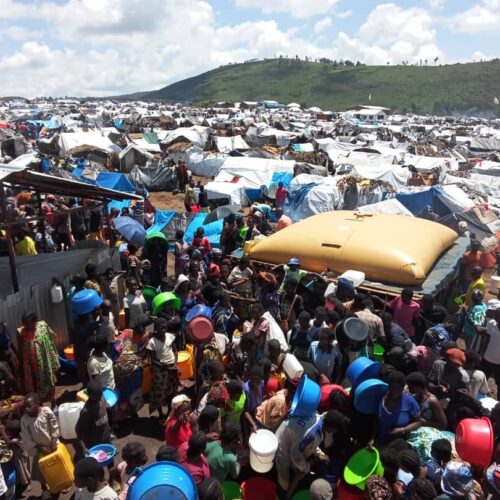
SOS Médias Burundi Musasa, July 16, 2026 – After more than six months marked by a severe shortage of drinking water, Congolese refugees in the Musasa camp, located in Butanyerera
South Kivu : Colonel Fureko, member of the Banyamulenge community and Wazalendo officer arrested, accused of links with the M23
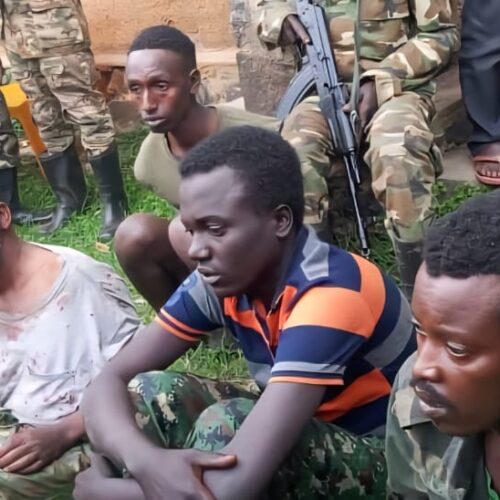
SOS Médias Burundi Bukavu, November 10, 2025 – Colonel Fureko, a member of the Banyamulenge community and an officer recently integrated into the local Wazalendo militias, supported by the Congolese

Buhumuza : a pro-CNDD-FDD activist sows terror ahead of the 2025 elections
SOS Médias Burundi A few months before legislative and district elections scheduled for 2025 in Burundi, residents of the Buhumuza region (eastern part of the country) are denouncing violent remarks