Burundi : the government exposes 13 alleged spies and targets the Banyamulenge
SOS Médias Burundi
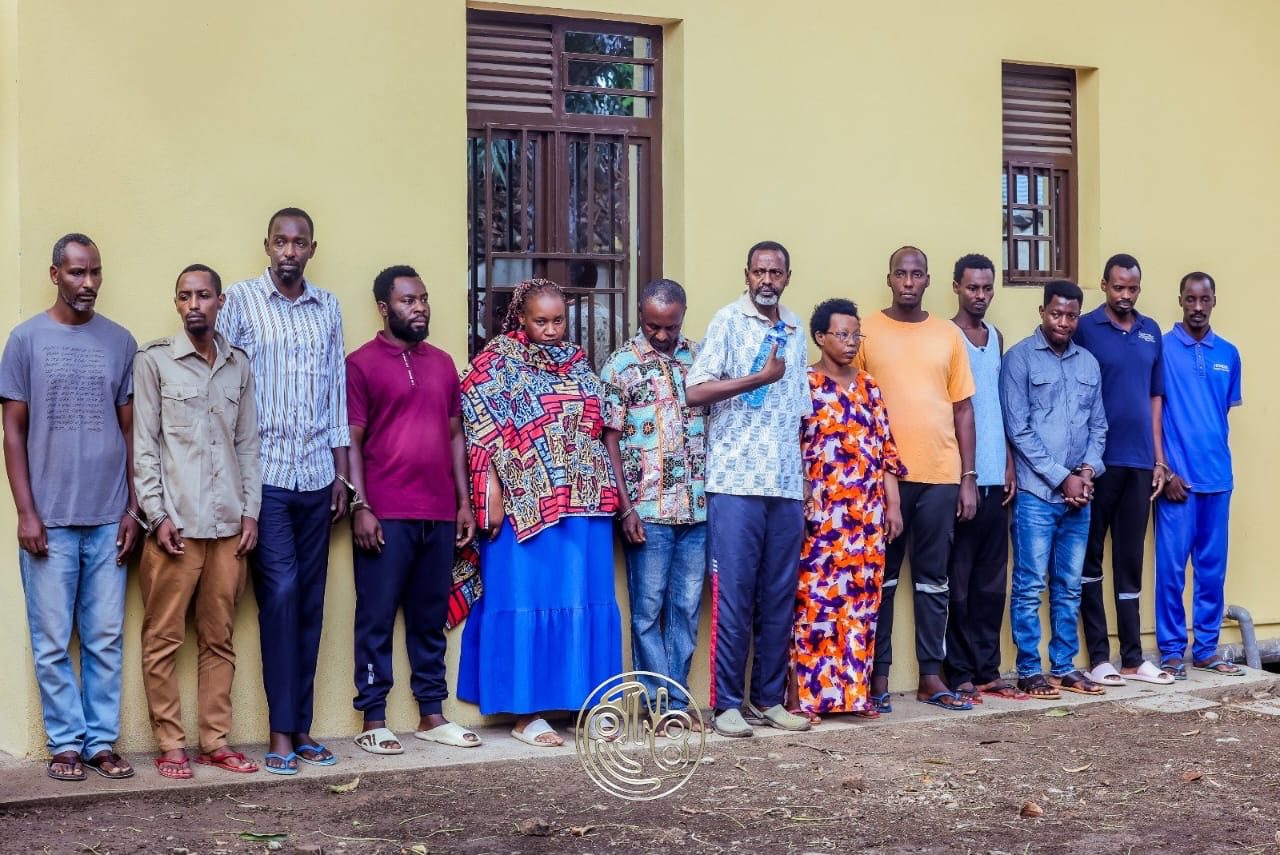
Bujumbura, October 11, 2026 — Burundian authorities presented 13 people, mostly Banyamulenge refugees, to a select group of journalists on Friday, October 9. The individuals are accused of spying for Rwanda and armed groups operating in eastern Democratic Republic of Congo (DRC). The suspects, including several pastors, were shown in handcuffs at the National Intelligence Service (SNR) headquarters in Bujumbura, Burundi’s commercial capital.
At the event, the spokesperson for the Ministry of Security, Pierre Nkurikiye, called on Burundians to monitor the Banyamulenge and to stop renting houses to them.
According to the authorities, the 13 people, including 11 men and two women, had been detained by the SNR for nearly a month. They are accused of, among other things, espionage for the enemy, undermining state security, using forged documents, and harming the national economy.
Pierre Nkurikiye asserts that the suspects collaborated with armed groups active in the region, including the AFC/M23, Red-Tabara, a Burundian armed group based in eastern DRC, and Twirwaneho, an armed group composed primarily of fighters from the Congolese Tutsi minority, the Banyamulenge.
Authorities also accuse some suspects of using religious networks to facilitate the production and circulation of forged documents. Relatives and members of their congregation dispute these accusations and denounce the targeting of their religious leaders.
Pastors among those presented
Mark Ntayoberwa, head of the Stone Evangelical Church, whose Burundian headquarters are located in Ngagara, north of Bujumbura, is among those presented. His church also has branches in Goma and Bukavu, the capitals of North Kivu and South Kivu, respectively, which have been controlled by the AFC/M23 since early 2025. The founder of this religious denomination resides in Goma, which has become the AFC/M23 headquarters.
Gédéon Nzayitegaho, pastor of the Carmel Church in Mutakura, Bujumbura, is also among the suspects. His church has branches in Ngozi, in northern Burundi; Ruyigi, in the east; Fota, in the center; and Rutana, in the southeast.
Jalos Nkunda Kilaya, head of the Evangelical Church in the Great Lakes Region (EEPGL), is also among those presented. According to witnesses, he was arrested on September 8 at Bujumbura International Airport as he was preparing to travel to Kigali, Rwanda. He was reportedly in possession of a Rwandan passport. His wife and a student who was staying with him were arrested in the following days during a search conducted by security services, particularly focusing on a phone.
Various sources describe him as a double agent. SOS Médias Burundi was unable to independently verify this allegation.
A close associate of one of the implicated religious leaders rejects the accusations and believes that the presence of branches of these churches in eastern DRC does not justify suspicions of espionage.
“Our churches are not places of politics. The pastors who were arrested have nothing to do with politics.” Accusing them of espionage simply because their churches have branches in eastern Congo would be tantamount to considering all pastors with congregations in Goma as spies. It’s unjust. The Burundians who legally represent our churches have nothing to do with politics. But simply because they are Tutsis, they are associated with politics and Rwanda,” this source denounced.
A call to monitor the Banyamulenge
During the presentation of the suspects, Pierre Nkurikiye called on the population to monitor members of the Banyamulenge community and refuse to rent them housing.
“We must monitor their movements and stop renting them houses, especially here in Bujumbura,” he declared.
These remarks are causing concern within this community, some of whose members have fled the violence and insecurity in eastern DRC to seek refuge in Burundi.
A community leader, a refugee in Burundi since 2008, believes that the accusations must be examined individually and with respect for the rights of the people concerned.
“If someone is suspected, there must be evidence and a transparent trial. An entire community cannot be considered suspect. Today, almost all Banyamulenge are living in insecurity in Burundi following the statements of spokesperson Pierre Nkurikiye. We fled insecurity in Congo to find protection, but now, in the country that was supposed to protect us, those who are meant to ensure our safety are making us relive the very insecurity we fled,” he laments.
He calls on the Burundian government and the international community, particularly the United Nations High Commissioner for Refugees (UNHCR), to take measures to protect the Banyamulenge.
“If one Banyamulenge commits a wrong, it doesn’t mean that all Banyamulenge must be victims. We fled discrimination and hatred, but today, we see the same phenomena in Burundi that we fled from,” he adds.
Presentations reminiscent of years of repression
For several weeks, Burundian authorities have been issuing repeated warnings about possible armed attacks and infiltrations from eastern DRC, which they attribute to groups allegedly receiving support from Rwanda. Kigali rejects these accusations.
In recent days, Pierre Nkurikiye has repeatedly presented individuals at the National Intelligence Service (SNR) headquarters, describing them as Burundian or Rwandan nationals. According to the authorities, some claimed to have been recruited for military training with Rwandan assistance in order to attack Burundi.
Journalists invited to these presentations were not allowed to ask questions that would enable independent verification of the statements attributed to the individuals presented.
This practice is reminiscent of the public presentations of detainees by the Burundian police and intelligence services between 2015 and 2017, following the attempted coup in May 2015 against President Pierre Nkurunziza. This period was marked by a crackdown targeting individuals suspected of supporting the opposition or armed rebellion, particularly in certain neighborhoods of Bujumbura and in the former Bujumbura province.
Former detainees subsequently stated that some confessions were obtained under torture or threats of death. In this context, the presentation of handcuffed suspects before journalists, without the possibility of freely questioning them, raises questions about respect for the presumption of innocence and guarantees of a fair trial.
Banyamulenge refugees also targeted in camps
Recently, refugee camps hosting members of the Banyamulenge community have also been subject to increased surveillance and are targeted by operations of the Burundian public security services.
In Bwagiriza, eastern Burundi, at least three Banyamulenge refugees have been arrested or abducted by police and intelligence services since September. One of them remains missing.
This situation is fueling concerns within the community, some of whose members fear that accusations against individuals will lead to widespread suspicion of Banyamulenge refugees living in Burundi.
A Tutsi minority caught between the front lines
The Banyamulenge are a Congolese Tutsi minority historically established in the highlands of South Kivu, particularly around Minembwe. For decades, their community has faced conflicts related to issues such as nationality, access to land, political representation, and security.
Twirwaneho, an armed group composed primarily of Banyamulenge fighters, claims to defend this community. Rwanda has forged closer ties with the AFC/M23, a Tutsi-dominated politico-military coalition that has controlled Goma since January 2025, Bukavu since February 2025, and several other strategic areas in North and South Kivu.
Kinshasa and several international reports accuse Rwanda of supporting the AFC/M23, which Kigali denies. Burundi, for its part, has deployed soldiers from the Burundi National Defense Force (FDNB) in eastern DRC, alongside the Armed Forces of the Democratic Republic of Congo (FARDC) and the Wazalendo militias, which are supported by Kinshasa, to fight the AFC/M23 and its allies.
In this context of regional confrontation, the accusations leveled against Banyamulenge refugees in Burundi raise concerns about an increase in their vulnerability. Members of the community are demanding that suspicions against individuals be substantiated with evidence and examined through transparent judicial procedures, respecting the right to a defense and the presumption of innocence.
They are calling on the UNHCR and human rights organizations to closely monitor the situation to ensure that accusations against certain individuals do not escalate into collective suspicions against an entire community.
You might also like
Uvira (DRC) : a Mai-Mai leader who collaborates with Burundian authorities arrested
The self-proclaimed general Kapapa of the Mai-Mai was arrested this Saturday afternoon. The Congolese army arrested him at the Kiliba Ondes border between Burundi and the DRC. He had with
Nyiragongo : a group of armed young people arrested in Rukoko
The Congolese security services got their hands, on this Thursday, a band of armed young people in the village of Rukoko, Munigi groupment in the territory of Nyiragongo. It is north

Kirundo : a sexagenerian who traded minerals to Rwanda missing
Augustin Mirerego has been missing for more than two months. This 68-year-old trader from the province of Kirundo (northern Burundi) was reportedly killed by the leader of Imbonerakure (members of