
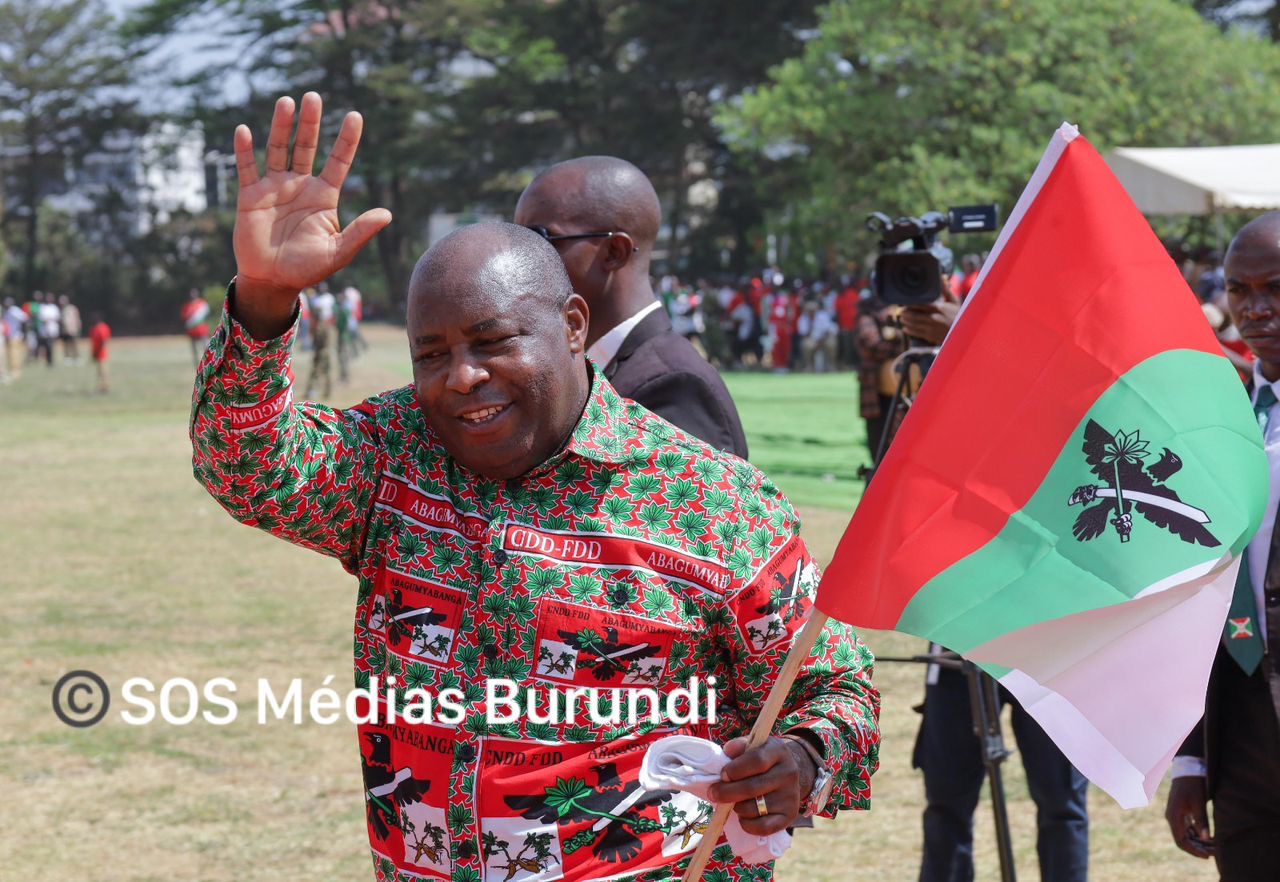
Burundi : Ndayishimiye almost alone in the race, main opposition forces sidelined
SOS Médias Burundi
Bujumbura, November 13, 2026 — The race for Burundi’s presidential election on May 3, 2027, is opening in a political landscape marked by the dominance of the ruling party and the weakening of the main opposition forces. On Friday, the Independent National Electoral Commission (CENI) began receiving applications. Évariste Ndayishimiye, the CNDD-FDD candidate and incumbent president, was the first to submit his application, followed by Abel Gashatsi, the UPRONA candidate.
Both men went to the CENI headquarters in the commercial capital, Bujumbura. Applications will be received until November 22.
Évariste Ndayishimiye is seeking a second seven-year term. Designated as the CNDD-FDD candidate last April, he thanked his party’s activists for their trust and mobilization, particularly in collecting the 100 million Burundian francs required as a deposit for each candidacy.
The Head of State expressed his hope that the 2027 elections would be exemplary in terms of democracy. He also warned local administrative officials that they would be held responsible for any unrest within their jurisdictions.
Abel Gashatsi, candidate of UPRONA, also submitted his application. He affirmed that his party was ready to participate in the electoral process. He called on the Independent National Electoral Commission (CENI) to preserve its independence and guarantee credible elections.
Candidates must provide, among other things, identity documents, photographs, a medical certificate, a list of 200 endorsements, and a deposit of 100 million Burundian francs. The list of endorsements must reflect the country’s diversity, particularly in terms of gender, ethnicity, and region, without the individuals in question necessarily being members of the candidate’s party.
In addition to Ndayishimiye and Gashatsi, four other figures have announced their intention to run for the presidency. These are Gabriel Banzawitonde, the APDR candidate; Francis Rohero, of the FPI; Gaspard Kobako, of the AND Intadohoka; and Valentin Kavakure, of the FPN Imboneza. The actual filing of their applications remains to be confirmed.
Endorsements that strengthen the presidential camp
The incumbent president also benefits from the support of eleven political parties that announced their backing for his candidacy on November 11. These parties have pledged to pool their human, financial, and technical resources to campaign for Ndayishimiye.
This alliance, however, raises the question of their electoral strength. None of these parties won any seats in the June 2025 parliamentary elections.
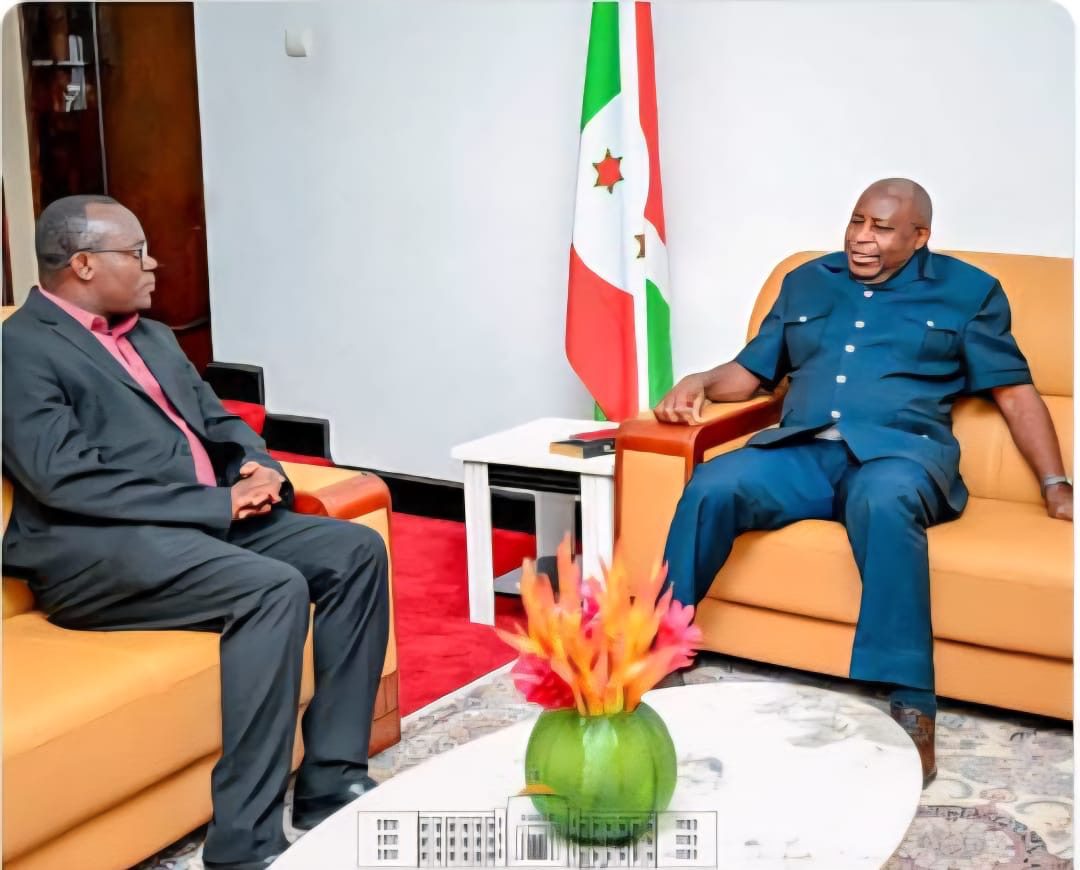
Évariste Ndayishimiye receives Father Abel Nduwimana at the presidential palace (Photo : Presidency of Burundi/SOS Médias Burundi)
The president also received Father Abel Nduwimana. In a post on the social media X, he presented his meeting with the cleric as a positive sign for Burundian democracy. Father Nduwimana, for his part, announced his intention to run for office. However, public information about his political background, positions, and motivations remains limited. The filing of his application with the CENI (Independent National Electoral Commission) had not been confirmed at the time of publication.
The Frodebu party withdraws, Rwasa removed from the leadership of the CNL (National Liberation Committee)
On the opposition side, several prominent figures and parties remain on the sidelines of the race. Frodebu, the party founded by Melchior Ndadaye, the first democratically elected Hutu president who was assassinated in October 1993, has announced that it will not field a candidate in the 2027 presidential election.
The party justifies this decision by citing the lack of democratic guarantees, its concerns about the transparency and inclusiveness of the electoral process, and the irregularities it denounces in the 2025 elections. It also demands that the truth be established regarding the assassination of its founder.
Another notable absence is that of Agathon Rwasa, who came in second behind Évariste Ndayishimiye in the 2020 presidential election. The former leader of the National Congress for Liberty (CNL), long considered one of the leading figures of the opposition, now finds himself without his political party.
The CNL was suspended in June 2023 by the Ministry of the Interior. Rwasa’s situation became even more complicated in 2024 when he was ousted from the party leadership following an internal crisis that deeply divided the organization. Challenged by some CNL officials, he lost control of the leadership to Nestor Girukwishaka, who took his place.
This ouster deprived him of the leadership of the party he had helped build and of which he had been the leading figure. During the June 2025 parliamentary elections, he attempted to participate in the race as part of the Burundi Bwa Bose coalition. However, the electoral authorities rejected his candidacy.
The CNL won 27 of the 100 directly elected seats in the National Assembly in the 2020 parliamentary elections. Its exclusion from the 2025 elections further reduced the opposition’s presence in the institutions.
UPRONA, another long-established party, is also struggling to gain influence in the political landscape. In the June 2025 legislative elections, the party garnered only 1.38% of the vote, failing to win any seats in the National Assembly. It now finds itself relegated to a secondary role, even that of an ally of the CNDD-FDD, despite its announced participation in the presidential election.
A competition dominated by the CNDD-FDD
The ruling party, the CNDD-FDD, has dominated Burundian politics since 2005. Originating from the former rebel movement, it came to power following the political process initiated by the Arusha Peace and Reconciliation Agreement, signed in August 2000.
In the June 2025 legislative elections, the ruling party won all 100 directly elected seats in the National Assembly. This landslide victory occurred in a context where the main opposition party, the CNL, was unable to participate in the election.
Since the 2015 political crisis, ?triggered by Pierre Nkurunziza’s candidacy for a third term, the political space in Burundi has shrunk considerably. Restrictions targeting opponents, pressure on the media, and violations of political aefreedoms have been regularly denounced by human rights organizations.
A few months before the 2027 presidential election, Évariste Ndayishimiye is therefore entering the competition with a party that largely controls the institutions, while several of his main opponents are absent, sidelined, or weakened. The support of eleven parties without parliamentary representation broadens the list of his declared backers, without, however, creating an opposition capable of truly challenging him.
This situation reignites the debate on political pluralism and the conditions for genuine democratic competition in this small East African country.
…….
Évariste Ndayishimiye, the CNDD-FDD candidate for the May 2027 presidential election, during a day dedicated to the fImbonerakure, the youth wing of the ruling party, organized in the commercial capital, Bujumbura. He is seeking a second term as the president of Burundi (SOS Médias Burundi)
You might also like

Muyinga : the presidential prayer overshadowed by extortion and forced mobilization
SOS Médias Burundi Muyinga, June 19, 2026 – Presented as a major gathering of faith and gratitude to God, the presidential prayer organized in Muyinga, in the Buhumuza province of

Kirundo : kiongozi wa Imbonerakure azuiliwa jela
Kiongozi wa Imbonerakure (mjumbe wa tawi la vijana la chama cha CNDD-FDD) mkaazi sa kata ya Nyange-Bushaza kwenye makao makuu ya Kirundo (Kaskazini mwa Burundi) amemaliza wiki moja akiwa katika


Burundi : “Five years of promises, five years of hardship” – In Bujumbura, city dwellers paint a grim picture of the Ndayishimiye regime
SOS Mëdias Burundi Bujumbura, June 19, 2025 Five years after his arrival at the helm of Burundi, President Évariste Ndayishimiye finds himself facing a disillusioned population. In Bujumbura – the