
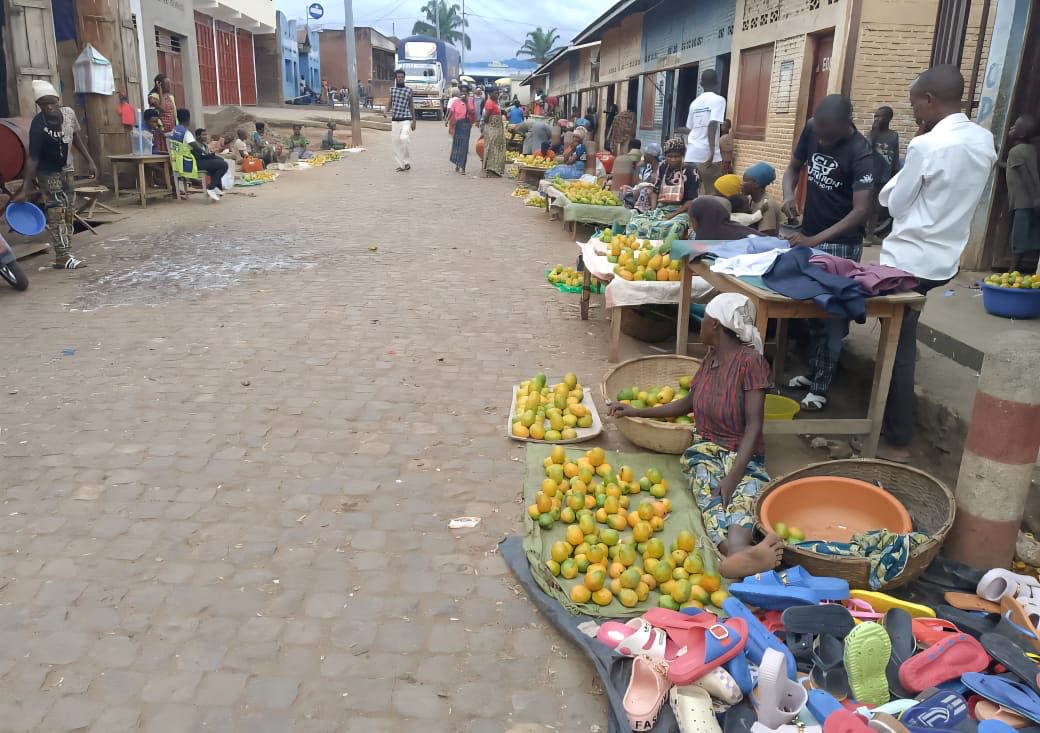
Photo of the week-Bubanza : the “Peace Torch” mobilizes the population, bringing local activity to a standstill
The arrival of the “Peace Torch” in the Bubanza district—located in the province of Bujumbura, in western Burundi—on November 19, drew a large turnout from the local population. However, behind the scenes of the welcome organized for this national caravan, commercial activities were brought to a halt, and many schools suspended classes. This mobilization has raised questions regarding the methods used to ensure public participation in the event.
At the central market in Bubanza, merchants were forced to keep their stalls closed for nearly the entire day. The market did not reopen until 4:30 p.m.—just an hour and a half before its usual closing time.
This disruption took a toll on the merchants, some of whom have spoken out against the recurring interference with their livelihoods. They lament the loss of a full day’s work due to such events, noting that their income depends entirely on daily sales.
The education sector was not spared either. Most schools located in the Bubanza town center closed their doors as early as 10:00 a.m. so that pupils and teachers could take part in welcoming the Peace Torch.
Furthermore, there was a specific instruction regarding attire : pupils were required to wear civilian clothes rather than their school uniforms. This measure gave their presence the appearance of spontaneous public participation, rather than a mobilization orchestrated through the school system.
Yet, this mobilization comes at a time when many households are deeply engaged in agricultural work—activities that are essential to their very survival. For some residents, the time spent on these events also represents time lost for income-generating activities and agricultural work.
A twenty-year-old national caravan
The “Peace Torch” was initiated in Burundi in 2006 by former president Pierre Nkurunziza. Its stated objective was to promote peace, national reconciliation, and development through community-based activities. Since then, the caravan has traveled across the country, organized by the association Intwararumuri—a name that literally means “bearers of the light” in Kirundi, Burundi’s national language. It serves, among other things, as a framework for mobilizing the population around community development projects.
The 2026 edition marks the twentieth anniversary. Launched on November 13 at the Intwari Stadium in Bujumbura—the country’s commercial capital and largest city—by President Évariste Ndayishimiye, this year’s event is themed : “Let us preserve the peace we have achieved and work in alignment with our nation’s vision.”
The organizers have announced that the caravan will visit various districts throughout the country, involving participants in community development works and providing material support for specific local projects. The caravan is scheduled to conclude on December 10 at the Ingoma Stadium in Gitega, Burundi’s political capital.
Once again this year, the authorities are presenting the Torch as a symbol of peace and a tool for mobilizing the public around the national vision of an “emerging” Burundi by 2040 and a “developed” Burundi by 2060.
A narrative with an electoral undertone
In Bubanza, the event also took on a political dimension. Emmanuel Ntirandekura, the district secretary for the ruling party, the CNDD-FDD, suggested that the presidential election had already been won—by 100%.
According to him, the level of mobilization observed during the Torch’s visit served as a message to be conveyed to the President of the Republic. This statement comes just months before the 2027 presidential election. It lends an electoral tone to an event officially dedicated to peace and development—even though the election has yet to take place.
It also raises questions about the use of a national event for political messaging, especially when local officials from the ruling party interpret public participation as a sign of a guaranteed electoral victory.
Mobilization at the expense of daily activities
While the “Peace Torch” is officially presented as a symbol of unity and reconciliation, its passage through Bubanza highlights the consequences of how such events are organized. The closure of markets and the suspension of classes, in particular, raise questions about the priority given to economic activities and education during these types of events.
Peace and development—two goals frequently associated with this caravan—also entail the protection of people’s livelihoods, household subsistence and the continuity of children’s education.
Twenty years after its inception, the “Peace Torch” continues to draw crowds across the country. Yet, in Bubanza, its arrival served primarily to highlight the gap between the official rhetoric on peace and development and the constraints imposed on the population’s daily activities. A celebration of peace that manifests in the closure of markets, the suspension of classes, and declarations of electoral victory before the polls have even opened casts doubt on the true objectives behind this mobilization.
Our photo : fruit and vegetable vendors forced to display their goods on the roadside following the closure of the central market in Bubanza
You might also like
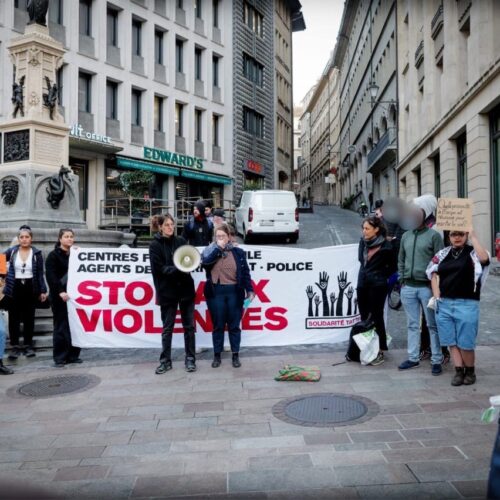
Photo of the week- Burundi : forced deportations from Switzerland, tense returns, and accusations of persecution denounced by experts
The return to Burundi of several young people deported from Switzerland is raising concerns and questions among their families, in a context already marked by economic hardship and persistent social

Photo of the week-Buhumuza : strict uniforms and “forced fields,” the governor under pressure
Since her arrival, the governor of Buhumuza, in eastern Burundi, Ms. Denise Ndaruhekere, has faced growing opposition. Her decisions, deemed “hasty” and “uncoordinated,” have caused frustration and concern among the
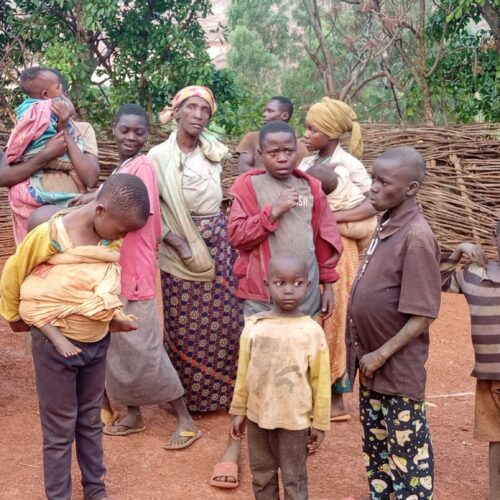

Photo of the week – Gitega : alcohol, a new scourge for women threatening family cohesion
In the province of Gitega, in central Burundi, a worrying phenomenon is growing : excessive alcohol consumption among women, including pregnant or breastfeeding mothers. This social scourge is weakening relationships,