Goma : several private media deprived of access to information
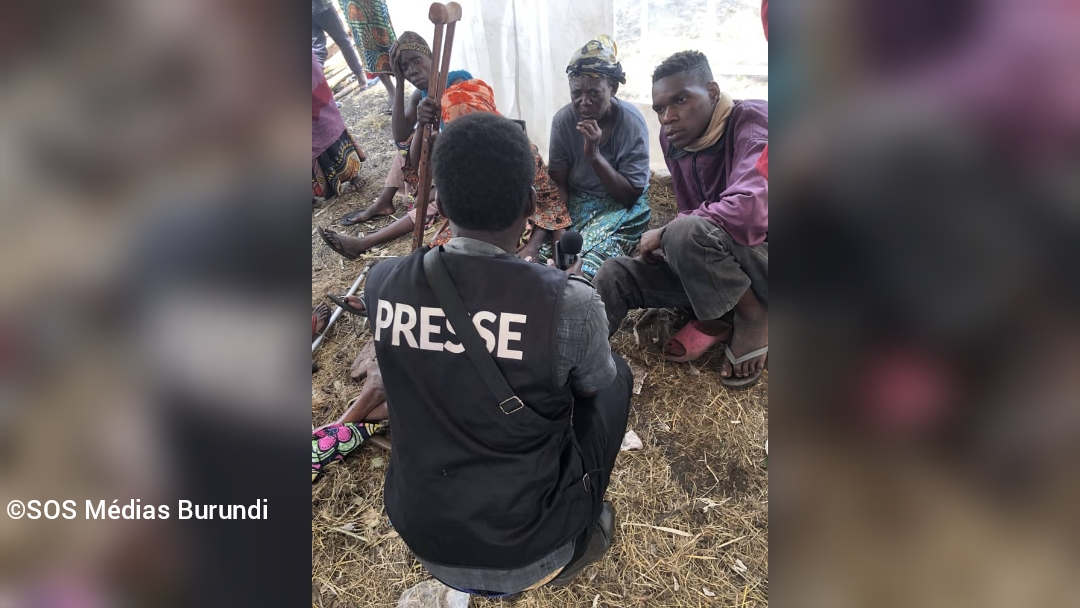
National and international media say they are excluded from covering facts that affect the current situation in the country and the region. Journalists protest against the fact that several activities that the press should cover to inform the public take place behind closed doors. They demand that access to information be guaranteed. INFO SOS Médias Burundi
Institutions opt for the media of their choice which broadcast what they want instead of giving the true version of the facts, deplored journalists.
“Press conferences and other press briefings organized by various national and international organizations are covered by selected media and refuse to open up to others”, testified a local journalist.
For example, the press conference held in Goma by the United Nations Security Council delegation last weekend raised several questions.
Several media did not have access to the media coverage.
“The United Nations had drawn up a list of journalists, not media. Thus, many journalists were not invited. This conference aimed to assess the security situation in the eastern part of the Democratic Republic of Congo and to formulate a solution with authorities in Kinshasa, MONUSCO and the regional force of east African states, which has the mission of restoring calm in the province of North Kivu”, explained a journalist.
“Among the media and journalists who did not have access to this conference, we can mention the Voice of America, Digitale Congo, the Volcanoes news, the Renouveau.NET, Kivumorningpost, actualité.Cd, Congo check and others”, specifies another journalist who said he was excluded.
“Among the invited journalists there were even those who are no longer in the career. They were invited following specific acquaintances with some MONUSCO protocol officers. Others were journalists but no longer work on behalf of the media whose names were on the list”, testified a journalist who took part in this conference.
Some civil society structures also complain that they were not received by the United Nations Security Council delegation.
“The United Nations did not want everything to be made clear, which is why journalists were not invited to this press conference. We are in a rule of law, a state where everyone has the freedom to express themselves and to give their point of view in relation to what is happening in the country”, insisted a local civil society actor.
Journalists are victims of intimidation by certain Congolese authorities, especially when they denounce the weakness of the army on the front line.
According to Journalistes en danger (JED), an organization defending rights of journalists in the DRC, at least 65% of journalists have been arrested by Congolese authorities, accusing them of giving the floor to the rebels in the eastern part of the vast central African country, especially in North Kivu where the loyalist army clashes with the M23, before being released.
Other journalists are killed in combat zones and this goes unnoticed.
You might also like
Bujumbura : grey areas surrounding the case of Ruboneka, arrested and rushed to Kinshasa
SOS Médias Burundi Bujumbura, July 29, 2025 – Arrested on Sunday, July 27 in Bujumbura, the commercial capital of Burundi, by Burundian security services, Laurent Ruboneka Musabwa, an employee of
Giharo : attempted arrest of a district leader of the UPRONA party
Usuel Ntakarutimana, leader of the UPRONA party (Union for National Progress) in Giharo district in Rutana province, southeast Burundi, was the victim of an attempted arrest by the district leader

Bubanza : qbandoned by their husbands, women sink, children pay the price
SOS Médias Burundi Bubanza, May 13, 2025 – In Bubanza, consequences of family abandonment are becoming increasingly dramatic. Two tragic events within the space of two weeks highlight the distress