
Burundi : Refugee families fleeing war, separated from loved ones and facing uncertainty
SOS Médias Burundi
Ruyigi, January 14, 2026 – The war in eastern DRC has caused thousands of civilians to flee, often separated from their families. The small east African nation has already taken in more than 100,000 Congolese since the beginning of December 2025, in addition to the 70,000 refugees already present earlier in the year. These populations live in precarious, often inhumane conditions that do not meet any international humanitarian standards, increasing the pressure on local infrastructure and available resources.
Families scattered by fighting
The clashes in eastern DRC, along the Kamanyola-Ruzizi Plain-Uvira-Makoboro line, have forced thousands of civilians to flee. The fighting pitted M23 rebels against the FARDC, the Congolese loyalist army, supported by Burundian troops and the Wazalendo group. In the confusion of gunfire and bombing, entire families were scattered.
Today, dozens, even hundreds, of children, women, and men are separated from their loved ones. Children, often left to fend for themselves or accompanied by only one parent, are among the main victims of this humanitarian crisis.
To escape the violence, some civilians crossed the border into Burundi. They were initially gathered in transit centers near the border before being transferred to the Busuma camp, which is receiving people from various transit sites. Others, unable or afraid to cross the border, have found refuge in neighboring villages, far from the fighting.
Shattered lives at Busuma camp
At Busuma camp, families are struggling to survive in extremely difficult conditions. An elderly couple recounts :
“We lived thanks to our children. When the war started, everyone fled however they could. We were separated. Today, we are here, without any news of them. They were the ones who sustained us. Now, we have nothing.”
Similarly, Ayisha, a refugee with her three children, confides :
“We fled in haste. My husband and my eldest son were in the fields. I was at home with the other children. We haven’t seen each other since that day.”
The border closed, families cut in two
Beyond the separations that occurred during the escape, the abrupt closure of the Burundi-Congo border, which took place just hours after the M23 rebels seized Uvira on the night of December 9-10, 2025, has isolated many families. Several Congolese who were in Burundi for trade, medical treatment, or family visits are now cut off from their loved ones.
Uvira is located just a few kilometers from Bujumbura, Burundi’s commercial capital, where the United Nations agencies and the central administration are concentrated. This strategic city in the far east of the Congo is also an economic engine for the small east African nation, reinforcing the region’s importance both humanitarianly and economically.
Célestine, a trader, testifies :
“I came to trade. The border was closed while I was still here.” My husband and children stayed in Sange. Since then, I have had no contact with them. I don’t know where they are or when I will be able to see them again.
A crisis embedded in a complex regional context
This humanitarian crisis is occurring within a highly complex and violent regional context. The FARDC, supported by Burundian troops and the Wazalendo militias, are fighting the M23 rebels, who were reactivated in 2021 and are now part of the Congo River Alliance (AFC).
The AFC/M23 controls several strategic areas in North and South Kivu, including Goma and Bukavu, as well as the Rubaya mining site, one of the world’s largest coltan deposits, a mineral essential for the electronics industry and new technologies. It also advocates for the establishment of a federal state in the DRC.
Kinshasa accuses Kigali of supporting the M23, while Rwanda denounces the alleged support of the DRC and Burundi for the FDLR, a Rwandan Hutu armed group whose members are accused of participating in the 1994 genocide against the Tutsis. Despite Rwandan denials, a report by the UN Group of Experts mentions the presence of 5,000 to 7,000 Rwandan soldiers alongside AFC/M23 fighters.
On the ground, clashes continue despite the Washington Agreement, signed on December 4, 2025, between the DRC and Rwanda under the US mediation, confirming the failure of diplomatic efforts. Burundi participated in this agreement as an observer, represented by President Évariste Ndayishimiye.
In this conflict with its multiple regional ramifications, Burundian soldiers continue to pay a heavy price, often in the shadows and in silence, while the Great Lakes region sinks deeper into lasting instability with major human, security, and geopolitical consequences.
For these separated families, finding a loved one is not just a hope, but a vital necessity for survival and rebuilding their lives after the war.
You might also like
Giharo : illegal fines imposed on Congolese refugees in search of survival
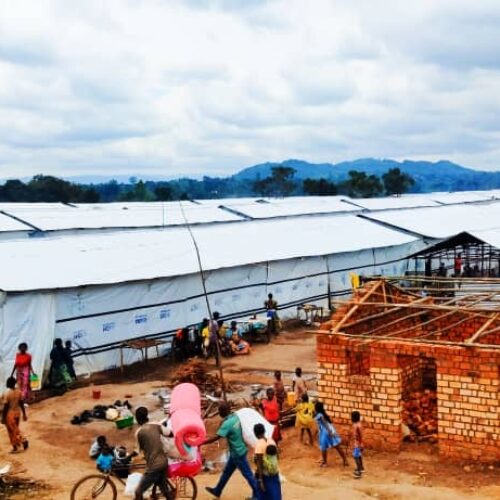
SOS Médias Burundi Rutana, June 16, 2025 — Congolese refugees living at the Musenyi site, in Giharo district (Rutana province) in southeastern Burundi, are denouncing abusive practices by Burundian police.
Cibitoke : a father massacred with machetes, his 16-year-old son on the run
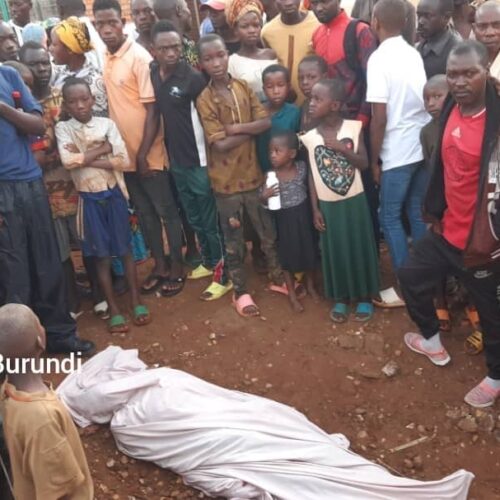
SOS Médias Burundi Cibitoke, June 13, 2026 – A man was brutally killed with machetes Saturday morning in his home in the Munyika neighborhood, in the Rugombo zone of Cibitoke

Rumonge : two drivers arrested for violating official transport fares
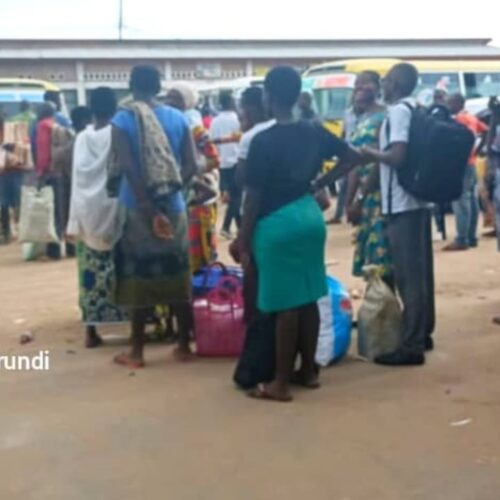
SOS Médias Burundi Rumonge, November 29, 2025 — Two public transport drivers, Jean-Claude Ndayirukiye and Seremani Amisi, were arrested on Friday and detained at the provincial police station in Rumonge,