

Tanzania : total chaos in Burundian refugee camps
SOS Médias Burundi
Kigoma, April 20, 2026 — The weekend ended in high tension among Burundian refugees in the Nduta camp. Riots broke out between police, supported by civilian guards, and Burundian refugees. The refugees attempted to reach areas already destroyed in search of firewood and water. Law enforcement used tear gas to prevent them. Several injuries have been reported.
It all began last Friday when the drinking water supply, provided by a single tap at the transit center, was cut off. This tap supplied water to more than 30,000 people crammed into the camp after their homes were demolished.
On Sunday, refugees braved their fear and forced their way through to reach already destroyed areas such as camps 7, 11, and 14, or the surrounding rivers, to fetch water, “even if it’s dirty, because we have no choice,” they said.
Others took the opportunity to collect firewood from the camp’s rubble.
Police officers tried to stop them, but without success. They then called in young civilian peacekeepers. Faced with these threats, “cunning and force” seem to be the refugees’ only means of survival.
“Around twenty refugees were injured, including at least five serious cases who are being treated at the Doctors Without Borders (MSF) hospital,” we learned.
Several dozen other refugees have been arrested and detained in still-unknown locations, causing great concern among their families.
For the refugees, resignation now appears to be the only way out.
“We have no other choice but to resign ourselves to this situation or perhaps take actions that endanger our lives, if only to survive, because we are left to fend for ourselves,” they say.
According to witnesses, the transit center, meant to host fewer than 3,000 people awaiting repatriation, is currently sheltering all the homeless refugees : nearly ten times its capacity.
“The living conditions are extremely deplorable : no drinking water, no mattresses, no blankets in the middle of the rainy season, no food…” the refugees complain.
Last week, the camp administration posted a list of just over 13,500 refugees eligible for food assistance, while the total population still exceeds 45,000.
“Those eligible for assistance are those on the waiting lists for repatriation. Do you want to receive food?” “So hurry up and register?” the camp president, a representative of the Tanzanian Ministry of Home Affairs and Public Security, ironically remarked.
According to our source, “tens of thousands of people whose homes have been demolished have chosen to go to the transit center but have categorically refused to register for repatriation.”
“Let them do what they want, we’ve seen it all! We will resist to the last breath,” said one of them.
Meanwhile, a group of about a thousand refugees “still requiring protection” has been transferred to Nyarugusu, another camp also undergoing demolition, to officially await their repatriation scheduled for July, the closing date.
“These are either elderly people, people with disabilities, those waiting for a third host country, and, of course, those who have been able to pay bribes,” revealed a source close to the matter.
Nyarugusu, also slated for demolition, seems destined for the same fate.
“Everything that happens in Nduta will happen here, we know it well. Because here too, more than half the camp has been destroyed, and the refugees are living either in the rubble, in an overcrowded transit center, or have found refuge with Congolese people who are living the high life,” confides a Burundian refugee from the Nyarugusu camp.
The UNHCR powerless or complicit?
The CDH/VICAR, a refugee rights organization, accuses the United Nations High Commissioner for Refugees of being complicit in these serious violations.
“The UNHCR is supposed to protect refugees and apply international humanitarian law as well as the Geneva Convention. But how is it that it remains silent in the face of these serious cases and the cries of the refugees?” denounces Léopold Sharangabo, president of the NGO.
He added, “Incomprehensible? Unacceptable! It will have to answer for this before the appropriate authorities because it has failed in its primary mission or is complicit.”
On the Burundian side, the spokesperson for the Ministry of the Interior and Public Security, Pierre Nkurikiye, recently mentioned a massive influx of returnees :
“We had planned for a rate of 3,000 people per week, but we have received up to 9,000. Even though we have to accommodate them, our logistical capacity is sometimes overwhelmed. We are doing everything we can to transfer them to their families, to their home villages,” he stated during a public broadcast held in Kayanza, in northern Burundi, on March 27.
According to him, more than 60,000 Burundians have already returned since the beginning of the year. He acknowledges that repatriating more than 145,000 refugees in just a few months remains a complex challenge, justifying the extension of the deadlines to comply with international standards.
An extension that worsens the ordeal
Initially scheduled to close at the end of March and the end of June 2026, the Nduta and Nyarugusu camps will remain open for an additional month, officially to better organize returns. For the refugees, this extension only intensifies their anxiety and prolongs already extremely precarious living conditions.
Tanzania still hosts more than 100,000 Burundian refugees, most of whom arrived after the 2015 crisis linked to the contested third term of President Pierre Nkurunziza. Today, their future remains uncertain, between forced repatriations, fear of persecution, and ever-deteriorating living conditions.
You might also like
Nakivale (Uganda) : cardiovascular diseases kill many elderly people
Medical Team International (MTI) wants to curb deaths from cardiovascular diseases in the Nakivale refugee camp in Uganda. This NGO which deals with the health aspect calls on everyone, especially
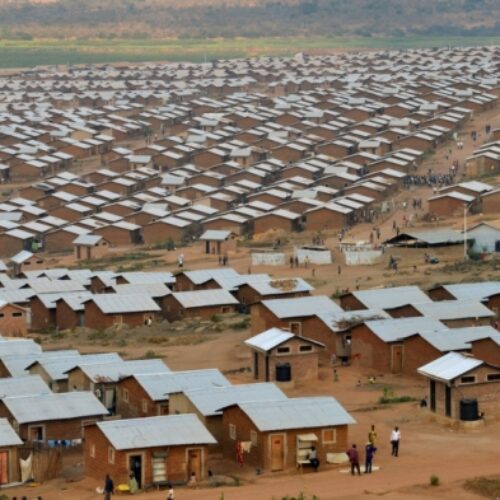
Mahama (Rwanda): the health component entrusted to “Save the children”
Since 2015, the health component has been managed by two NGOs : Save the children and Alight. But the latter has just been removed from the list. The UNHCR explains
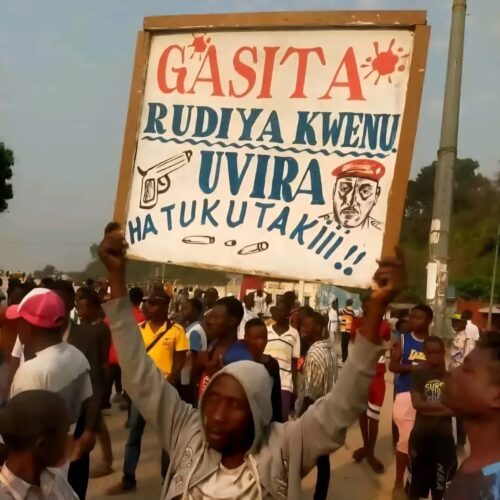

DRC : driven from Uvira after deadly protests, General Gasita returns to command
SOS Médias Burundi Uvira, August 26, 2026 — Brigadier General Olivier Gasita has returned to eastern Democratic Republic of Congo. After being recalled to Kinshasa, the DRC capital, following violent