
Zambia : the court opens the way to citizenship for children born to refugee parents
SOS Médias Burundi
Lusaka, April 5, 2026 — The Constitutional Court of Zambia unanimously issued a landmark ruling, striking down a key provision that prevented refugees from acquiring Zambian citizenship. This decision now paves the way for thousands of refugees and children born to refugee parents to obtain citizenship and the associated rights, including education, healthcare, and employment.
This ruling follows a petition filed by the Zambian Civil Liberties Union (ZCLU), which challenged several restrictions affecting refugees and their children under the Constitution and the Refugee Act. Supported by the Global Strategic Litigation Council (GSLC), the organization argued that these provisions violated, among other things, Articles 266 and 37 of the Zambian Constitution.
Article 266 defines several important constitutional concepts, notably that of “habitual resident.” This definition linked resident status to possession of a residence permit in accordance with immigration law, thus excluding many refugees from access to citizenship. Article 37, for its part, addresses the right to Zambian citizenship, particularly by birth and descent.
In a unanimous decision issued last week by a panel of seven judges, the Court affirmed that the constitutional principles relating to nationality are based on birth and descent.
“The drafters of the Constitution deliberately anchored nationality in birth and descent, thereby affirming that those born on the territory or to Zambian parents are, by right, members of the national community,” the Court stated.
The judges also reiterated that naturalization remains a legal pathway to citizenship, demonstrating the country’s openness to those seeking long-term integration through residency and allegiance to the Zambian state.
The Court further ruled that the definition of “habitual resident” in Article 2 of the Citizenship Act, which required a residence permit in accordance with immigration law, was incompatible with the Constitution. This provision was therefore invalidated to the extent of this incompatibility.
In practice, according to the ZCLU, this requirement constituted a major legal obstacle preventing many refugees—including children born in Zambia and long-term residents without permanent immigration status—from ever acquiring Zambian citizenship. Refugees and their children were ineligible for permanent residence permits under existing immigration legislation.
The organization considers this decision a “crucial first step” toward enabling people born in Zambia, who know no other home, to live fully in dignity and belong to Zambian society.
This legal advancement has been welcomed by several refugees living in the country.
“Removing this legal obstacle is a crucial first step toward ensuring that people born in Zambia, who know no other homeland, can fully belong to this country and live in dignity,” testifies a Burundian refugee who has lived in Zambia for over ten years and is the father of three children born there.
In addition to citizenship, this decision should allow thousands of children from refugee families easier access to essential rights such as education, healthcare, and employment.
However, several potential beneficiaries are already anticipating difficulties related to the practical implementation of this court decision, particularly on the administrative level.
For its part, the ZCLU, which hails the decision as a “triumph for humanity,” believes it will foster greater integration of refugees into Zambian society. It pledged to collaborate with government institutions to support the implementation of the decision, particularly through administrative reforms designed to facilitate access to citizenship.
The Global Strategic Litigation Council (GSLC) also argued before the Court that the contested legislation contradicted Zambia’s international obligations, particularly gregarding the prevention of statelessness, non-discrimination, gand guaranteeing the right to a nationality for children born within its borders.
In 2023, the Zambian Parliament rejected a proposal to amend this legislation, deeming the contested provision constitutional. The Constitutional Court has now issued a final ruling, finding this requirement incompatible with the country’s fundamental law.
Zambia currently hosts more than 104,000 refugees and former refugees. Among them, the United Nations High Commissioner for Refugees (UNHCR) estimates that approximately 41,000 children were born in Zambia to refugee parents and could be directly affected by this landmark decision.
You might also like

Burundians in Kenya : fear of deportation shakes a community heavily involved in the informal economy
SOS Médias Burundi Nairobi, September 9, 2026 — The threat of deportation for foreign workers in small businesses and street vending has sown panic among Burundian nationals in Kenya. Following
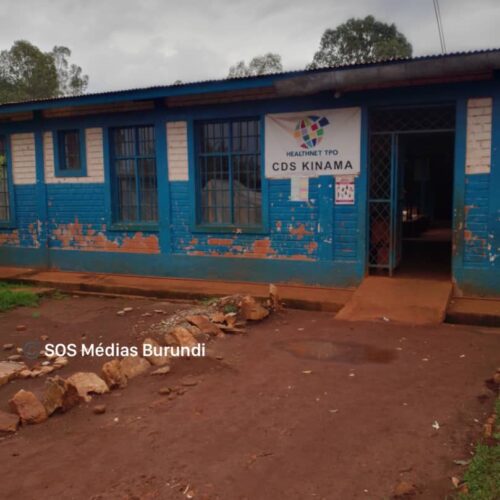
Kinama: a new laboratory – hope for refugees and host community
The health center of the Kinama refugee camp in northeastern Burundi recently benefited from a modern laboratory, built with the support of the International Diabetes Federation. This facility replaces an
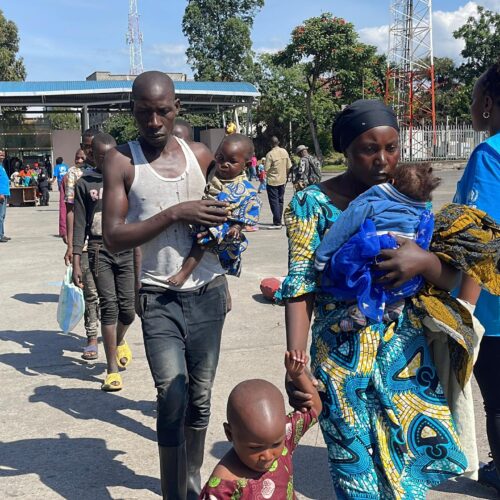

Goma : exactly 1,150 Rwandan refugees repatriated in 48 hours
Goma, May 20, 2025 – On Monday, May 19, 790 Rwandan refugees were repatriated to their country via the Great Corniche Barrier, between Goma (DRC) and Gisenyi (Rwanda). This joins