
Burundi : “President Ndadaye’s plan to establish democracy still remains a dream”
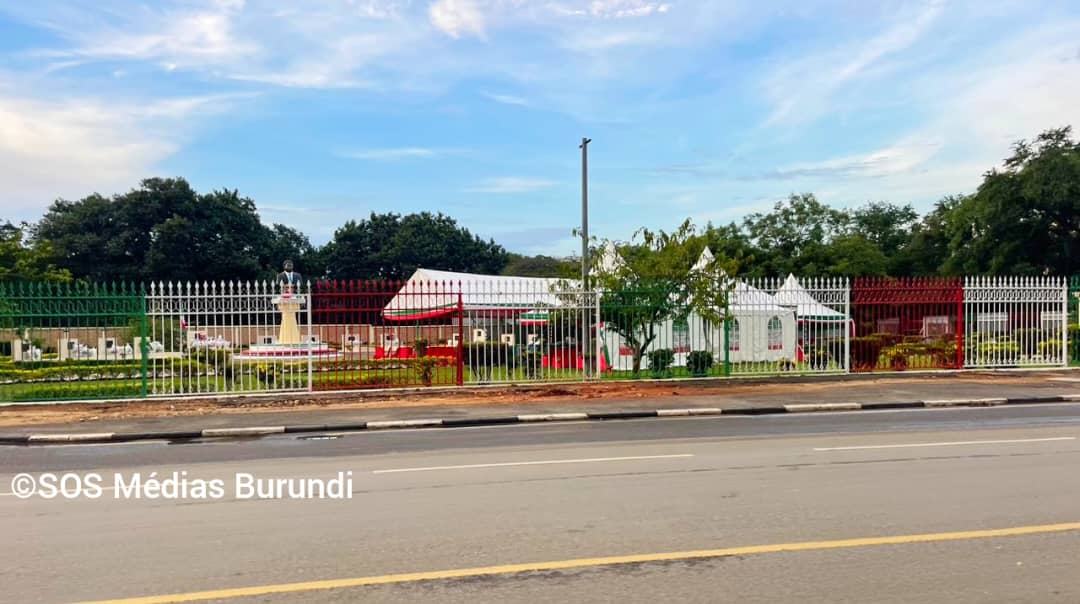
This October 21 is the 30th commemoration of Melchior Ndadaye’s assassination, the first democratically elected Burundian president. His fellow fighters regret that thirty years later, despite the progress in terms of democracy, much remains to be done. INFO SOS Médias Burundi
In a public conference arranged by his Sahwanya Frodebu party, officials said the government must always guarantee freedom of expression and avoid political discrimination to keep democratic culture.
“What is important in Ndadaye’s legacy is his love for his homeland. He demonstrated it. It was not, then easy, to go in front of Burundian ciyizens when you mainly came from a discriminated ethnic group. It was like carrying the cross. There are also some who considered this act as suicide. But know that Melchior Ndadaye is this good shepherd that we talk about in the Bible”, this is the memory that former President Sylvestre Ntibantunganya shared with participants to the conference.
He said the democracy hero served as an example and others should follow suit.
However, he welcomed the actions of the current government to pay tribute to him. He cited among others the decision of the National Assembly in 2006 to make Melchior Ndadaye the hero of democracy, the places which bear his name such as the Melchior Ndadaye international airport and other advantages granted to his family.
President Ntibantunganya recommended that the Sahwanya Frodebu party conduct other activities that pay tribute to other senior officials assassinated along with Ndadaye. He even suggested that the party’s top leaders consider building a center called the “Ndadaye Melchior Center for Democracy and Reconciliation”. For him, it would serve as a school of democracy which could help build a better Burundi dreamed of by the hero of democracy.
He advised political leaders to avoid staying in power as a way of consolidating democracy.
The president of the Frodebu party Patrick Nkurunziza, for his part, reminded the wishes of Melchior Ndadaye which he wants Burundian authorities follow suit.
“He wanted the repatriation of Burundians from exile, you know that we still have people outside the country, we would ask the government to bring them back to the fold. He was also against arbitrary imprisonments, that the justice system should do its best to look into these cases,” said Nkurunziza.
Others, like Phenias Nigaba, vice-president of the party, reported certain challenges still noticeable, such as the opening of the political and media space and the fear for some, of expressing themselves freely and that changes are needed from the government to correct these shortcomings that prevent the country from pursuing the vision of the hero of democracy.
Melchior Ndadaye was assassinated during a bloody coup on October 21, 1993, after 102 days of the presidency. Of Hutu ethnic group, he was invested on July 10, 1993.
The civil war triggered by his assassination killed more than 300,000 people, according to the UN.
It was the Arusha deal signed in 2000 between the Hutu rebel movements and the then government mostly dominated by the Tutsi minority, which ended the crisis. An arrangement which led the former Hutu rebellion, the CNDD-FDD, now the presidential party, to come to power in 2005.
You might also like

North-Kivu : a hundred women victims of rape perpetrated by M23 rebels (civil society)
An association of displaced women indicated that more than a hundred womenclaim to be victims of rape perpetrated by elements of the M23. Territories of Rutshuru, Nyiragongo and Masisi located
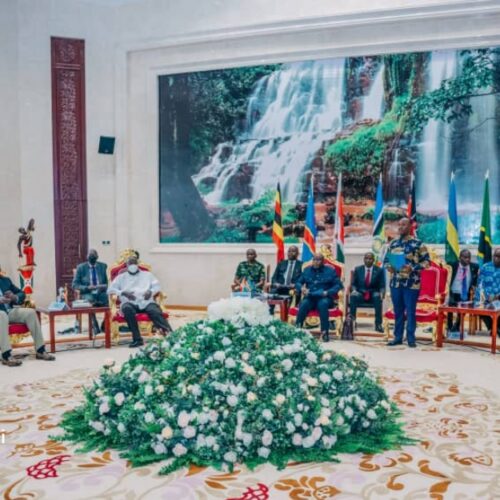
Bujumbura: EAC heads of state call again for an immediate ceasefire in eastern Congo
In a most extraordinary way, the heads of the East African community members states met in Bujumbura, the economic capital of Burundi, this Saturday, February 4, 2023. The security situation
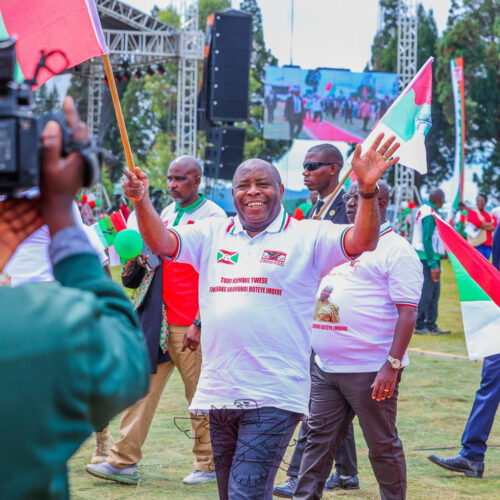

Election campaign in Kiremba : CNDD-FDD demonstrates strength in a tense atmosphere
SOS Médias Burundi Ngozi, May 13, 2025 – The small east African nation is entering a tense campaign phase, marked by massive mobilizations, a strong presence of the ruling party’s