Ituri : the emergence of a new armed group exacerbates security instability
Ituri province in eastern Congo continues to be the scene of chronic instability, exacerbated by the resurgence of armed groups. Following the CRP (Convention for the Popular Revolution) of the former Congolese leader convicted by the International Criminal Court, a new rebel movement, the National Coalition for the Liberation of Congo (CNLC), recently emerged in the Walendu Bindi chiefdom, specifically in Aveba, south of Irumu territory. This group, led by Colonel Innocent Kaina, is raising concerns about its impact on the already precarious security situation in the region.
INFO SOS Médias Burundi
A former child soldier under the Alliance of Democratic Forces for the Liberation of Congo (AFDL), Innocent Kaina has served in several armed movements. He was notably a key figure in the Congolese Rally for Democracy (RCD), the National Congress for the Defense of the People (CNDP), and the March 23 Movement (M23). Despite his past ties to the M23, he did not join the rebellion during its resurgence in 2021, due to tensions with the movement’s military leader, Sultani Makenga.
His decision to create the CNLC appears to be the result of these disagreements and a desire to establish a new military dynamic in Ituri. However, the group’s precise objectives remain unclear, and questions remain about its support and sources of funding.
An already fragile security context
Ituri is a province marked by constant conflicts between various armed groups. These include the CODECO (Cooperative for the Development of Congo) militia and the ADF (Allied Democratic Forces) rebels, known for their deadly attacks against civilians and security forces. The emergence of the CNLC further complicates this mosaic of violence, making peacemaking efforts more difficult.
The ADF: a persistent threat in Ituri
The Allied Democratic Forces (ADF), an armed group of Ugandan origin, are among the most feared in eastern DRC. Active primarily in the Ituri and North Kivu provinces, they are responsible for numerous massacres of civilians and attacks against Congolese and foreign forces. Since their establishment in the DRC in the 1990s, the ADF militias have committed numerous atrocities, earning a reputation for extreme brutality.
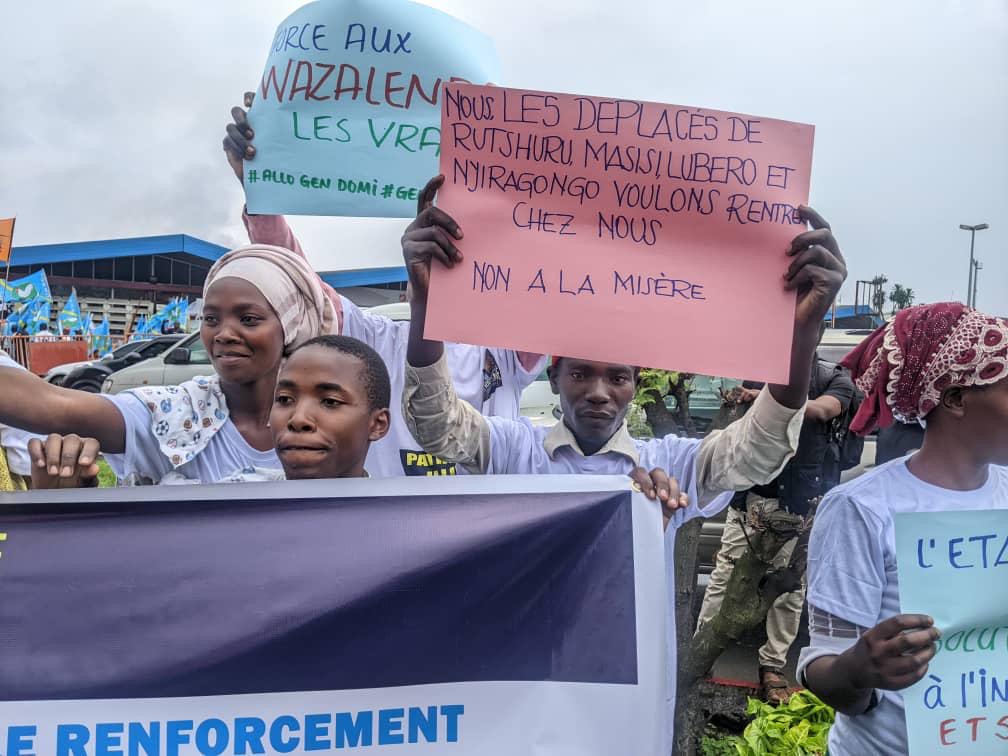
Women and men demonstrate against insecurity in eastern Congo, November 22, 2024, in Goma (SOS Médias Burundi)
In recent years, the ADF has intensified its attacks in Ituri, particularly in the Irumu and Mambasa territories, where it targets both local populations and strategic infrastructure. The Congolese army, supported by Ugandan forces through military cooperation, is conducting operations to eradicate them, but the threat remains persistent.
The group is also accused of maintaining links with international jihadist networks, notably the Islamic State, which has further complicated efforts to neutralize it. Its presence in Ituri exacerbates instability and contributes to the insecurity that prevents people from carrying out their daily activities.
A proliferation of armed groups in eastern DRC
Beyond Ituri, the eastern Democratic Republic of Congo is infested with numerous armed groups, including the Allied Democratic Forces (ADF): Of Ugandan origin, this group is responsible for multiple terrorist attacks and massacres in the provinces of Ituri and North Kivu.
CODECO (Cooperative for the Development of Congo): A predominantly ethnic militia that attacks rival communities and security forces.
The M23 (March 23 Movement) : The main rebel movement active in North and South Kivu, whose rebels already control the capitals and are accused of being supported by Rwanda.
The Mai-Mai: Local militias maintained by the Congolese authorities with diverse motivations, often linked to local communities.
The FDLR (Democratic Forces for the Liberation of Rwanda) : a Rwandan rebel group composed of former Hutu perpetrators of the genocide, active since the 1990s.
“The arrival of a new rebel group only intensifies the security crisis in the province,” analyzes a specialist in armed conflicts in the DRC. “This could lead to new alliances, but also to clashes between rival factions.”
Reaction from the government and security forces
So far, the Congolese government has not officially reacted to the emergence of the CNLC. However, security sources indicate that increased surveillance is in place and that measures may be taken to contain the expansion of this armed group.
“We are closely monitoring the situation and will take necessary measures to preserve the territorial integrity of the country,” a senior security official said anonymously.
Furthermore, the civilian population remains the primary victim of this instability, with massive displacement and recurring violence. Humanitarian organizations are expressing their concerns about the deterioration of living conditions in this province, which is plagued by constant tensions.
Towards a new escalation of violence?
With the emergence of the CNLC, the map of conflicts in Ituri risks being redrawn. This new group could compete with other factions for control of territories and resources, thus increasing inter-ethnic tensions and armed clashes.
Faced with this threat, Congolese authorities are called upon to act quickly to prevent a further escalation of violence. An effective and coordinated government response, combined with diplomatic and security efforts, is more necessary than ever to stabilize Ituri and prevent further human tragedies.
——
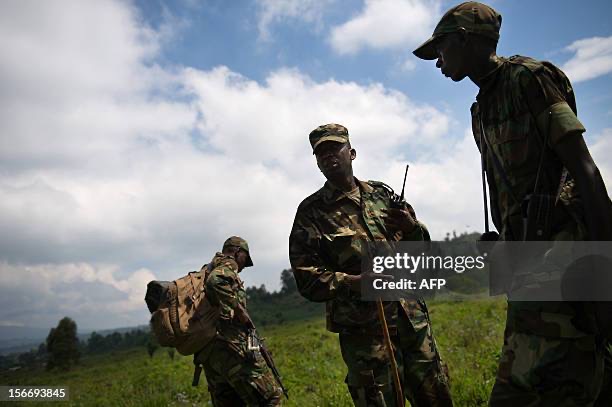
Colonel Innocent Kaina with his guard, not far from the city of Goma, November 19, 2012. At that time, he was one of the sector commanders of the M23, the armed group that now controls the provincial capitals of North Kivu and South Kivu. Photo credit : Getty Images
You might also like
Makamba : the spread of hate speech is worrying
CNDD-FDD representatives in different areas of Makamba province (southern Burundi) have been increasing their visits in all the villages in recent days. They call on the activists of the ruling
Burunga : four suspects arrested in Rumonge for murder and theft of a large sum of money
SOS Médias Burundi Rumonge, August 24, 2025 – Four people, including two women, are held in the Rumonge police station cell in Burunga province, southern Burundi. They are accused of

Cibitoke : 15 Congolese drowned in the Rusizi while trying to flee fighting in the DRC
While clashes between the M23 and the Congolese army intensify in South Kivu, refugees are trying to flee to Burundi. In less than 48 hours, 15 people have lost their