Bubanza : women’s informal trade, the economic pillar of households
SOS Médias Burundi
Bubanza, April 28, 2025 – In Bubanza, in western Burundi, informal trade is predominantly driven by women. Thanks to their dynamism and the ingenuity of their initiatives, they actively contribute to improving living conditions of their families.
In this bustling commercial center, women dominate the small business sector. They buy agricultural products that they resell at the market, or offer various essential services to the local population.
An innovative example is the cassava leaf pounding service : “Today, I no longer need to look for a mortar and pestle to pound cassava leaves. This service helps me earn a living, feed my family, and pay for my children’s education,” proudly says a member of a women’s group.
The sale of food products—grilled corn, fruits, vegetables, palm oil, shikwangs, beans, rice, and corn—is nearly 98% women. Aside from a few women traders who own shops, the majority finance their activities through local tontines, called “nawe nuze.”
“Every week, we contribute a set amount together. Then, we borrow with a small interest rate, repayable after three months. This capital helps us develop our small business and support our household economies,” explain some fruit and vegetable sellers.
A business with direct benefits for households
Even with modest profits, these activities make all the difference. A woman selling grilled corn says :
“I buy a pile of corn for 2,000 Burundi francs and I earn 1,000 francs in profit. It’s better than staying home and do nothing.”
Thanks to this income, many women are able to purchase basic necessities without relying entirely on their husbands :
“Every week, my husband reminds me of our tontine meeting day. He knows that my small business is important to our family. I can buy soap, salt, coal, and sometimes even provide a food ration,” says another trader.
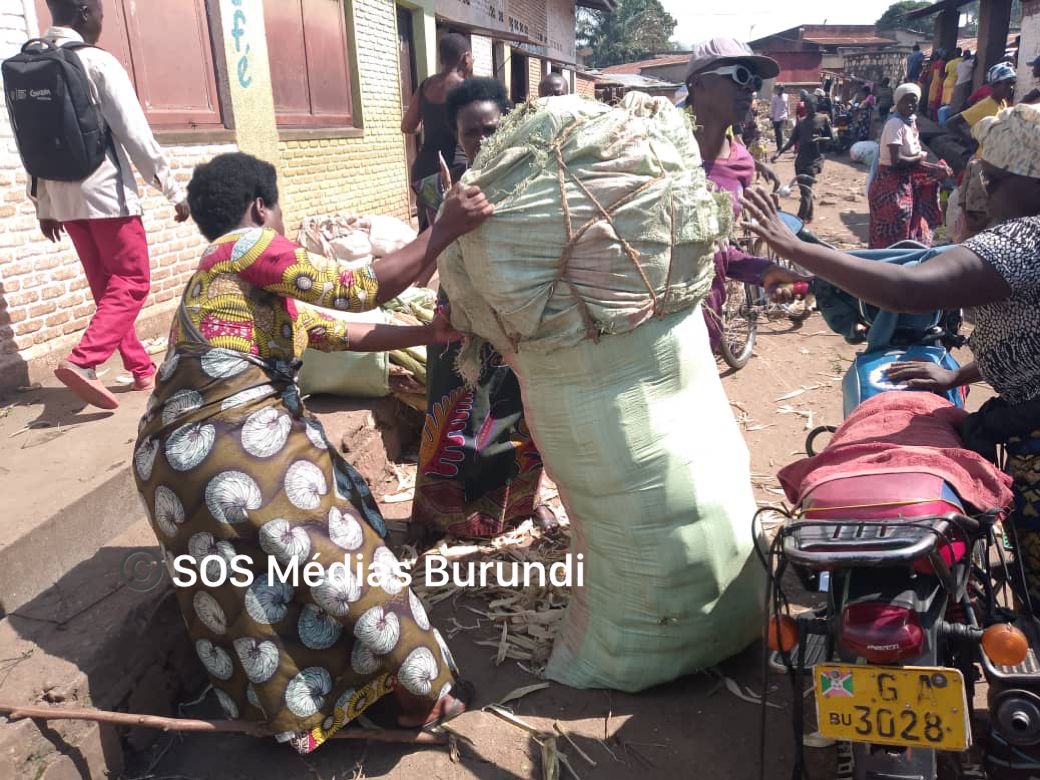
Women traders receive bags of food products before reselling them at the Bubanza market, April 2025 (SOS Médias Burundi)
Some even recount how their business has strengthened their status within their households :
“When my child asks me for a loaf of bread, I can give it to him. My children respect me more. Every year-end, when the contributions with interest are shared, I can even buy a loincloth and pants for my husband,” says a tontine member with a smile.
Sewing, a business also popular with women
In addition to informal trade, sewing is one of the most popular activities among the women of Bubanza. In vocational schools, approximately 85% of sewing pupils are girls, while they remain underrepresented in other technical training programs.
In Bubanza, these women’s initiatives demonstrate women’s ability to overcome economic challenges, build their independence, and play a central role in the survival and development of their families.
——-
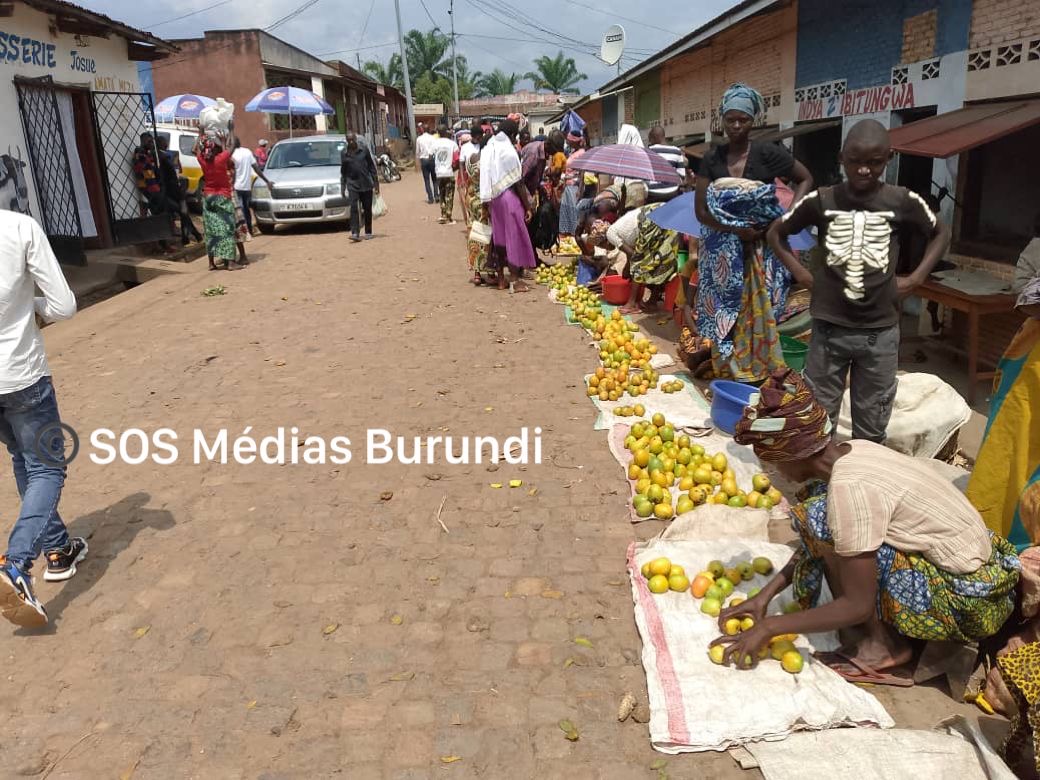
Women fruit sellers at the Bubanza market, April 2025 (SOS Médias Burundi)
Armed men assimilated to the rebels of the Allied Democratic Forces (ADF) have again attacked this Sunday, villages in the territories of Irumu and Djugu, in the province of Ituri
Women leaders are requested to take the lead in the fight against malnutrition.This was said in the economic capital Bujumbura which hosted between Monday and Wednesday the fourth edition of
Employees of the National Blood Transfusion Center CNTS gathered within the SYNAPA union began an indefinite strike movement on Monday. They are demanding their unpaid salaries for the months of