
National Unity in Burundi : 35 years later, a myth that doesn’t hold up to reality
SOS Médias Burundi
Bujumbura, February 5, 2026 – Established in a context marked by deep social and political divisions, the national unity remains one of the pillars of official discourse in Burundi. Thirty-five years after the adoption of the National Unity Charter, initiated by the late President Pierre Buyoya following the violence of 1988, the ideal of social cohesion continues to raise questions and frustrations in a country still facing persistent discrimination, significant social inequalities, and widely contested governance.
In Bujumbura, Burundi’s commercial capital, the National Unity Monument stands as a powerful symbol of reconciliation and living together. But for many citizens, this unity, celebrated every year, remains more visible in official speeches than in everyday reality. For them, a gaping chasm remains between the principles enshrined in the Charter and the lived experience of a large segment of the population.
The Charter of National Unity was born in the wake of the 1988 massacres in the former districts of Ntega and Marangara, now located in Butanyerera province, in northern Burundi. These tragic events, which deeply traumatized the Burundian community, resulted in more than 30,000 deaths, according to United Nations estimates. Faced with the scale of the tragedy, the authorities at that time expressed a desire to prevent further divisions and promote national cohesion.
Thirty-five years later, many civil society actors believe that this ambition remains largely unfulfilled. For Faustin Ndikumana, national director of PARCEM (Words and Actions for Awakening Consciences and Changing the Mindset), the national unity remains “invisible as long as there is unequal treatment of citizens and discrimination in governance.”
He cites, in particular, the absence of a truly shared national memory as one of the main obstacles to reconciliation. “Today, there is no common date to commemorate certain chapters of the country’s history. Some Burundians celebrate their dates, while others do not identify with them,” he laments. According to him, this situation reflects a lack of political will to unite all citizens around a shared history.
Faustin Ndikumana also points to the mismanagement of public assets as a major factor weakening the national unity. He denounces the behavior of certain officials who, taking advantage of their positions, appropriate state resources to the detriment of the public interest. For the director of PARCEM, a real fight against corruption and impunity is essential to restoring trust between rulers and the ruled.
This observation is shared by Gabriel Rufyiri, president of the Observatory for the Fight Against Corruption and Economic Misappropriation (OLUCOME). He believes that the national unity remains threatened by the lack of frank debate on sensitive issues that continue to “haunt the country.” “In a country where poverty is widespread, the national pie is monopolized by a handful of individuals,” he asserts.
According to Gabriel Rufyiri, the unequal distribution of national wealth, social injustices, and discrimination observed in certain recruitment processes constitute veritable time bombs for social cohesion. He emphasizes that the annual celebration of the National Unity Day is insufficient without the effective implementation of the principles contained in the Charter.
Among the population, disillusionment is equally palpable. In Bujumbura, several residents interviewed believe that the national unity “exists only on paper.” “How can we talk about unity when a large part of the population lives in fear of what tomorrow may bring?” asks a citizen. Another adds, “It’s difficult to talk about the national unity in a country where discrimination is still felt in certain sectors.”
Despite this critical picture, some Burundians nevertheless recognize the existence of values of solidarity and mutual support that continue to be expressed in daily life. For them, the main challenge lies less in the relationships between citizens than in those between the authorities and the population, often marked by the primacy of personal interests at the expense of the common good.
Thirty-five years after its adoption, the National Unity Charter thus continues to embody both an ideal and a source of frustration. For many observers, only fair, inclusive governance that respects the rights of all will make it possible to transform this promise of unity into a reality experienced by all Burundians. Every year on February 5th, this quest for unity is commemorated with a public holiday in the small east African nation.
You might also like
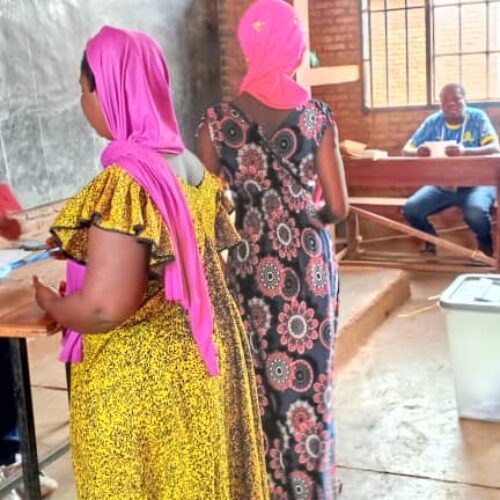
Bujumbura : low turnout and irregularities during village elections
SOS Médias Burundi Bujumbura, August 25, 2025 – The elections for village and neighborhood leaders in Bujumbura province (western Burundi) were marked on Monday, August 25, by a low turnout
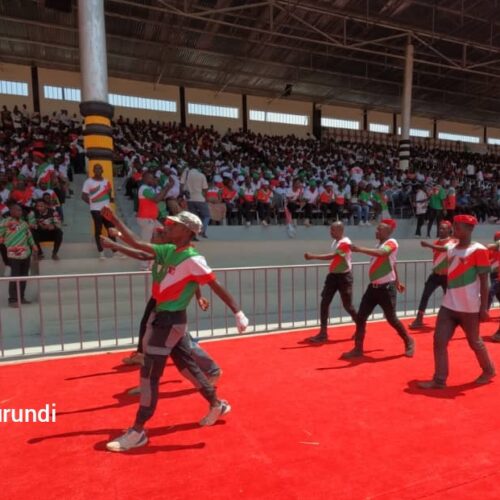
Cibitoke : paramilitary training for Imbonerakure before their deployment in the DRC
For three weeks, members of the youth league of the CNDD-FDD party have been receiving paramilitary training in Cibitoke province (northwest Burundi). Local sources say that beneficiaries of the training


Vugizo – Makamba : meetings of certain political parties banned
The administrator of the Vugizo district in Makamba province (southern Burundi) is accused of political intolerance and of being harmful to democracy. This follows untimely bans on meetings of opposition