
Burundi : “No one has the right to exile half a million Burundians,” pleads Marguerite Barankitse
SOS Médias Burundi
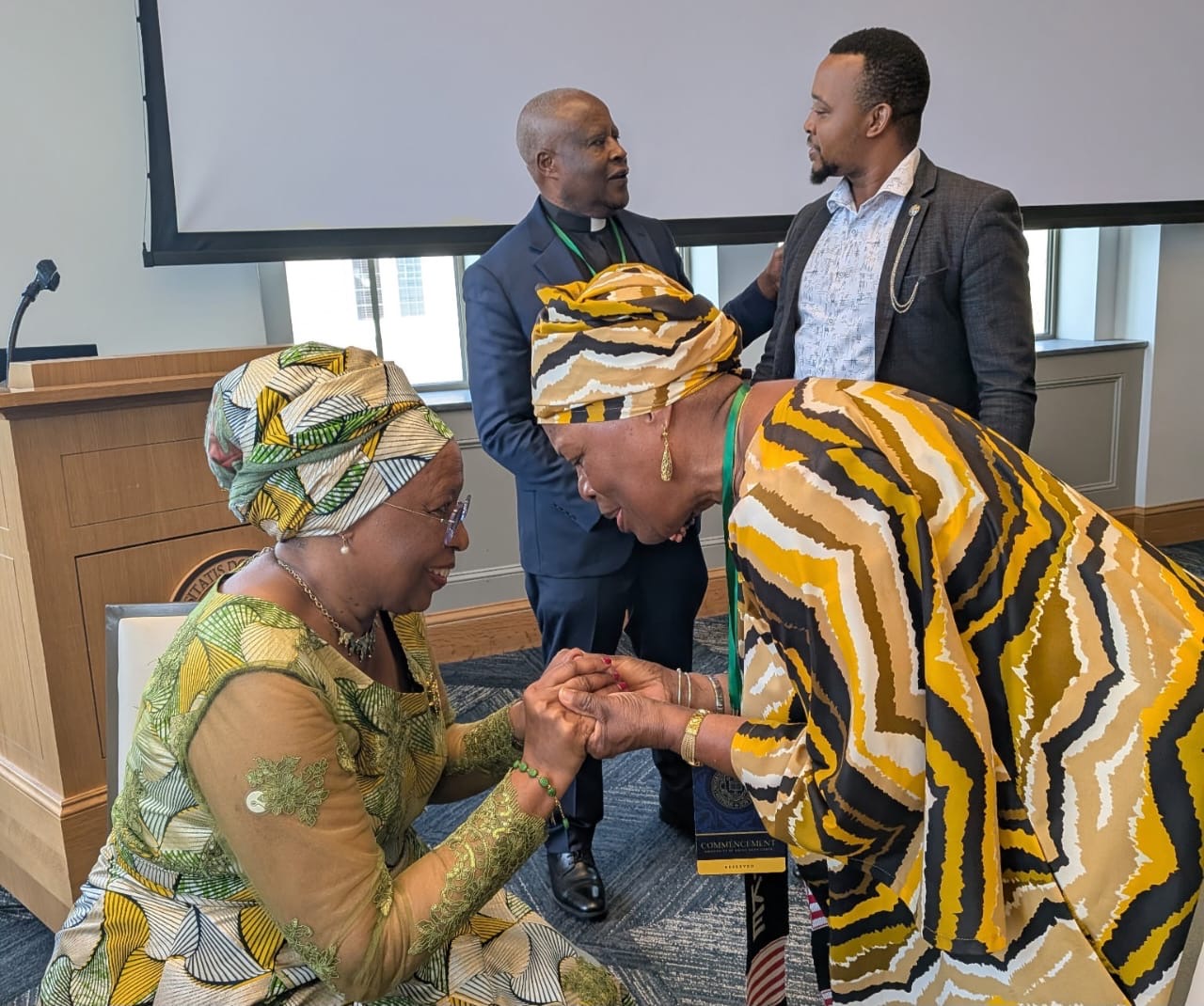
Kigali, June 21, 2026 – As the world celebrated the World Refugee Day on June 20, testimonies and calls for solidarity with those forced into exile resonated across the globe. Among them was that of Marguerite Barankitse, an emblematic figure in African humanitarian work and a refugee for over eleven years. In an interview given last May to Amjambo Africa, a community media outlet based in the state of Maine, in the northeastern United States, she spoke of the wounds of exile, the pain of living without a recognized national identity, and the importance for Burundian refugees of preserving their dignity despite their hardships. This message resonates particularly strongly as hundreds of thousands of Burundians still live far from their country.
In the Mahama camp in eastern Rwanda, which hosts more than 70,000 Burundian and Congolese refugees, Maison Shalom continues its work with displaced people. But for its founder, Marguerite Barankitse, Mahama is not a camp.
“I refuse to call it a camp. It’s a city,” she says.
A city where thousands of men, women, and children are trying to rebuild their lives after fleeing violence, persecution, or insecurity.
Marguerite Barankitse’s own story is marked by exile. After the 2015 crisis, she left Burundi and was subsequently sentenced in absentia to life imprisonment plus an additional twenty years, notably for insurrection and attempted coup d’état. Burundian authorities accuse her of participating in the failed coup of May 2015 and supporting the preceding protests against the controversial third term of the late President Pierre Nkurunziza.
Accusations she has always denied.
The government has also seized her assets and frozen the accounts of Maison Shalom in Burundi.
Yet, this woman, who has met four generations of popes, from Saint John Paul II to the current pontiff, refuses to be defined by these trials.
“Do you see a depressed woman when you look at me?” she asked with a smile during her interview with Amjambo Africa.
At the time of this interview, she was receiving her eighth honorary doctorate from the Catholic University of Notre Dame in South Bend, Indiana.
Despite the international distinctions that mark her career, Marguerite Barankitse acknowledges that exile leaves deep wounds.
“Losing one’s identity and not having a country is the greatest crime a person can inflict on someone,” she confides.
The founder of Maison Shalom explains that she feels profound sadness when she has to specify, during her travels, that she does not possess a national passport.
“It grieves me, but it is also my resistance. It is my way of calling on Burundians to reclaim their dignity,” she says.
She insists, however, that this situation has not diminished her optimism.
“I am not a bitter woman,” she repeats.
For Marguerite Barankitse, Burundian refugees must preserve their dignity, continue their studies, learn new skills, and contribute positively to the communities that host them.
“They must learn good things, create, undertake projects, and prepare themselves to rebuild their country,” she believes.
According to her, exile should not be seen as an inevitability but as a step towards acquiring the knowledge necessary to one day rebuild a better Burundi.
She does not hesitate to denounce what she calls the country’s confiscation by “greedy, corrupt, and unworthy leaders.”
“Migrants enrich the countries that host them.”
Beyond the situation in Burundi, Marguerite Barankitse is concerned about the rise of anti-migrant and anti-refugee rhetoric in several regions of the world.
She criticizes migration policies that close borders and force thousands of people to take increasingly dangerous routes.
“How many people are dying today in the seas and oceans because they are being turned away?” she asks.
For this Burundian humanitarian, refugees and migrants do not constitute a threat or a burden on host communities. On the contrary, they represent a human, intellectual, and economic asset when countries offer them opportunities for education, training, and integration.
To illustrate her point, she cites, in particular, the physicist Albert Einstein, himself a refugee, as well as numerous scientists, researchers, and doctors from refugee or immigrant families who have made their mark on history through their discoveries.
“Migrants enrich the countries that host them,” she argues.
According to her, governments should view refugees more as partners in development rather than as problems to be managed.
“A refugee is a normal human being living in an abnormal situation,” she says.
On the occasion of the World Refugee Day, her message also takes on a political dimension when she addresses the scale of the Burundian exile.
“No one has the right to exile nearly half a million Burundians,” she asserts.
This statement comes as hundreds of thousands of Burundian refugees still live in several countries in the sub-region, including Tanzania, Rwanda, Uganda, Kenya, and the Democratic Republic of Congo.
For many of them, the challenges remain numerous. Access to education, healthcare, employment, and lasting legal protection remains limited.
The situation is particularly worrying in Tanzania, where human rights organizations continue to denounce pressure exerted on Burundian refugees to accept their return home. These concerns are compounded by recurring reports of forced repatriations or restrictive measures in some camps.
Faced with these realities, Marguerite Barankitse remains convinced that human dignity must remain at the heart of any migration policy.
Her message, delivered from exile, resonates particularly strongly on that World Refugee Day, as conflicts, persecution, and economic crises continue to force millions of people onto the roads around the world.
You might also like
The Netherlands closes its embassy in Bujumbura : a decision with profound implications for bilateral cooperation
SOS Médias Burundi – Bujumbura, April 19, 2025 – The Dutch government has announced the closure of several of its diplomatic missions, including the embassy in Bujumbura, the commercial capital
Mahama (Rwanda): banditry on the rise following growing poverty
The Mahama camp in Rwanda has been famous for several cases of banditry in recent days. Household items and telephones are the most targeted. Refugees fear that this situation could

North Kivu: the ceasefire agreed between the FARDC and the M23 not been respected
After the communiqué announcing the ceasefire, in the combat zones in the east of the Democratic Republic of the Congo, this Tuesday by the M23 rebels, clashes were reported the