Ebola in DRC : the spread to cities raises fears of an out-of-control health crisis
SOS Médias Burundi
Goma, June 25, 2026 – The Democratic Republic of Congo is facing a worrying resurgence of Ebola cases. According to the latest data released by health authorities, more than a thousand confirmed infections have been recorded since the start of the epidemic, along with several hundred deaths. While these figures are evolving as epidemiological investigations and laboratory analyses progress, experts are primarily concerned about the virus’s spread to urban centers, considered a major aggravating factor in the health risk.
For Congolese health authorities and their international partners, the challenge now goes beyond simply managing the identified cases. Each new infection increases the risk of new transmission chains, particularly in areas characterized by high population mobility and fragile health systems.
The urbanization facilitates the spread of the disease
The World Health Organization (WHO) considers the spread of the epidemic to urban areas to be one of the main factors accelerating the transmission of the virus.
In large urban areas, population density fosters close contact between individuals. Markets, public transportation, schools, places of worship, and workplaces all become potential transmission points, where an infected person can contaminate others even before the onset of symptoms.
Added to this is the high mobility between cities and rural areas. Daily travel for business, family, or humanitarian activities facilitates the spread of the virus from one locality to another.
In eastern DRC, massive population displacements due to insecurity further exacerbate the situation. Many families live in makeshift settlements where sanitary conditions remain precarious, creating an environment particularly conducive to the spread of infectious diseases.
Health teams are also facing increasing difficulties in contact tracing. Unlike rural areas, where interactions are more easily identifiable, urban environments significantly complicate epidemiological investigations.
A strengthened response to contain the epidemic
In response to this situation, the Congolese government, with the support of the World Health Organization (WHO) and several international partners, has strengthened its response measures.
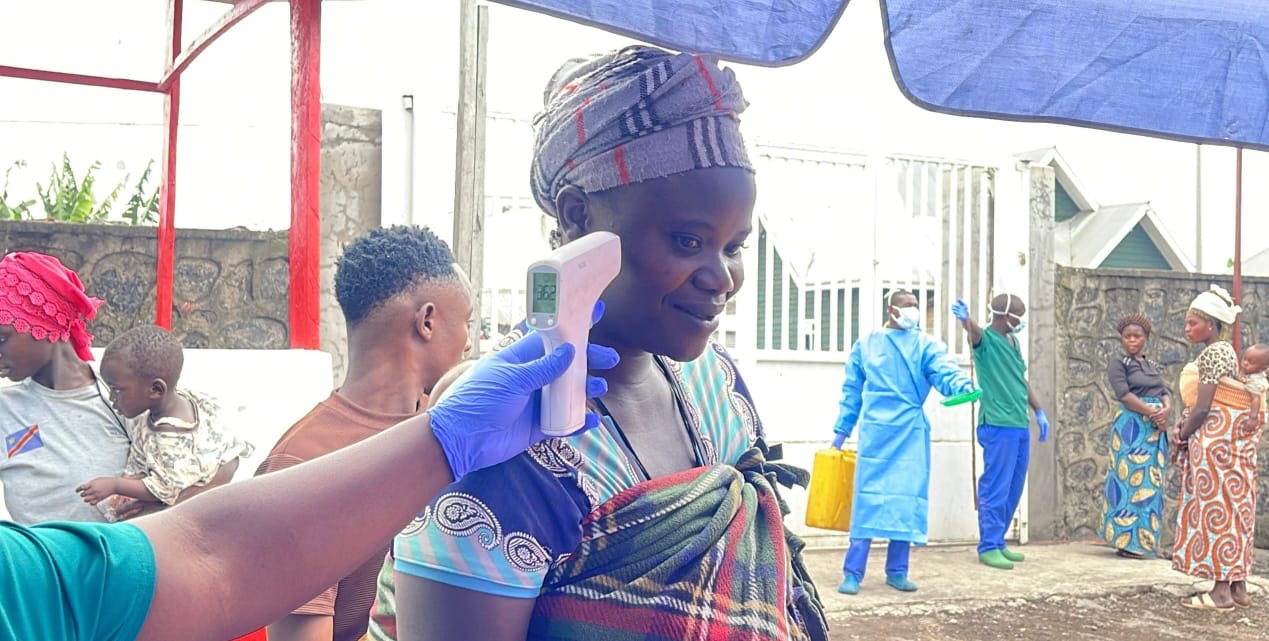
Epidemiological surveillance has been intensified to rapidly detect new cases. Field teams are identifying and monitoring individuals who have been in contact with confirmed cases throughout the incubation period.
Health control measures have also been deployed at key entry and exit points in affected areas, including borders, airports, and certain strategic roads.
At the same time, specialized treatment centers are receiving infected patients to limit the risk of transmission within communities and healthcare facilities.
Awareness campaigns also play a central role in the response strategy. Health authorities are working with community leaders, religious leaders, and the media to encourage the early reporting of symptoms and promote preventive measures.
An experimental treatment supported by the United States
As part of the response to the outbreak, the United States has provided doses of the experimental treatment MBP134, developed by the American company Mapp Biopharmaceutical.
This drug is based on monoclonal antibody technology, capable of recognizing and neutralizing the Ebola virus in the body.
According to researchers, MBP134 has the potential advantage of acting against several species of the Ebola virus, unlike some previous treatments that targeted specific strains.
The initial results from preclinical studies and preliminary trials have sparked interest within the international scientific community. Specialists hope that this treatment could help reduce mortality, particularly when administered early.
However, experts emphasize that this drug remains experimental and its efficacy still needs to be confirmed through rigorous clinical trials.
Clinical trials in preparation
Health authorities and their international partners are currently finalizing preparations for the launch of clinical trials designed to evaluate the treatment in real-world conditions.
Several steps remain, including ethical approvals, training of medical personnel, and the establishment of scientific data collection systems.
These operations are complicated by the security situation in eastern DRC, where insecurity continues to limit access to certain affected areas.
The objective is twofold : to provide patients with access to a potentially effective therapy and to generate scientific data that can improve the management of future epidemics.
As authorities continue their containment efforts, experts are stressing the need to strengthen community cooperation, health surveillance, and international support to quickly bring the outbreak under control.
Since the official declaration of the outbreak on May 15, the DRC has recorded 1,048 confirmed cases, including 267 deaths, primarily in the provinces of Ituri, North Kivu, and South Kivu. According to the World Health Organization, this is the highest number of cases recorded in the first month of an Ebola outbreak, a situation exacerbated by the virus’s spread to urban centers, massive population displacements, and persistent insecurity in the east of the country.
You might also like
Crisis in Eastern DRC: Washington relaunches dialogue between the DRC and Rwanda, Brussels strengthens its diplomatic engagement
SOS Médias Burundi Bujumbura, April 26, 2025 – Under the auspices of U.S. Secretary of State Marco Rubio, a major meeting took place on April 25 in Washington between Thérèse
DRC : the economic activity resumes in Uvira, while protests erupt in Goma against the withdrawal of the AFC/M23
SOS Médias Burundi Uvira/Goma, December 24, 2025 – In Uvira, the economic activity is resuming after attacks by the Wazalendo, but the population strongly opposes the withdrawal of the AFC/M23,

South Kivu : the war in the east exacerbates tensions between Burundi and Rwanda
SOS Médias Burundi Bujumbura, December 9, 2025 — During a meeting Monday afternoon with diplomats accredited to Burundi and representatives of regional and international organizations, Burundian Foreign Minister Edouard Bizimana