Rwanda-Belgium : Kigali and its former colonial power reconcile after an 18-month rift
SOS Médias Burundi
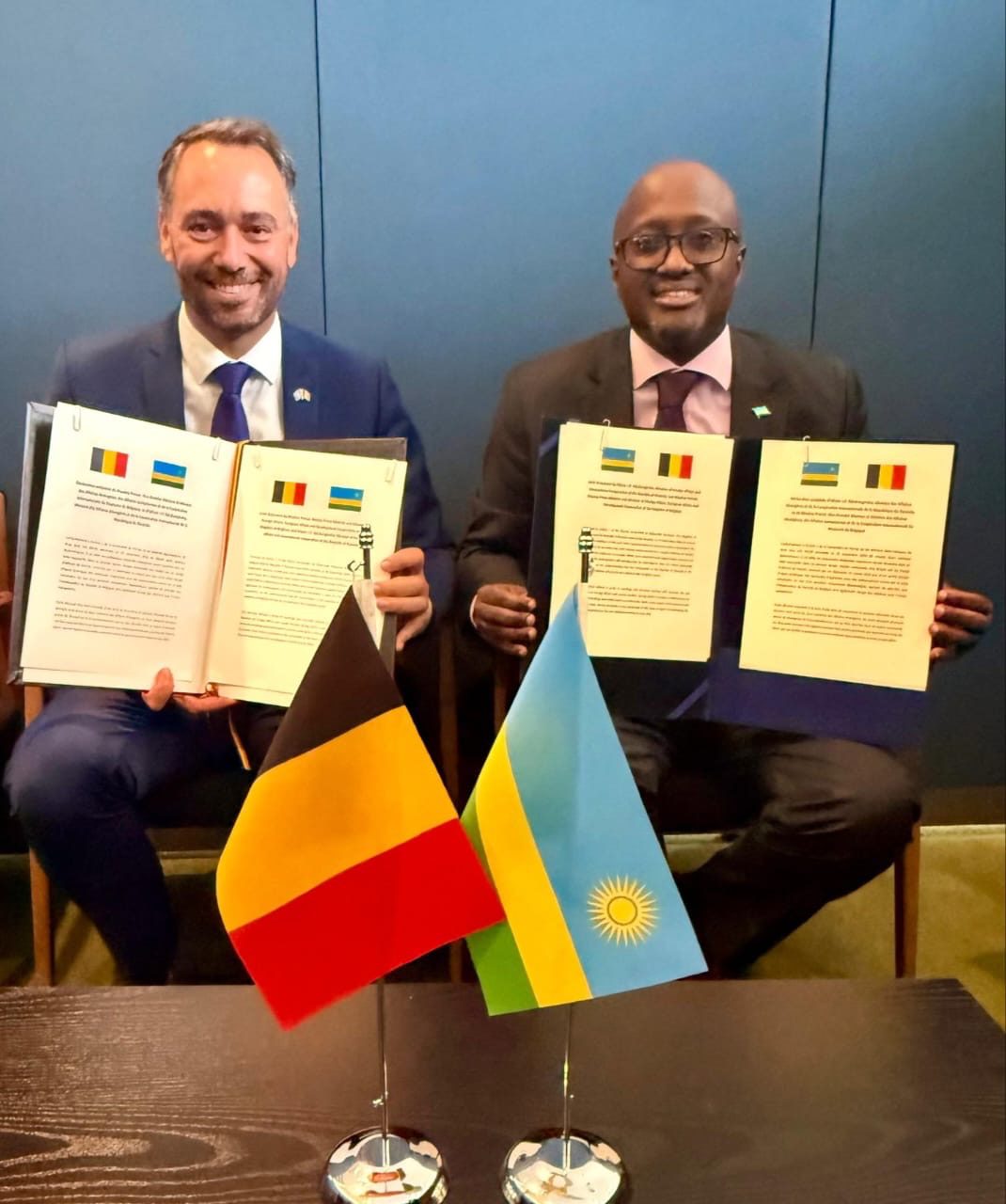
Kigali, September 23, 2026— Rwanda and Belgium decided to restore diplomatic relations on Tuesday, September 22, in New York, on the sidelines of the 81st session of the United Nations General Assembly. Foreign Ministers Olivier Nduhungirehe and Maxime Prévot announced the rapprochement following an 18-month rupture, against the backdrop of the ongoing war in the eastern Democratic Republic of the Congo (DRC).
The decision paves the way for the imminent reopening of both countries’ embassies in Kigali and Brussels. Initially, the diplomatic missions will be led by ad interim chargés d’affaires pending the appointment of new ambassadors. Both governments state that they now intend to prioritize dialogue, non-interference, mutual respect, and constructive engagement in addressing their differences.
A rift stemming from the Congolese crisis
Kigali had severed diplomatic relations with Brussels on March 17, 2025, an event followed by the reciprocal expulsion of diplomats. Rwanda notably accused Belgium of taking sides in the security crisis pitting Congolese authorities against the AFC-M23 in the eastern DRC.
For its part, Belgium had adopted a critical stance regarding the role attributed to Rwanda in the Congolese conflict and had actively participated in European discussions on sanctions targeting various actors linked to the situation in the eastern DRC. Kigali disputed these positions and accused Brussels of pursuing a hostile policy toward it.
The current rapprochement follows several months of informal contact between Olivier Nduhungirehe and Maxime Prévot. Both governments extend their thanks, notably to Qatar, which facilitated their initial meeting in Doha in June 2025—three months after diplomatic ties were severed.
A relationship with a former colonial power
The restoration of relations involves two countries with deeply intertwined histories. Belgium is Rwanda’s former colonial power; the country was administered under a Belgian mandate and subsequently a trusteeship prior to gaining independence in 1962.
The colonial era profoundly shaped Rwanda’s administrative and social structures and continues to influence relations between Kigali and Brussels. Following independence, Belgium maintained close ties with Rwanda across political, economic, and judicial spheres, as well as in development cooperation.
This history lends a particular dimension to diplomatic crises between the two nations. Relations have been notably shaped by the aftermath of the 1994 genocide against the Tutsis and the subsequent wars in the Great Lakes region. To this day, Belgium highlights its role in judicial cooperation with Rwanda and its support for post-genocide justice and reconciliation mechanisms.
The AFC-M23 at the heart of regional tensions
The conflict in the eastern DRC remains the primary point of contention between Kigali and Brussels.
The AFC-M23 is a politico-military coalition active in the eastern Congo, a region exceptionally rich in mineral resources. The movement has established parallel administrative structures in several areas under its control within the North Kivu and South Kivu provinces. Politically led by Corneille Nangaa, former chairman of the DRC’s Independent National Electoral Commission (CENI), the AFC-M23 seized control of Goma and subsequently Bukavu—the capitals of the North Kivu and South Kivu provinces, respectively—during its offensive in early 2025.
The movement calls for a political transformation of the DRC and has notably advocated for a reorganization of the Congolese state. Its advance across the two Kivu provinces has fundamentally altered the balance of power in the east of the country and drawn neighboring nations deeply into the conflict.
Kinshasa accuses Rwanda of supporting the AFC-M23. Kigali rejects this accusation, maintaining that it is acting to defend its security against the Democratic Forces for the Liberation of Rwanda (FDLR)—a Rwandan Hutu armed group present in eastern Congo, some of whose members are accused of participating in the 1994 genocide against the Tutsis.
Burundi also involved
The conflict has gradually taken on a regional dimension, particularly with Burundi’s military involvement alongside the Congolese authorities.
The Burundi National Defense Force (FDNB) has been deployed in eastern DRC alongside the FARDC, the Congolese regular army, and the Wazalendo militias supported by Kinshasa in the fight against the AFC-M23 and its allies.
This Burundian involvement has intensified significantly with the coalition’s advance towards South Kivu and the capture of Bukavu. The conflict thus directly or indirectly pits several actors in the Great Lakes region against each other, making the Congolese crisis a regional issue rather than simply an internal conflict within the DRC.
Brussels maintains its position on the DRC
The restoration of relations does not mean that Belgium is abandoning its position on the Congolese crisis.
Maxime Prévot indicated that Brussels would continue to defend the sovereignty and territorial integrity of the DRC, while supporting diplomatic efforts to end the violence in the east of the country. Belgium intends, in particular, to continue encouraging respect for the commitments made in the Doha and Washington diplomatic processes.
The restoration of relations should therefore allow both countries to once again have official diplomatic channels, without erasing their differences regarding the DRC.
Towards a new phase
In their joint declaration, Kigali and Brussels affirm their desire to maintain an “open, frank, and transparent” dialogue and to address their differences through diplomatic channels. The two countries also state their intention to base their new relationship on non-interference, mutual respect, and constructive engagement.
In New York, where the two ministers met on the sidelines of the UN General Assembly, the restoration of relations thus marks the end of an 18-month diplomatic crisis. But deep divisions over the war in eastern DRC remain, making the reopening of diplomatic channels a new framework for dialogue rather than a resolution of tensions between Kigali and Brussels.
You might also like
Burundi : in Geneva, the UN Special Rapporteur denounces a persistent human rights crisis ahead of the 2027 presidential election
SOS Médias Burundi Bujumbura, July 1, 2026 – The United Nations Special Rapporteur on the situation of human rights in Burundi, Fortuné Gaëtan Zongo, has painted a particularly worrying picture
Cholera in Rumonge : at least 7 Congolese refugees dead in two weeks
SOS Médias Burundi Rumonge, December 23, 2025 – A deadly cholera epidemic has struck the port city of Rumonge in southwestern Burundi. In the past two weeks, at least seven

Fizi : two FDNB officers arrestedafter an M23 strike on Hotel Mwalu, suspected of leaking intelligence
SOS Médias Burundi Fizi, September 1, 2026—Two officers of the Burundi National Defense Force (FDNB), Captain Félicien Kanjori and Major Jérémie Nitunga, were arrested after a drone strike attributed to