
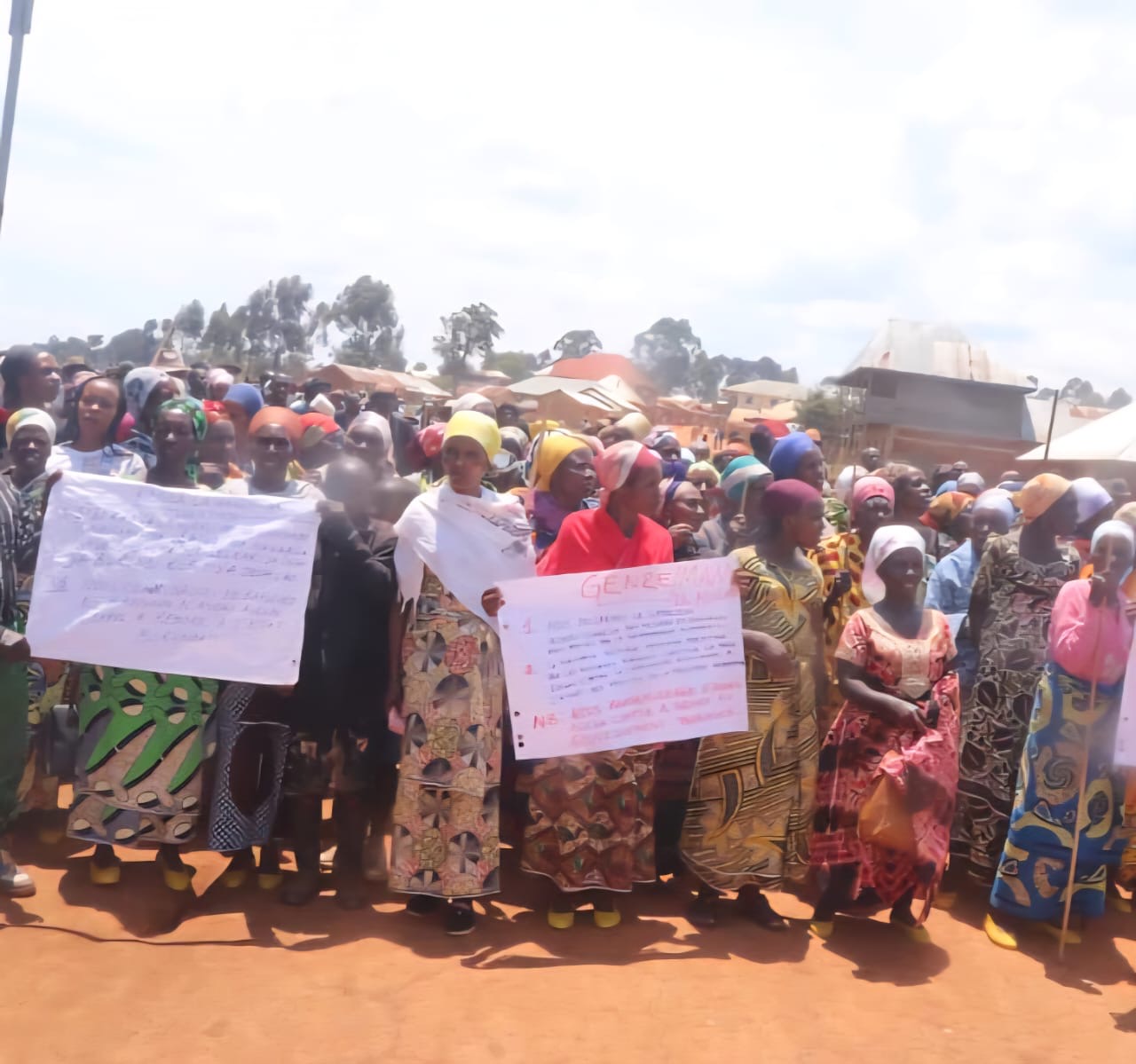
Photo of the week-Minembwe : protest against the Burundian army
Thousands of residents of Minembwe, in the Fizi territory, took to the streets on Tuesday, November 4, 2025, to denounce the blocking of their commercial access routes by Burundian soldiers deployed in Mikalati, in the Balala Nord groupment, Tanganyika sector.
The demonstration, led by the Banyamulenge community, brought together students, women, and men, who accuse the Burundian army of trying to isolate them economically and physically.
The demonstrators marched from the center of Minembwe to the center of Madegu, holding signs condemning what they call “massacres and blockades orchestrated” by the Burundian army, the Wazelendo armed group, and certain units of the Armed Forces of the Democratic Republic of Congo (FARDC).
“The Burundian soldiers have blocked all the roads leading to the markets.” “We have no more salt, soap, sugar, or medicine,” declared Benigne Nyasingizwa, a women’s representative in Minembwe, in a message to the community. “We don’t know what the Burundian army wants from us. If they open the road to Mikalati, we’ll be able to go to the market,” she added.
A blockade denounced for three weeks
According to several residents, this blockade has lasted for nearly three weeks and prevents all movement between Minembwe and the markets in the Bijombo area. Customary chief Muhire, also present at the demonstration, called on the Burundian government to withdraw its troops from the highlands, asserting that “their presence aims to exterminate the Banyamulenge.”
Residents accuse Burundian soldiers of conducting joint operations with the Wazelendo and certain units of the FARDC (Armed Forces of the Democratic Republic of Congo) against Twirwaneho, a self-defense group composed of young Banyamulenge men from Rugezi, Mikenge, and Kahwela.
Persistent regional tensions
Recent reports by United Nations experts have already documented the presence of Burundian soldiers in South Kivu, sometimes operating alongside local militias. These experts report repeated clashes between Burundian troops, the Wazalendo, and the Twirwaneho group, particularly in the localities of Mikenge and Mutunda.
As the march took place in Minembwe, local sources reported renewed fighting in these areas. No official reaction from the Congolese or Burundian governments had been recorded as of Wednesday.
This new flare-up of tensions has reignited concerns about the stability of the South Kivu highlands, a region already marked by decades of intercommunity violence and armed rivalries.
Context : the Burundian presence in South Kivu
Burundi has deployed approximately 10,000 soldiers in eastern DRC to fight alongside the FARDC, the Congolese loyalist army, and the Kinshasa-backed Wazalendo militias in the war against the M23, since March 2023.
But well before that, since 2019, SOS Médias Burundi had documented the presence of the Burundi National Defense Force (FDNB) in South Kivu, accompanied by Imbonerakure, members of the youth wing of the CNDD-FDD, the ruling party in Burundi. These forces were sent to hunt down two armed groups of Burundian origin : Red-Tabara and the FNL of self-proclaimed General Aloys Nzabampema.
On several occasions, Burundian soldiers and the Imbonerakure have been accused of atrocities in this region—assassinations, kidnappings, rapes—targeting, in particular, members of the Banyamulenge community, a Tutsi minority that has been persecuted for many years.
The Burundian authorities, as well as the Secretary General of the CNDD-FDD, Révérien Ndikuriyo, have always denied these accusations, claiming that their detractors are trying to tarnish the image of the Burundian army and the country.
Most recently, Burundian troops concentrated their forces in South Kivu after being pushed back by M23 rebels in North Kivu. Since the beginning of the year, rebels have seized Bukavu, the capital of South Kivu province, forcing Congolese authorities to relocate the administrative center to Uvira, a few kilometers from Bujumbura, Burundi’s commercial capital.
Burundian soldiers are now participating in operations aimed at containing the M23’s advance toward Uvira, in an area where the rebels receive support from the armed group Twirwaneho, composed of members of the Banyamulenge community who are intimately familiar with the region’s mountainous terrain.
The M23, a former Tutsi rebellion that resumed hostilities in late 2021 after its reintegration efforts failed, now controls the provincial capitals of North Kivu and South Kivu, as well as several strategic mineral-rich areas. Its fighters, affiliated with the Congo River Alliance (AFC), are suspected of being supported by approximately 4,000 Rwandan soldiers, a claim Kigali firmly denies.
This war in eastern Congo is exacerbating tensions between Burundi and Rwanda, with President Évariste Ndayishimiye accusing his counterpart, Paul Kagame, of being “the destabilizer of the sub-region,” while Kigali accuses Gitega of collaborating with the FDLR, Rwandan Hutu rebels accused of participating in the 1994 genocide against the Tutsis.
Photo : Women from the Banyamulenge community demonstrate, holding placards, against the blockade imposed by the Burundian army, November 4, 2025 (DR/ SOS Médias Burundi)
You might also like
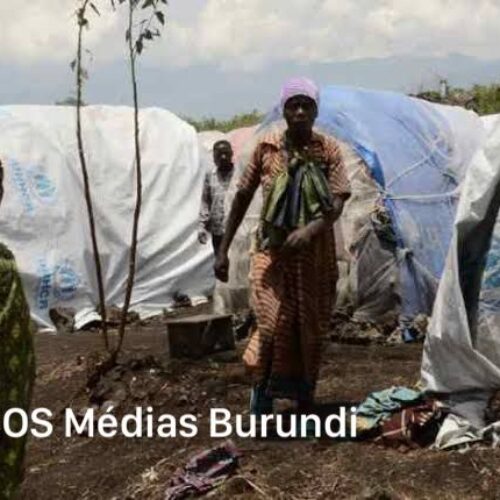
Photo of the week : eventful week between allies in North Kivu
During the week of September 23, 2024, several clashes took place between the FDLR (Democratic Forces for the Liberation of Rwanda) and the Congolese army on one side and between
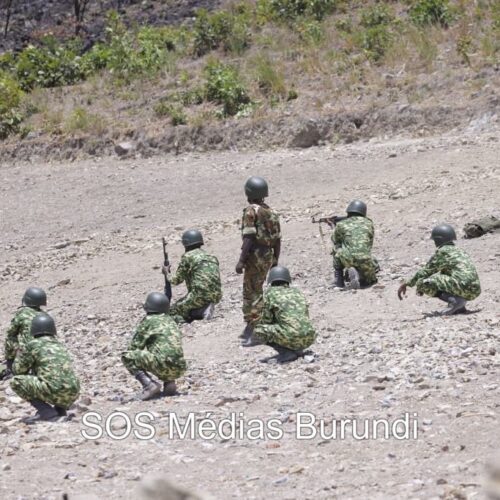
Photo of the wee-Buhumuza : Kigarika, the new laboratory for the militarization of the Imbonerakure
President Évariste Ndayishimiye attended the ceremony on Thursday in Kigarika, Ruyigi district, Buhumuza province, eastern Burundi, where the first class of members of the Reserve and Development Support Force (FRAD)
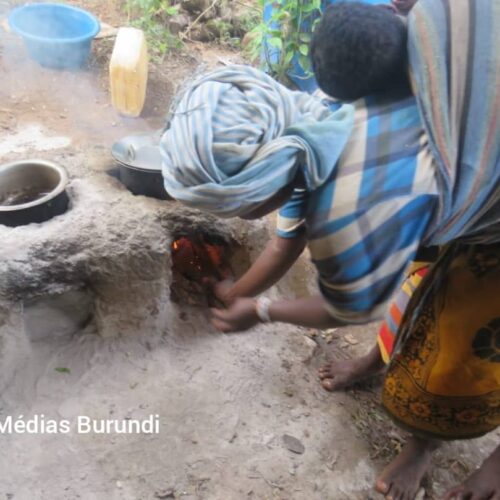

Photo of the week : suspicious deaths and rumors of poisoning in the Nduta refugee camp
A climate of fear has taken hold in the Burundian refugee camp of Nduta, in northwest Tanzania, following several suspicious deaths and accusations of poisoning. Since July, rumors have circulated