
DRC : Félix Tshisekedi reaffirms his refusal of any integration or partnership with the M23
SOS Médias Burundi
Goma, November 30, 2025 – Through official communications published on Friday, November 28, 2025, by the Congolese Presidency on Facebook and X, President Félix Tshisekedi announced an upcoming trip to Washington, D.C., to finalize the agreement recently concluded with Rwanda under the U.S. mediation.
But while this move seems to place Kinshasa within a renewed diplomatic dynamic, the Head of State made firm statements to the Congolese diaspora in Serbia : there will be no integration or partnership with the M23 rebels.
The M23 : a former Tutsi rebellion affiliated with the AFC
The M23, a former Tutsi rebellion that resumed hostilities in late 2021, accuses Congolese authorities of failing to honor their commitments to reintegration. Kinshasa also accuses Rwanda of supporting the rebels. UN experts, whom Kigali has dismissed as “imposters,” recently claimed that approximately 6,000 Rwandan soldiers have been deployed in eastern Congo to support the M23—allegations firmly denied by the Rwandan government.
The M23 is affiliated with the Congo River Alliance (AFC), a political and military movement hostile to Kinshasa, led by the former president of the CENI (Independent National Electoral Commission), Corneille Nangaa, who believes that “a federal state will be able to meet the needs of the population.”
For its part, Burundi has deployed more than 10,000 soldiers in eastern Congo to fight alongside the FARDC and local militias supported by Kinshasa, notably the Wazalendo.
In the provinces of North Kivu and South Kivu, the M23 continues to expand its influence after seizing control of several strategic cities, including the provincial capitals of Goma and Bukavu, as well as mineral-rich areas. In recent days, hostilities have been particularly intense in South Kivu, where the Burundian army is reported to have suffered heavy losses.
A red line clearly drawn by Tshisekedi
Amidst mounting pressure from regional negotiations, Tshisekedi has publicly reaffirmed his opposition to any integration of M23 fighters into the Armed Forces of the DRC (FARDC). This position aligns with the law passed by the Congolese Parliament, which prohibits the reintegration into the army of individuals who have taken up arms against the State.
M23’s reaction : “a defeated army is not our choice”
The rebel movement’s response was swift. On his Twitter account, Bertrand Bisimwa, deputy coordinator of the AFC/M23, reiterated his organization’s consistent position on military integration :
“We have always stated and reaffirmed this at the negotiating table : integration—whether it be merging or mixing—within a defeated army is not our choice,” he declared.
Mr. Bisimwa also reiterated his movement’s ambition to participate in the creation of a new security system in the country :
“We will build and lead the new Defense and Security Forces of the Federal Republic of Congo.”
Between popular distrust and political dilemmas
In Congolese public opinion, distrust remains deep : many Congolese believe that the integration and mixing processes—already used in the past—have facilitated the infiltration of the army by foreign or rebel armed groups. This perception fuels near-unanimous rejection within the Congolese society.
However, several analysts point out that President Tshisekedi’s categorical refusal could lead to an operational impasse. Without a reintegration mechanism or a permanent cantonment, no concrete plan currently exists to address the fate of the several thousand M23 fighters still active in the east of the country.
This situation risks complicating the effective implementation of the announced agreement with Rwanda.
Between Washington and the east, a fragile balance
President Tshisekedi’s announced trip to the United States aims to consolidate a regional agreement intended to pave the way for de-escalation with Rwanda.
But the contradictory statements—ranging from diplomatic openness to military firmness—underscore the complexity of a situation where every word can influence the fragile regional balance.
For now, the political standoff between Kinshasa and the M23 continues, leaving the central question unanswered : how to achieve lasting stability in eastern DRC without integrating the M23 fighters and without legitimizing their insurgency?
In response to escalating violence, a meeting is scheduled for December 4 in Washington between Presidents Félix Tshisekedi (DRC) and Paul Kagame (Rwanda), as part of regional peace efforts.
During a press conference held Thursday, November 27, in Kigali, Mr. Kagame stated that “a possible meeting in Washington with Tshisekedi and Trump would be a good thing,” emphasizing the importance of regional cooperation to stabilize the eastern DRC.
You might also like
Bubanza : witch hunt spreads within the ranks of the CNDD-FDD
SOS Médias Burundi Bubanza, June 23, 2026 – Five CNDD-FDD members from Mitakataka village, in the Mitakataka zone of the district of Bubanza, in the province of Bujumbura, western Burundi,
Gitega : a police officer found dead
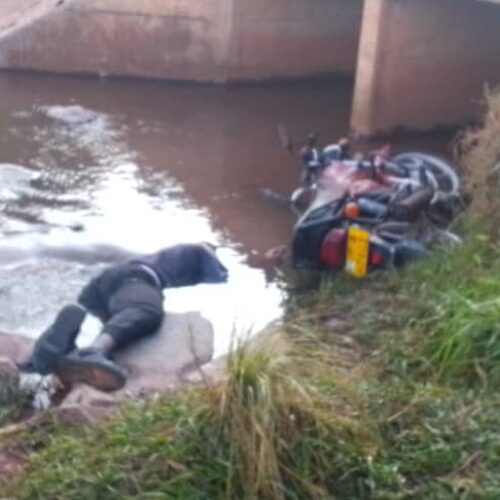
The body of first police sergeant Major Lionel Bizoza, 34 years old, was found in the morning of Sunday, June 23, in the Karonga stream located in Rukoba village in

Rugombo : two young motorcycle taxi riders kidnapped
Justin Nirema and Yves Nsanzurwimo have not been found since last Saturday. They were kidnapped while taking food to their brothers studying in the DRC, according to witnesses.Intelligence suspected them