
South Kivu : the war in the east exacerbates tensions between Burundi and Rwanda
SOS Médias Burundi
Bujumbura, December 9, 2025 — During a meeting Monday afternoon with diplomats accredited to Burundi and representatives of regional and international organizations, Burundian Foreign Minister Edouard Bizimana denounced recent Rwandan attacks against Burundian positions in the Democratic Republic of Congo (DRC). As of this article’s publication, there had been no direct response from Rwanda to the Burundian Foreign Minister’s allegations.
Coordinated attacks against Burundian forces and the civilian population
According to Mr. Bizimana, Rwanda launched these offensives shortly after the signing, on December 4 in Washington, of a regional agreement to which Burundi was a signatory. The attacks reportedly targeted the Burundi-Congolese Joint Task Force (TAFOC), deployed to support the Congolese government, as well as the civilian population, using drones and precision weapons.
The minister specified that preparations for these actions began as early as November 28, with the passage of military trucks and the deployment of thousands of Rwandan soldiers to the DRC, including an additional 8,000 recently. According to Bizimana, the objective was to capture several strategic cities : Uvira, a few kilometers from Bujumbura—the commercial capital of Burundi—the Fizi territory, and the city of Kalemie, the capital of Tanganyika province.
Burundian reinforcements and losses
Since December 1, clashes in the localities of Lubarika, Mitimbili, Katogota, Luvungi, and Sange have resulted in numerous casualties among Burundian soldiers. Among them was Lieutenant Colonel Athanase Minani, the highest-ranking officer killed since the start of the intervention in the DRC.
Unlike peacekeeping missions in Somalia, where soldiers’ families receive clearly defined compensation, no official procedure exists for Burundian soldiers killed in the DRC, provoking anger and incomprehension among their families.
Burundi calls for sanctions
Minister Bizimana called on the international community to sanction Rwanda for these attacks, which he described as “indiscriminate” and a violation of regional agreements.
Denouncing what he called Kigali’s “double game,” Edouard Bizimana insisted that Burundi is not a party to the conflict, but is intervening to secure its border and cooperate with Congolese forces. According to him, the country is ready to engage in dialogue with Kigali to find a peaceful solution, while also stating its readiness to defend its territory if necessary.
“We have prevented several attacks targeting our soil.” “Burundi has the right to prosecute those who have attacked its territory,” he said.
The M23, a driver of regional tensions
Reactivated in 2021 and integrated into the Congo River Alliance (AFC) of Corneille Nangaa, former president of the Congolese Independent National Electoral Commission (CENI), the M23 now controls several provincial capitals in North and South Kivu, as well as strategic mineral-rich areas. Kinshasa accuses Rwanda of supporting the movement, a claim Kigali denies, although several UN reports mention the presence of thousands of Rwandan soldiers fighting alongside the M23.
Since March 2023, Burundi has officially deployed more than 10,000 soldiers to support the Armed Forces of the Democratic Republic of Congo (FARDC) and the local Wazalendo militias in the war against the M23. In December 2023, 272 Burundian soldiers who refused to fight the M23 were arrested, tried, and sentenced to prison terms ranging up to life imprisonment. They are currently held in Murembwe, in the southwest of the country.
Diplomacy and prospects
On the sidelines of the discussions held in Washington, Burundian President Évariste Ndayishimiye stated :
“Burundi has a major role to play,” adding that he hopes it is possible “to achieve lasting peace and the stabilization of the region.”
On several occasions, Mr. Ndayishimiye defended the Burundian military presence in the DRC as a duty of regional solidarity :
“It is normal that Burundian soldiers are killed in the DRC, because they signed up for it.”
Nevertheless, he reiterated that the advances of the M23 are the responsibility of the Congolese authorities :
“It is up to the Congo to explain how the rebels continue to gain ground while we came to help them. Burundi is only providing support.”
Rwanda, in turn, accuses the DRC and Burundi of supporting the FDLR, a Rwandan Hutu group operating in eastern Congo and accused of participating in the 1994 genocide against the Tutsis. The Washington agreement notably provides for the disarmament of these fighters, whom President Félix Tshisekedi describes as “a residual force reduced to banditry.”
This situation is unfolding within an already tense regional climate, marked in particular by the Burundian authorities’ decision to close the land borders with Rwanda in January 2024, a measure justified by recurring accusations of Rwandan support for armed groups hostile to Burundi.
At this stage, no independent investigation has corroborated the accusations made by Minister Bizimana, leaving these claims unconfirmed for the time being.
You might also like
Burundi : several committed activists demand the release of journalist Sandra Muhoza
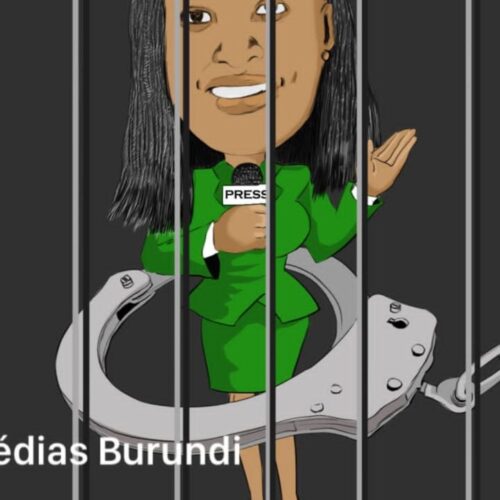
About twenty organizations with a Burundian majority issued a statement on Friday, February 28, 2025, to demand the unconditional release of journalist Sandra Muhoza. detained for nearly a year, accused
Cibitoke : a 53-year-old farmer shot dead by soldiers near the border with the DRC
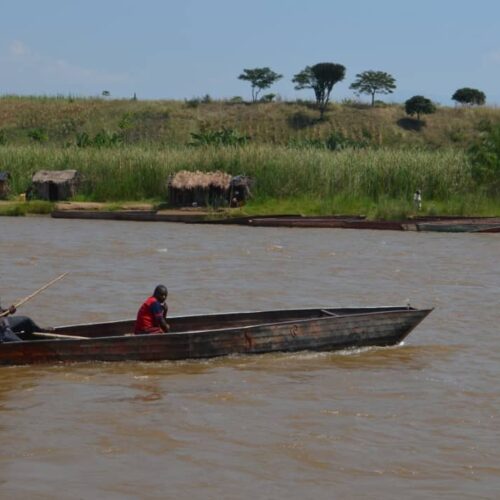
SOS Médias Burundi Cibitoke, January 11, 2026 – A 53-year-old farmer was shot dead by Burundian soldiers while on his way to his rice field located along the Rusizi River,

Mwenga collapses : M23 advances, South Kivu region on high alert
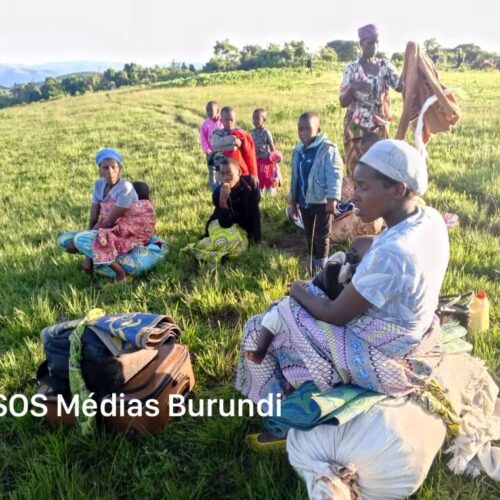
SOS Médias Burundi Bukavu, December 2, 2025 – Fierce fighting is shaking Mwenga, located in South Kivu on the border with Burundi. Faced with the rapid advance of the M23,