DRC : AFC/M23 surprise withdrawal from Uvira – Kinshasa cries maneuver and demands evidence
SOS Médias Burundi
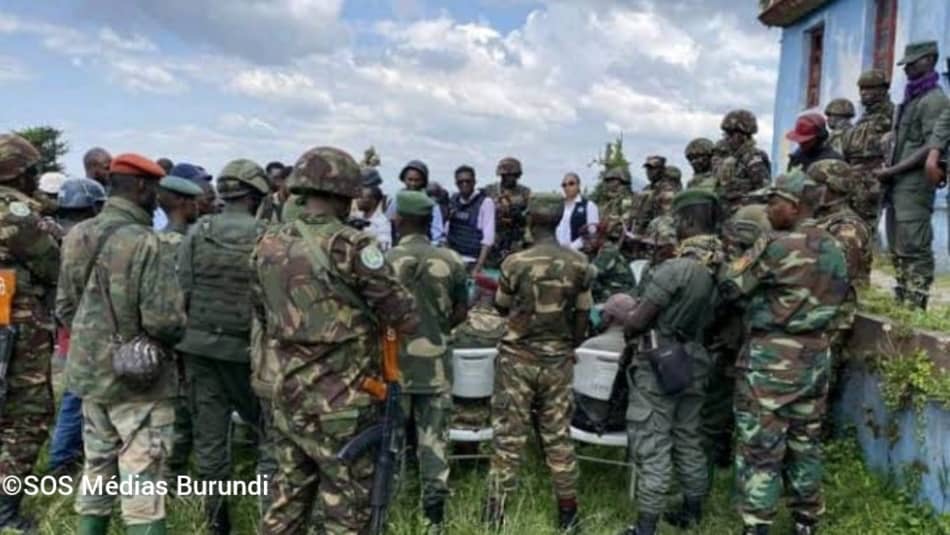
Uvira, December 18, 2025 – The withdrawal of M23 rebels from Uvira has been underway since Wednesday evening, according to local sources contacted by SOS Médias Burundi. The M23, now integrated into the Congo River Alliance (AFC), a political and military movement hostile to Kinshasa and led by former CENI president Corneille Nangaa – who advocates for a federal state in the DRC – asserts that the operation will be completed on Thursday, amidst intense regional and international pressure.
Announced withdrawal from Uvira : a departure under scrutiny
According to Bertrand Bisimwa, deputy coordinator of the coalition, the withdrawal is indeed underway and proceeding gradually. He called on the population to remain calm and asked the international mediation to guarantee that Uvira would not be remilitarized or subjected to reprisals after the rebels’ departure.
Local sources told SOS Médias Burundi that the fighters began leaving Uvira around 5:30 p.m. on Wednesday, heading towards Kiliba. Those positioned near the Gatumba-Kavimvira border post, on the border between Burundi and the DRC, also reportedly began their withdrawal.
“Some rebels were on foot while others withdrew in military vehicles. They were very calm as they left,” said a resident of Uvira.
In a statement signed by Corneille Nangaa, the movement specified on Monday that this withdrawal aims to support the Doha process, mediated by Qatar, which is presented as a framework for regional de-escalation. The AFC/M23, however, set several conditions, including the demilitarization of Uvira, the protection of the civilian population, and the monitoring of the ceasefire through the deployment of a neutral force.
However, the coalition did not specify where its troops would be stationed afterward, leaving strategic uncertainty. The day before, residents had demonstrated, demanding that the rebels remain in place for fear of a security vacuum.
Kinshasa disputes : “prove this withdrawal!”
In Kinshasa, the announcement was met with skepticism.
On the social media X, the Congolese government spokesperson, Patrick Muyaya, questioned the veracity of the withdrawal :
“Who can verify this? Where are they going? How many were there? What are they leaving behind in the city? Mass graves? Armed men disguised as civilians?”
He accuses the AFC/M23 of orchestrating a public relations campaign to save Kigali, which he presents as the true mastermind of the rebel movement. The Congolese government demands a “real” and “complete” withdrawal of Rwandan troops from all occupied areas in the DRC.
American pressure and Washington’s agreement
This announcement comes as the American pressure on Kigali intensifies. Since the capture of Uvira on the night of December 9-10, Washington has repeatedly warned Rwanda.”
On Friday, December 12, before the UN Security Council, US Ambassador Mike Waltz declared that Kigali was “leading the region toward greater instability and toward war.” US Secretary of State Marco Rubio accused Rwanda of violating the peace agreement signed in early December in Washington, while the US Ambassador to the DRC, Lucy Tamlyn, indicated that her country was examining “all the tools at its disposal, including sanctions, to ensure that the commitments made are respected.”
This announcement also comes less than two weeks after the signing of the Washington Agreement of December 4, 2025, concluded under the US mediation in an attempt to defuse tensions between the DRC and Rwanda. According to our sources, the withdrawal is a response to US diplomatic pressure.
Already under US sanctions, the coordinator of the AFC/M23, Corneille Nangaa, asserts that this is a strategic reorientation and not a sign of weakness.
Call to Congolese loyalist forces
On December 15, Corneille Nangaa called on the FARDC, the Congolese loyalist army, to join the AFC/M23. He recalled President Félix Tshisekedi’s remarks, made last weekend to young people in Kinshasa :
“I found an army of bums when I arrived in 2019.”
According to Nangaa, these remarks justify a “radical change.” He also called on the Wazalendo militias to join what he described as a “revolution.”
Regional context : a conflict with deep ramifications
Uvira, which fell to the M23 on December 9, is located just a few kilometers from Bujumbura, Burundi’s commercial capital, where United Nations agencies and a large part of the central administration are concentrated.
Reactivated in 2021, the M23, composed mainly of Congolese Tutsis, now controls several strategic territories in North and South Kivu.
Kinshasa accuses Kigali of providing military support to the rebel movement, while Rwanda denounces the support given by the DRC and Burundi to the FDLR, an armed Rwandan Hutu group accused of participating in the 1994 genocide against the Tutsis.
These conflicting accusations persist despite the Washington’s agreement. Kigali continues to deny any direct support for the M23, dismissing the reports of UN experts—which estimate the number of Rwandan soldiers fighting alongside the rebels at between 5,000 and 7,000—as “fabrications.”
Furthermore, the M23 is now integrated into the Congo River Alliance (AFC), led by Corneille Nangaa, former president of the Congolese Independent National Electoral Commission (CENI), which advocates for a federal state in the DRC.
For its part, Burundi has deployed more than 10,000 soldiers in South Kivu to support the FARDC and the Wazalendo militias allied with the Congolese government.
The announced withdrawal from Uvira marks a major turning point in the regional crisis, but it remains difficult to confirm. Between Kinshasa’s skepticism, the American pressure, Qatari mediation, regional mistrust, and strategic gray areas, the eastern DRC remains caught in a shifting conflict.
The expected reaction of the FARDC and the response to the AFC/M23’s appeals could determine a new phase of the conflict. The situation remains volatile, at the heart of tensions that extend far beyond the city of Uvira.
You might also like
DRC : General Masunzu arrested, a symptom of an army in crisis
SOS Médias Burundi Bukavu, November 4, 2025 – Lieutenant General Pacifique Masunzu, commander of the 3rd Defense Zone of the Armed Forces of the Democratic Republic of Congo (FARDC), was
Burundi : Burundian soldiers who refused to go to fight alongside the FARDC were concentrated in three jails after their conviction
The 274 soldiers, only two of whom were acquitted, were sent to the prisons of Ruyigi (east), Bururi and Rumonge (southwest). These detention centers respectively hosted 82, 61 and 131
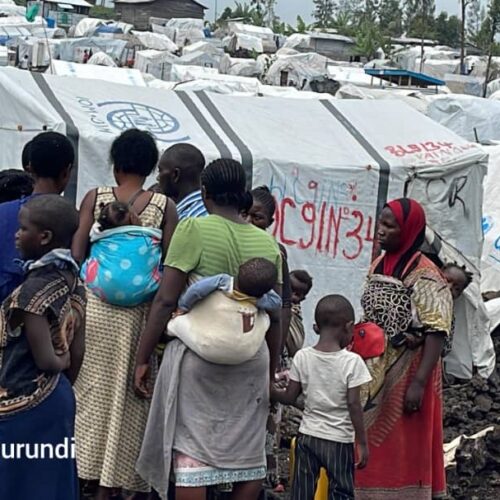

Goma : at least nine displaced women and girls raped by gunmen
The victims are settled in the Baraka site located west of the city of Goma, capital of North Kivu in eastern Congo. The perpetrators of the attack have not yet