
South Kivu : Twirwaneho/M23 breakthrough in Fizi shatters the FARDC–Burundi–Wazalendo front
SOS Médias Burundi
Fizi, January 17, 2026 – The Twirwaneho armed group, composed mainly of fighters from the Banyamulenge minority and a key ally of the M23 in South Kivu, has seized control of the strategic position known as “Point Zero” in the Fizi territory, following two days of fierce fighting against the Armed Forces of the Democratic Republic of Congo (FARDC), supported by Burundian soldiers and Wazalendo militiamen.
According to several local sources contacted by SOS Médias Burundi, the fall of this position occurred on Friday, January 16, after intense fighting in the highlands. After the rebels seized the area, elements of the FARDC (Armed Forces of the Democratic Republic of Congo), the National Defense Force of Burundi (FNDB), and Wazalendo groups retreated to the towns of Mulima and Mutambala, abandoning a position considered a key military stronghold in southern South Kivu.
A strategic position lost
On the ground, the new occupiers of Point Zero celebrated what they called a major victory, claiming that this position was a strategic bastion for the FARDC and their allies, used as a rear base for military operations in the region.
“Our villages have been attacked repeatedly from this area. Cows have been looted, civilians killed, and villages burned,” residents contacted by SOS Médias Burundi stated, specifically mentioning the towns of Kalingi, Mikenge, Rubemba, Rwitsankuku, and Kalongi.
A security breach with serious consequences
For several security analysts, the loss of Point Zero constitutes a serious military setback for the FARDC and their allies. This position could now open a strategic corridor towards Mulima, Mukera, Fizi-centre, and the town of Baraka, raising fears of an acceleration of the rebels’ advance in the southern part of the province.
In the wake of the fighting, residents belonging to the Nyindu, Bembe, and Fulero communities, who were present in the area at the time of the clashes, fled to Mutambala, according to local humanitarian sources contacted by SOS Médias Burundi, exacerbating an already acute humanitarian crisis.
Disputed casualty figures
In a statement released the same day, the FARDC claimed to have neutralized more than 180 Twirwaneho/M23 fighters in two days of operations in the territories of Fizi and Uvira. These figures could not, however, be independently verified, while the rebel movement does not acknowledge these losses.
A regionalized and explosive conflict
These clashes are taking place within an extremely complex and violent regional context in eastern Democratic Republic of Congo. The FARDC, supported by Burundian troops and the Wazalendo militias, are fighting the M23, which was reactivated in 2021 and is now part of the Congo River Alliance (AFC).
The AFC/M23 controls several strategic areas in North and South Kivu, including Goma and Bukavu, the capitals of the two Kivus, as well as the Rubaya mining site, one of the world’s largest coltan deposits, a mineral essential for the electronics industry and new technologies. The movement also advocates for the establishment of a federal state in the DRC.
Diplomatically, Kinshasa accuses Kigali of supporting the M23, while Rwanda denounces the alleged support of the DRC and Burundi for the FDLR, a Rwandan Hutu armed group, some of whose members are accused of participating in the 1994 genocide against the Tutsis. Despite official denials, a report by the UN Group of Experts mentions the presence of 5,000 to 7,000 Rwandan soldiers alongside AFC/M23 fighters.
The fighting continues despite the Washington Agreement, signed on December 4, 2025, between the DRC and Rwanda under the US mediation, in which Burundi participated as an observer, represented by President Évariste Ndayishimiye. On the ground, this agreement remains largely a dead letter, confirming the failure of diplomatic efforts.
In this climate of regionalized warfare, the capture of Point Zero by Twirwaneho/M23 marks a new stage in the deterioration of the southern front and reinforces fears of a military escalation with major human, security, and geopolitical consequences for the entire Great Lakes region.
You might also like
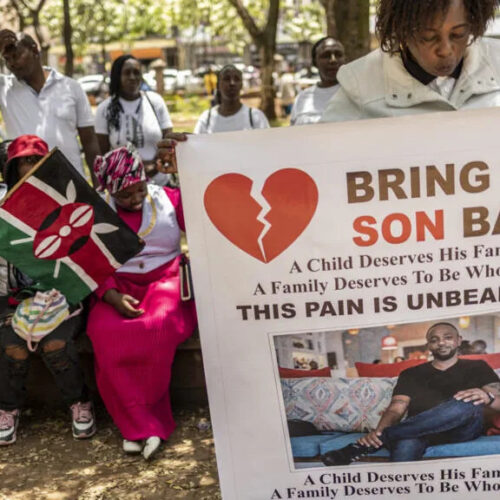
“African cannon fodder” : the shadow of transnational recruitment for the war in Ukraine — From Kenya to Burundi, a mechanic of despair
SOS Médias Burundi Bujumbura, March 26, 2026 — At least six Burundians have already been killed in the war in Ukraine, according to multiple sources. Behind these losses, which have
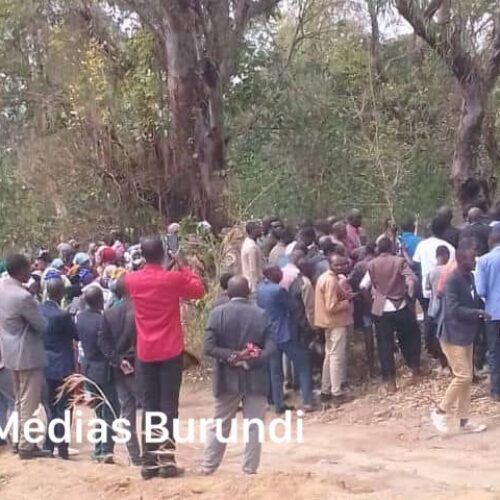
Ruyigi : a Congolese refugee found dead
On Sunday, a sordid tragedy shook the Nyankanda refugee camp, located in the district of Butezi, Ruyigi province, in eastern Burundi. Innocent, a Congolese refugee aged over 30 years, was
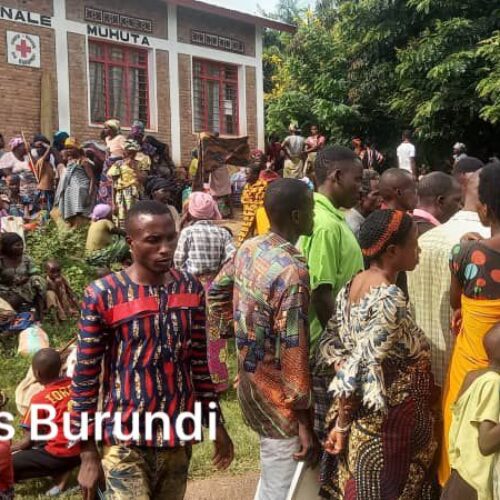

Gitaza : a man arrested for alleged rape of a minor
SOS Médias Burundi Gitaza, July 20, 2025 – A 26-year-old man was arrested on Thursday in Gitaza, in Muhuta district, Burunga province (southern part of the country). He is suspected