
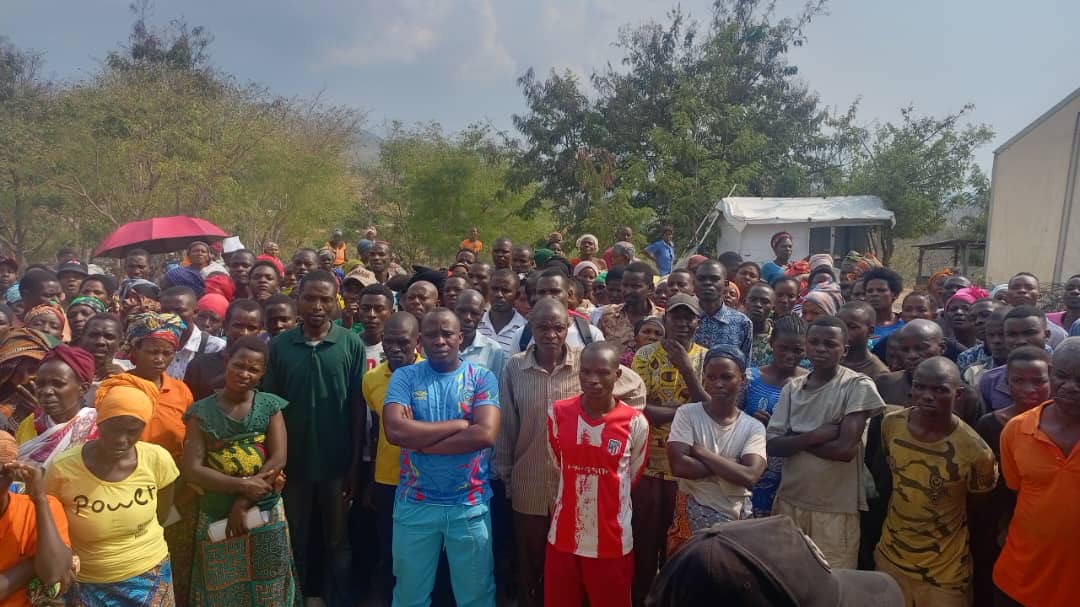
DRC : in Lusenda, Burundian refugees say they are abandoned under tarpaulins after years of waiting
SOS Médias Burundi
Uvira, July 16, 2026 – After several years living in severely dilapidated shelters, hundreds of Burundian families living in the Lusenda camp, in the Fizi territory of South Kivu, eastern Congo, received tarpaulins on Tuesday distributed by the United Nations High Commissioner for Refugees (UNHCR), through its implementing partner, the International Committee for Emergency Relief and Development (CIAUD). While this assistance provides immediate relief to many households, it does not allay the refugees’ concerns, who are demanding more sustainable solutions to improve their living conditions.
Tarpaulins to protect severely damaged shelters
The distribution took place in front of the offices of the National Commission for Refugees (CNR), where hundreds of beneficiaries gathered to receive this assistance.
For many families, these tarpaulins will provide better protection for their homes against the rain after several years without replacement of roofing materials.
“It’s been three years since I last received any tarpaulins. When it rained, my children slept in the rain because our roof was completely damaged. Today, we are relieved and we hope to get through the rainy season without getting wet,” said Jean N., one of the beneficiaries.
According to those in charge of the operation, 510 households, out of 562 identified as high-risk cases, received this assistance. In accordance with the new UNHCR protocol, each household receives four tarpaulins, regardless of the number of people living there.
Refugees demand sustainable solutions
While the beneficiaries welcome this distribution, many feel it only partially meets their needs.
They are asking the UNHCR to gradually replace the tarpaulins with corrugated iron roofs, which are more durable and better suited to a situation of exile that has lasted for several years.
“In other countries, the UNHCR builds houses with corrugated iron roofs for refugees. Here in Congo, we are only given tarpaulins that deteriorate quickly. We are asking for corrugated iron roofs,” says a refugee.
Several families also regret not having been selected as beneficiaries.
“I didn’t receive any tarpaulins even though my house is very old. We are asking the UNHCR to rehabilitate our houses,” laments a refugee.
CIAUD promises to continue advocacy
According to the International Committee for Emergency Relief and Development (CIAUD), advocacy efforts will continue so that households not currently receiving assistance can also benefit from this aid.
This distribution comes as the rainy season approaches, a particularly difficult time for families living in severely damaged shelters.
A persistent humanitarian crisis
Beyond the shelter problem, Burundian refugees living in the Lusenda and Mulongwe camps continue to face a particularly worrying humanitarian situation.
They have now gone more than a year and a half without food assistance, a situation that exacerbates their vulnerability and further weakens households already facing extremely precarious living conditions.
The Democratic Republic of Congo currently hosts more than 42,000 Burundian refugees, almost all of whom are living in the province of South Kivu, in the east of the country, where humanitarian needs remain immense.
For the refugees in Lusenda, this distribution of tarpaulins is a welcome relief from the bad weather. However, they feel it does not address the structural difficulties they have faced for several years and are calling on the UNHCR and its partners to implement sustainable solutions to guarantee more dignified living conditions.
You might also like
Tanzania: authorities to expel former Burundian refugees who have returned to exile
In total, there are 1,048 Burundians to be affected by the measure. They are former refugees who have returned to exile in the past two years after being repatriated to
Dzaleka : two pregnant refugees die before giving birth, testimonies denounce conditions of access to healthcare in Dowa
SOS Médias Burundi Dzaleka, August 17, 2026 — The Dzaleka refugee camp, located in the Dowa district of central Malawi, is facing renewed concerns regarding access to healthcare. Two Burundian

DRC : Burundian soldiers sent to their deaths — a hidden war, without compensation or truth
SOS Médias Burundi Bujumbura, January 4, 2026 – While Burundian authorities continue to justify Burundi’s military presence in the Democratic Republic of Congo (DRC) through alleged “regional solidarity,” the Secretary