
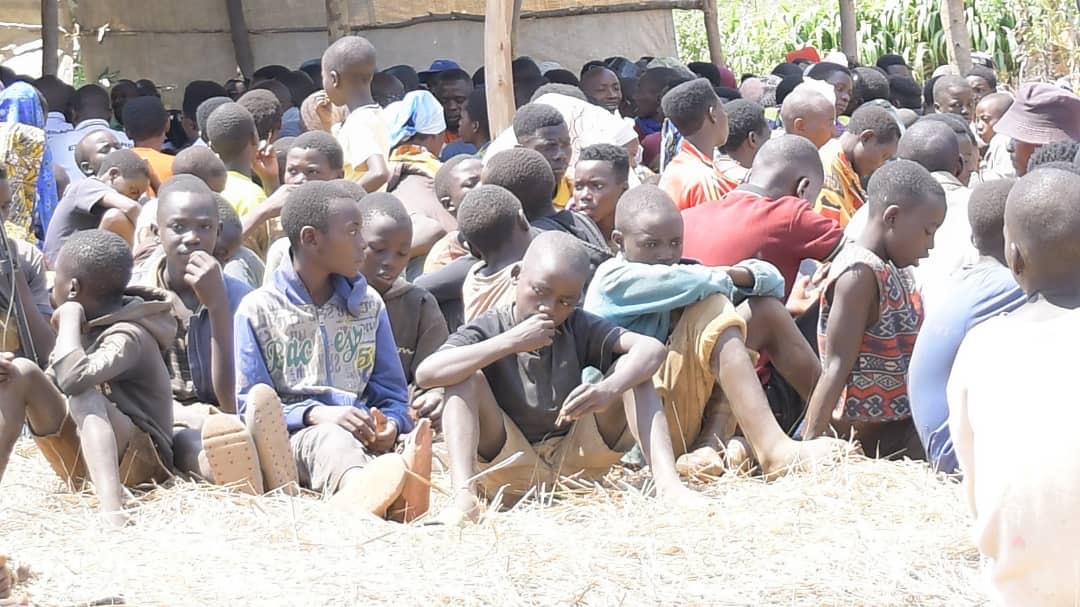
Mass exodus : the local NGO PARCEM accuses African governments of driving their youth abroad
SOS Médias Burundi
Bujumbura, August 13, 2026 — On the occasion of the International Youth Day, celebrated on August 12, the local NGO Speech and Action for the Awakening of the Consciousness and Change of Mindsets (PARCEM) accused African governments of failing to meet the basic needs of their youth, thus pushing many young people to seek opportunities abroad that they cannot find in their own countries.
On this day, PARCEM called on African governments to move from words to concrete actions to curb the exodus of young people.
For Faustin Ndikumana, director of PARCEM, the mass departure of young people abroad reflects a gradual loss of hope. According to him, the future of African youth depends on the ability of states to meet their real
needs rather than simply offering empty rhetoric.
“It is now high time to move beyond rhetoric and take concrete action to address the real challenges,” declared Faustin Ndikumana.
Essential needs still unmet
Based on a survey conducted with a group of young people, the head of PARCEM indicated that several priorities had been identified.
These include access to quality training, infrastructure suitable for self-employment, internet access, electricity and water, as well as sufficient food.
The young people interviewed also emphasized the need to facilitate access to employment and bank loans, enabling them to realize their economic projects and participate in the development of their communities.
According to Faustin Ndikumana, the lack of concrete responses to these needs is pushing many young people to seek opportunities elsewhere, opportunities they cannot find in their own countries.
Unemployment that breeds despair
Youth unemployment and underemployment are a major challenge on the African continent. The International Labor Organization (ILO) emphasizes that young people continue to face significant difficulties in entering the workforce, despite improvements in some global indicators.
In 2025, the ILO estimated that approximately 262 million young people aged 15 to 24 would be neither employed, nor in education, nor in training.
Sub-Saharan Africa remains particularly affected by the prevalence of informal work. According to ILO data, 87.6% of employment there was informal in 2025, reflecting the extent of precarious and insufficiently protected jobs in the labor market.
The problem, therefore, is not simply the lack of employment. For many young people, it is also the difficulty of accessing decent, stable, and adequately paid employment.
This phenomenon is not new. But with the continent’s population growth, the pressure on labor markets is expected to continue to intensify if job creation does not keep pace with the influx of new young workers.
From Burundi to Southern Africa, young people seek opportunities elsewhere
In Burundi, many young people also leave the country to try their luck abroad, particularly in Tanzania, Zambia, and Kenya, as well as in Southern Africa, notably Malawi, Mozambique, and South Africa.
Others head to the Gulf States or Eastern Europe in search of jobs and better living conditions.
But leaving does not always guarantee a better life. Some migrants face difficulties related to their immigration status, unemployment, exploitation, or various forms of abuse.
In Southern Africa, some African nationals have recently faced tensions and hostile acts linked to xenophobia, highlighting the risks migrants can face once they arrive in their destination country.
Graduates without opportunities
In Burundi, every year, many graduates enter the job market without finding opportunities that match their skills.
In the streets of Bujumbura, Burundi’s economic heart and capital, home to UN agencies, a large part of the administration, and commercial activity, many unemployed young people spend much of the day in public spaces, lacking economic prospects.
Some also report harsh treatment during police raids, particularly when accused of disturbing the peace.
For PARCEM, this situation contributes to fostering a sense among some young people that their future lies elsewhere.
The government is highlighting its programs
Faced with these criticisms, the Burundian authorities assert that young people benefit from support through various programs, including the Youth Investment Bank (BIJE) and the Youth Economic Empowerment and Employment Program (PAEEJ).
The government maintains that these initiatives enable young people to develop their projects, create jobs, and contribute to the country’s economic growth.
However, PARCEM believes these efforts must be strengthened by deeper and more sustainable actions.
The NGO specifically calls for improved access to training, employment, financing, internet, electricity, and other essential services, in order to restore confidence to a generation increasingly tempted to emigrate.
For Faustin Ndikumana, it is now urgent to create the conditions that allow young people to build their future in their own countries, rather than seeing them embark on sometimes dangerous migration routes in search of a better life.
You might also like
Bururi : gereza limezidiwa na idadi kubwa ya wafungwa
Gereza la Bururi (kusini mwa Burundi) linawahidhi wafungwa ambao wanazidi uwezo wake kwa mjibu wa vyanzo katika idara ya magereza. Inawapa hifadhi watu 383 wakati uwezo wake hauzidi watu 250.
Giharo – Rutana : CNL activists mistreated by CNDD-FDD activists
According to officials of the opposition CNL party in Giharo district, in Rutana province (southeast Burundi), activists of their party are mistreated by members of the CNDD-FDD party. The latest


Cibitoke: more than ten minors raped in less than a month
Little girls and under 15 adolescents are frequently raped in three communes of Cibitoke province. Reports show more than ten victims in the area in less than a month. Out-of-court