“My motherhood was stolen” : a patient denounces medical negligence with irreversible consequences
SOS Médias Burundi
Bujumbura, October 9, 2025 – In Burundian hospitals, tragedies related to medical negligence often remain unreported, stifled by fear and resignation. Yet, behind these silences, lives are shattered.
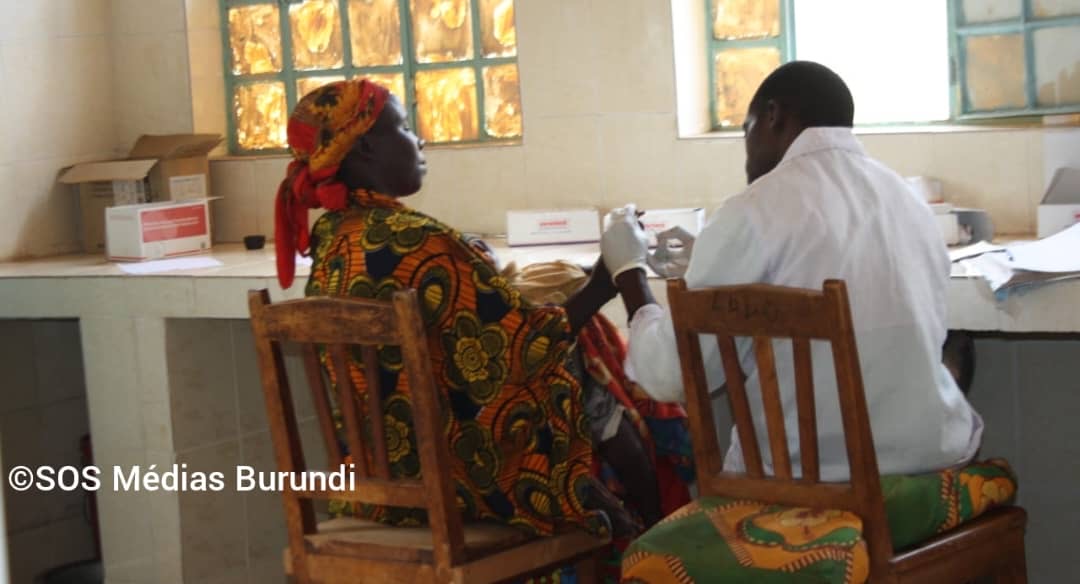
In Kanyosha, in the south of the commercial capital, where several United Nations agencies and central government departments are concentrated, a young woman describes the ordeal she endured after a miscarriage. The lack of medical follow-up nearly compromised her reproductive health. Her story illustrates the recurring failings in the healthcare system, where a simple oversight can destroy the dream of motherhood.
“It was my first pregnancy. “Unfortunately, I had a miscarriage,” says Marie Birahinduka (not her real name), her voice still fragile.
“I went to the hospital urgently, hoping to receive proper care. The doctor examined me, but he didn’t order any tests. Nothing at all,” she recalls.
Five days later, when she returned for an ultrasound follow-up, another team asked her if she had had any lab tests done. “That’s when I discovered I was Rh-negative. It was already too late to receive the injection, which is normally administered within 72 hours,” she confides bitterly.
“I felt like something precious had been stolen from me.”
A gynecologist she consulted next gave her some hope : the seven-day window might be enough, provided the irregular agglutinin (RAI) test was negative. But the young woman encountered a new obstacle : it was the weekend, and the test was only done at public facilities.
“Everywhere, they told me to come back on Monday. I was desperate,” she says.
Unwilling to give up, Marie finally went to the CNTS (National Blood Transfusion Center), where a lab technician agreed to listen to her.
“I will never forget that woman. She understood my pain and agreed to do the test immediately on Monday. That day, she gave me hope again.”
For this resident of Kanyosha, the fear of having lost the possibility of being a mother remains a deep wound.
“I was afraid I would never have another child. All because of a simple oversight,” she sighs.
According to several practitioners contacted by SOS Médias Burundi, checking blood type and Rhesus levels is a basic step after a miscarriage.
“Cases like this shouldn’t happen. These are routine checkups,” admits an obstetrician-gynecologist on condition of anonymity.
Despite the workload and sometimes difficult conditions, healthcare professionals are called upon to be extra vigilant. Because beyond the statistics, every medical oversight has a face, a story, a life turned upside down.
You might also like
Cibitoke : a woman and a child found dead while trying to cross into the DRC
SOS Médias Burundi Cibitoke, March 7, 2026 – The lifeless bodies of a woman and a child of about seven years old were discovered Friday afternoon on the banks of
Ruyigi : warning shots fired at the Busuma site during Eid al-Adha celebrations
SOS Médias Burundi Ruyigi, May 28, 2026 – Warning shots were heard on the evening of Wednesday, May 27, 2026, at the Busuma Congolese refugee site in Ruyigi district, Buhumuza

“Pay or you don’t get through”: in Busuma, refugees trapped in a system of extortion
SOS Médias Burundi Ruyigi, March 29, 2026 — Returning to their country of origin has turned into a nightmare for many Congolese refugees living at the Busuma site in the