
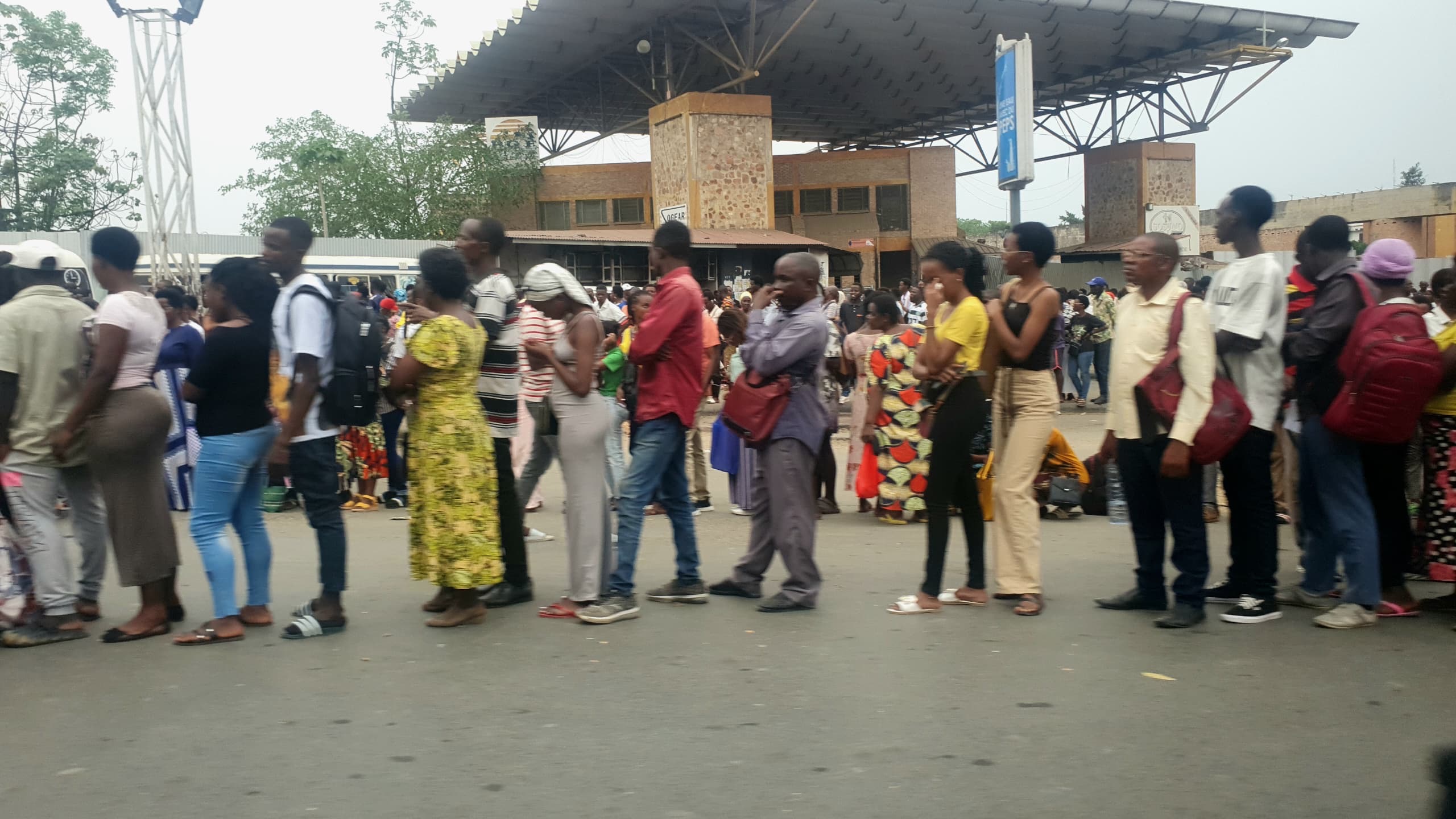
Burundi : miserable salaries starve civil servants and paralyze the country
SOS Médias Burundi
Bujumbura, October 24, 2025 — In Burundi, exhausted and underpaid civil servants are denouncing derisory salaries that prevent them from meeting basic needs, weakening public services and hindering the national development.
Poorly paid, exhausted, hungry… Burundian civil servants are sounding the alarm in the face of increasingly untenable living conditions. Unable to provide housing, transportation, or healthcare for their families, they denounce a situation that not only undermines their dignity but also dangerously hinders the national development.
“How can you work on an empty stomach after walking 20 kilometers to get to your job?” exclaims Fidèle Niyonkuru, a trade unionist at the Burundian Ministry of Health.
His heartfelt plea reflects the dismay of a large proportion of civil servants in the small east African nation, burdened by paltry wages and increasingly untenable living conditions.
Mr. Niyonkuru, a committed trade unionist, denounces a situation he considers unacceptable and contrary to human dignity.
Wages too low to survive
This testimony reflects the reality of thousands of public sector workers, forced to live on wages so low that they no longer cover even basic needs. For several years now, the majority of them have been unable to pay their rent or cover transportation costs. Many travel long distances every day—sometimes up to twenty kilometers—to reach their posts on foot. And once there, they carry out their duties on an empty stomach.
A declining public service, a failing country
This chronic precariousness has direct consequences on the quality of public services and, in turn, on the country’s entire economy.
“You can’t expect good performance when a worker is exhausted, hungry, and demoralized,” insists Mr. Niyonkuru.
The development of the small rast African nation is inevitably slowed.
Fundamental rights violated
The trade unionist denounces a situation that violates the most basic human rights.
“The right to decent housing, to health, to education… nothing is guaranteed today,” he laments. According to him, Burundian workers would have sufficient grounds to take legal action, as the country has ratified several international conventions guaranteeing these fundamental rights.
A striking contrast with national ambitions
While the Burundian government displays an ambitious vision of becoming an emerging country by 2040 and a developed country by 2060, the reality on the ground is quite different.
“The mortality rate is very high, and families are left to fend for themselves. What kind of emergence can we hope for under these conditions?” asks Mr. Niyonkuru.
Faced with this social crisis plaguing the civil service, an urgent reform of salary policy is essential.
Workers, the pillars of public service, cannot be forgotten in a development that seeks to be inclusive.
If the Burundian government truly wants to achieve its long-term objectives, it must begin by guaranteeing respect for the fundamental rights of its own employees.
You might also like

Power outages : local radio stations suffocate in the dark
SOS Médias Burundi Bujumbura, September 17, 2025 — Burundian local radio stations are going through an unprecedented crisis. Power outages, which have become almost daily, cripple studios, interrupt shows and
Bujumbura : unusual flu worries the population
SOS Médias Burundi Bujumbura, January 19, 2026 — For nearly a month, an illness with unusual symptoms has been spreading in several neighborhoods of Bujumbura, causing concern and raising questions


Goma : a civil society protest to denounce blunders in enrollment centers
A demonstration organized by the positive Generation citizen movement took place on Thursday. This organization denounces coinage and influence peddling and other blunders in several voter registration centers in the