DRC – Uvira : killings, looting, and violence increase after M23 withdrawal
SOS Médias Burundi
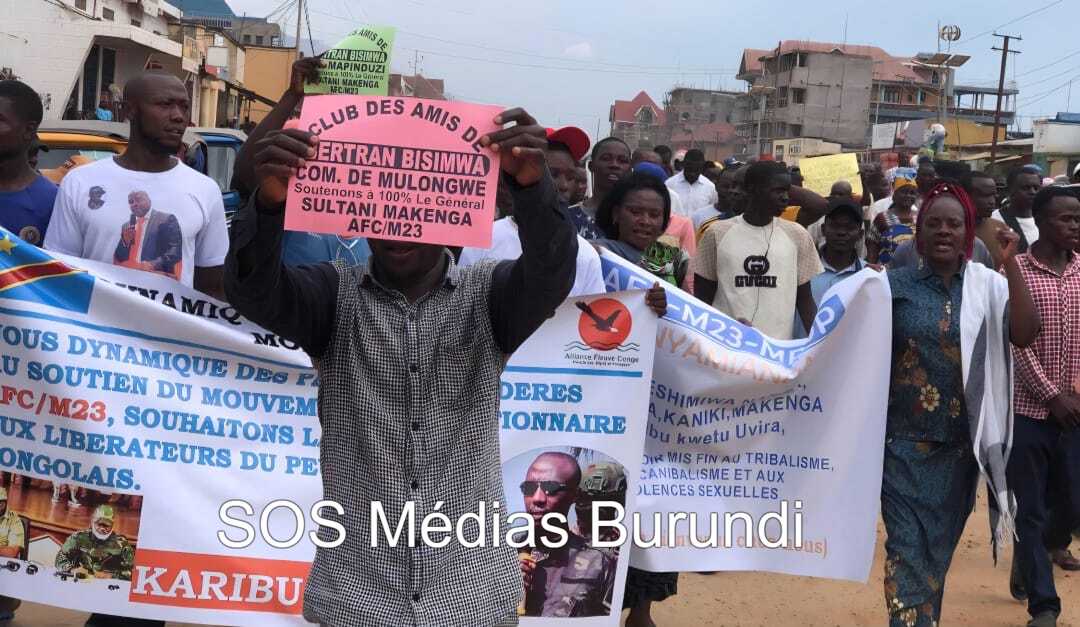
Uvira, January 20, 2026 – Since the withdrawal of the M23 rebel movement from the city of Uvira, the security situation has deteriorated sharply. From Sunday until Tuesday, killings, looting, and sexual violence have been reported in several neighborhoods of the city, according to residents.
Shops, houses, and stores are regularly looted by armed men. Several civilians have been killed, some for refusing to hand over their phones, others because of their appearance, which was perceived as Tutsi, or for allegedly collaborating with the M23. Some testimonies point to Wazalendo elements as perpetrators of the violence, while other acts are reportedly committed by unidentified armed bandits. A woman was reportedly killed after giving food to Wazalendo fighters, who then allegedly assaulted her.
In several families, young girls have been targeted because of their appearance or for refusing to hand over their cell phones. These acts are fueling a climate of widespread fear among the civilian population. Some community leaders are calling on their members, as well as the FARDC, the Congolese loyalist army, to stop the looting and killings, reminding them that the M23 has left the city and that civilians should no longer be targeted.
Security sources within the FARDC indicate that more than twenty families from the Banyamulenge community are currently under the protection of the regular forces.
The withdrawal of the M23, which seized Uvira on the night of December 9-10, 2025, was announced a week later. The last elements of the movement began leaving the city on Saturday evening and completed the operation on Sunday morning. However, the Wazalendo militias, supported by Kinshasa, took advantage of this vacuum to advance towards Uvira, seizing control of the village of Kirungu, 15 km from the city, and firing on several mountains overlooking Uvira, causing panic and population displacement.
The Banyamulenge community particularly targeted
A minority in South Kivu, the Banyamulenge community is regularly stigmatized and associated with Rwandans. It is perceived by some as being close to the M23. In September 2025, demonstrations against the appointment of General Olivier Gasita, a member of this community, degenerated into violence. The armed group Twirwaneho, composed mainly of young Banyamulenge, is considered an ally of the M23 in certain areas.
Regional context and geopolitical implications
Reactivated in late 2021 and composed primarily of Congolese Tutsis, the M23 is part of the Congo River Alliance (AFC), led by Corneille Nangaa. The movement controls several strategic areas in North and South Kivu, including Goma and Bukavu, the capitals of the two Kivus, as well as the Rubaya mining site, one of the world’s largest coltan deposits, supplying a significant portion of the global tantalum used in the electronics industry and new technologies. The AFC/M23 advocates for a federal state in the DRC. Kinshasa accuses Kigali of supporting the movement, while Rwanda denounces the DRC and Burundi for their support of the FDLR, a Rwandan Hutu armed group whose members are accused of participating in the 1994 genocide against the Tutsis.
President Félix Tshisekedi has repeatedly opposed violence targeting certain communities. In late December, the army suspended General Sylvain Ekenge, then spokesperson for the FARDC, for remarks deemed hateful towards Tutsi women.
Despite the agreement signed in Washington on December 4, 2025, under the US mediation, fighting continues. Burundi, represented by President Évariste Ndayishimiye, participated as an observer. According to an internal report consulted by SOS Médias Burundi, more than 29,000 Burundian soldiers have been deployed in eastern DRC, with approximately 10,000 remaining on the ground, fighting alongside the FARDC and the Wazalendo militias against the M23.
Recently, the Secretary General of the CNDD-FDD, Révérien Ndikuriyo, confirmed the continued presence of Burundian soldiers, stating : “We return there whenever we want, in accordance with the signed agreements; it’s practically our home.”
In Uvira, the military reorganization has not brought a return to security for civilians. Between the M23 withdrawal, the advance of the Wazalendo militias, and the persistent involvement of regional forces, local populations continue to suffer the consequences of a conflict with military, community, and geopolitical dimensions. For the Banyamulenge community, regularly associated with outside actors, this violence revives the specter of lasting marginalization and underscores the urgent need to protect minorities in eastern DRC.
You might also like
Ngozi : a man detained for witchcraft, his family denounces political persecution
SOS Médias Burundi Ngozi, May 4, 2025 – The arrest of Elias Niyonkuru, a resident of Nyabihanga village in Ngozi district and province (northern Burundi), continues to spark outrage. Accused

Burundi : a CNIDH employee missing for nearly two weeks
SOS Médias Burundi Bujumbura, March 10, 2026 — An employee of the National Independent Human Rights Commission (CNIDH) has been missing since February 25, 2026, in Bujumbura. She is Chadia

South Kivu : Tutsi Burundian refugees in Mulongwe camp demand evacuation amid threats from Wazalendo militias
SOS Médias Burundi Gitega, December 30, 2025 – Tutsi Burundian refugees living in the Mulongwe camp in Fizi territory, South Kivu province, are making an urgent appeal to the United