Burundi : towards a further demotion of the CNIDH?
The UN special rapporteur on the human rights situation in Burundi no longer wants to hear from the CNIDH, the national human rights body. For the UN diplomat, the CNIDH is no longer independent, much less impartial, and should lose its first rank of A status, a label given by the UN to National Commissions which have proven their independence from the rules in place. The accused denies this. INFO SOS Médias Burundi
The Human Rights Council held a dialogue on Friday with the Special Rapporteur on the situation of human rights in Burundi, Fortuné Gaetan Zongo. The latter once again drew up a gloomy assessment of the Burundian commission.
“The weakness of institutions remains glaring, a weakness which makes them instruments of violation of human rights. Thus, we are deeply concerned by the absence of strict control of the National Intelligence Service to guarantee the rule of law and human rights”, said the Special Rapporteur.
“Several cases involving this body, faced with suspicions of an attack on the internal security of the State or rebellion, refer to offenses with imprecise outlines which leave a large margin for interpretation and do not constitute threats to the state and the population”, Mr. Zongo said, adding that, in most cases, those prosecuted carried out known political and social activities.
In addition, major challenges are at the origin of the poor performance of the judicial system, he notes, citing in particular “insufficient human resources or even interference from the executive. It appears fundamental that the judicial system carries out a critical analysis of its functioning and its role”, said Mr. Zongo.
The CNIDH is silent…
The Special Rapporteur is extremely critical of the silence of the
Independent National Commission for Human Rights, CNIDH.
“It is clear that its reports and public interventions only echo official speeches”, regretted the Special Rapporteur, recalling that during the interactive dialogue on Burundi, on July 6 before the Council, the Commission had affirmed that, “during the 2022-2023 financial year, the political situation was satisfactory, […] the political parties functioned normally”.
“Such assertions, in a context where political parties, the media and the civil society are threatened, show that the Commission does not report on the exact human rights situation”, considers Mr. Zongo.
Wish from the UN
As a result, the UN wants this commission to be downgraded.
“I recommend that the Global Alliance on National HR Institutions therefore reassess its A status in order to encourage this commission to comply with the principles concerning national institutions for the promotion and protection of human rights”, concluded the Burkinabè Fortuné Gaetan Zongo.
The UN Rapporteur is not going solo. Around twenty national and international human rights organizations support this request.
An oral statement from FIACAT co-sponsored by CCPR Centre, DefendDefenders (East and Horn of Africa Human Rights Defenders Project), International Rehabilitation Council for Torture Victims (IRCT) and the World Organization Against Torture (OMCT) was tabled before the UN Human Rights Council.
“As an illustration, ACAT-Burundi documented from August 2022 to August 2023 : 228 cases of assassinations, 234 cases of arbitrary arrests and 73 cases of torture. For the same period, the ITEKA league documented 168 cases of gender-based violence. According to FOCODE, in 2023, the phenomenon of kidnappings and forced disappearances resumed from February and has increased in recent months, as if to justify their wish.
The organizations signing this declaration deplore “the inaction of the CNIDH in the face of such a human rights situation which continues to deteriorate and demands that it be downgraded and lose the A status reserved for commissions which are truly independent” .
“That’s their recommendation.”
The CNIDH denies this…
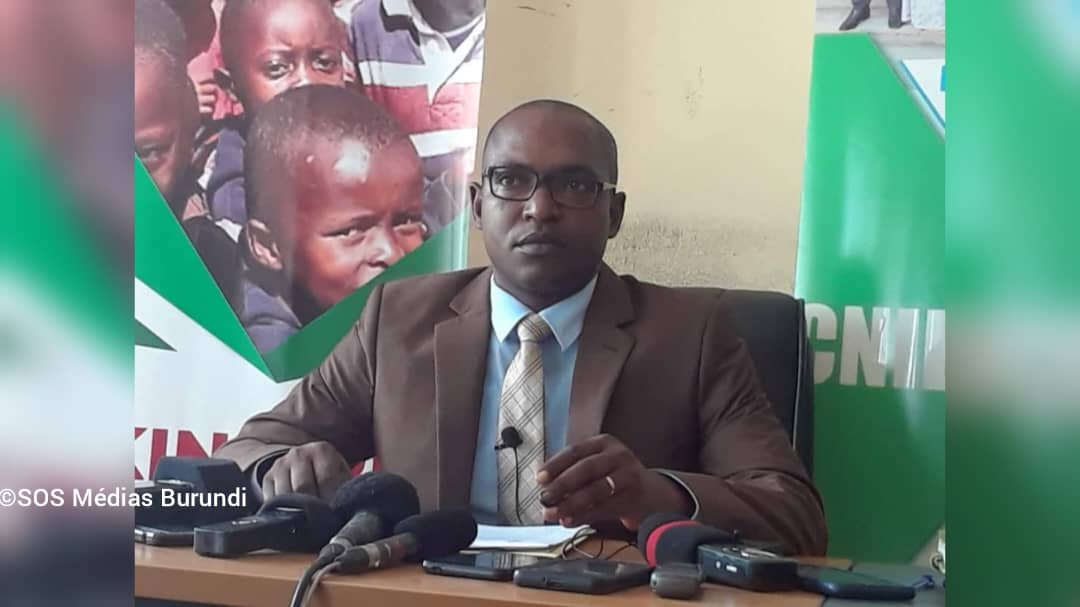
For the chairperson of the CNIDH, his commission is doing its best as far as possible.
“We denounce cases of gender-based violence, arbitrary and illegal detentions, judicial slowness in the processing of cases and the execution of judgments which are the major challenges”, explained Sixte Vigny Nimuraba, chairman of the CNIDH.
And he concluded, “the CNIDH continues to work for the protection and promotion of human rights and recommends to the government to enforce the principle according to which freedom is the rule and detention the exception, to release all prisoners detained illegally or arbitrarily.”
Accusations of Gitega
For the Burundi ambassador in Geneva, the UN Special Rapporteur and these organizations are more in favor of the critics of the Burundian government.
“When he describes the CNIDH and its members as less credible than that of 2012, what does this allegation tell us when he is only shortly becoming country representative? Who dictates words to him? What can we conclude when the Special Rapporteur ends up being the emissary of a single opposition political party while Burundi has around forty of them! What can we say about his relentlessness against the ruling party? Would he offer us anything better?“, constantly asked Ambassador Elisa Nkerabirori before the UN Human Rights Council.
The past
Status A of the CNIDH had already been the subject of the same discussions over the last six years.
In May 2016, the UN undertook a special review of the accreditation status of the CNIDH, at the request of the FIDH (International Federation for Human Rights) and its member organization in Burundi, the ITEKA League.
For the FIDH, since April 2015 and the start of the crisis in Burundi, the CNIDH had sought to “minimize or even ignore the crimes committed by the regime in place, and its president led a campaign against the independent civil society, in particular in order to prevent the work of human rights defenders.
The CNIDH, which until then had A status, was then downgraded to B status, the United Nations having judged that it no longer fully respected its mandate as an independent institution for the protection and promotion of human rights.
Three years later, in June 2021, the Independent National Commission on Human Rights (CNIDH) obtained its re-accreditation to Status A, a label given by the UN to National Commissions which have proven their independence from the rules in place.
The UN had warned this Burundian commission to “commit to fulfilling its triple mission : protection, promotion and advisory role in the field of human rights”.
All that remains is for the UN to carry out its investigations and make a decision within a year.
You might also like
Burundi : two journalists’ long detention ends on the same day
SOS Médias Burundi Bujumbura / Ngozi, March 4, 2026 – Two Burundian journalists were released on Wednesday, March 4, 2026, after more than two years of detention. Sandra Muhoza and
Rumonge: a child killed and two others injured in torrential rains
The province of Rumonge’s capital (south-west of Burundi) counted one death, two injuries and a dozen houses destroyed following torrential rains. A report shared by the administrative authorities who request

Mahama (Rwanda): more than a thousand refugees have not received a ration for three months
More than a thousand people including mostly Burundian refugees have no ration for three months. Normally distributed monthly, the ration is given as money in Rwandan currency on beneficiaries’ bank