Malawi – Dzaleka camp : refugees ordered to give up their “surplus” housing
SOS Médias Burundi
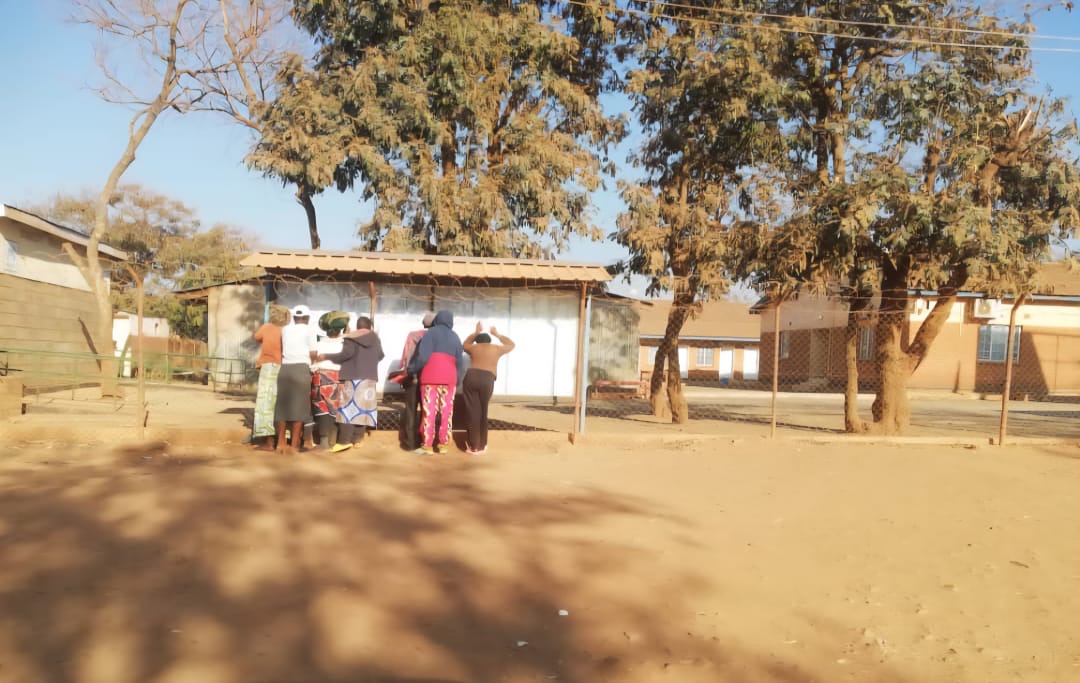
Dzaleka (Dowa district), September 5, 2025 – Since July, a large-scale housing survey has been underway in the Dzaleka refugee camp. Conducted jointly by the United Nations High Commissioner for Refugees (UNHCR) and the Malawian government, the operation aims to identify homes in poor condition with a view to their rehabilitation. But an unexpected measure has sparked outrage : families with multiple homes must give up their surplus housing, a decision that many refugees consider unfair and unacceptable.
Initially, the initiative was well received : refugees had long been demanding an improvement in living conditions in the camp. However, authorities say they have discovered a more complex situation than expected. The basic principle is clear :
“All members of the same household, registered on a single family card, must live in a single house,” remind camp officials.
However, census agents have noted that several households have two or even three houses—sometimes built on the same plot by children who have reached adulthood.
“How is it that two young people can build two houses in addition to their parents’ house, on the same plot?” asks one official.
This practice is deemed unacceptable by the administration, while many families are still sleeping outside.
Threat of house requisition
The first measure taken is the requisition of housing deemed “unlawful” to allocate it to the camp’s homeless – a decision that those most affected reject outright.
“It’s impossible to build a house for someone you don’t know. They’ve cost us time, energy, and money.” “It’s better to destroy them than giving them up,” protests a resident.
A climate of tension and insecurity
Some fear that this measure will fuel tensions and crime within the camp.
“This principle of robbing Saint Paul to pay Saint Peter is a source of insecurity here. We demand the immediate suspension of this decision, which, fortunately, has not yet been implemented,” warns a community leader.
Ways to relieve the camp’s overcrowding
To address the overcrowding in the camp—which currently hosts more than 50,000 refugees, three times its initial capacity—several avenues have been explored :
Creation of new mixed villages, where refugees and local communities would coexist to strengthen integration;
A program for the reintegration and inclusion of refugees into the host community;
Partial relocation of certain groups to relieve overcrowding in Dzaleka.
Among the camp’s residents are more than 11,000 Burundian refugees, alongside Congolese, Rwandans, and other nationalities.
Trust, a scarce resource
Despite the authorities’ good intentions, many refugees remain skeptical.
“We’ve heard these speeches before. What we expect are concrete actions, not promises,” confides a Burundian mother.
For these communities, who have lived in precarious conditions for years, trust cannot be decreed; it must be rebuilt. And for this, transparency and consultation remain essential conditions.
You might also like
Nakivale (Uganda) : an assistance that frustrates
The Saudi Arabian Embassy in Uganda has given food assistance to refugees who fled from the neighboring DRC. The other communities cringe their teeth. INFO SOS Médias Burundi The assistance

Kakuma (Kenya): more than 450 Sudanese refugees return to the camp
Sudanese refugees had fled clashes between two Sudanese communities that occurred in Kalobeyei last July. Several of them had found refuge at the Kakuma camp, others in villages surrounding the
Nakivale (Uganda) : a Burundian refugee child found dead, burned
The victim disappeared last Saturday before being found three days later, burned and mutilated, far from his village. One person has been arrested as part of the investigation. INFO SOS