
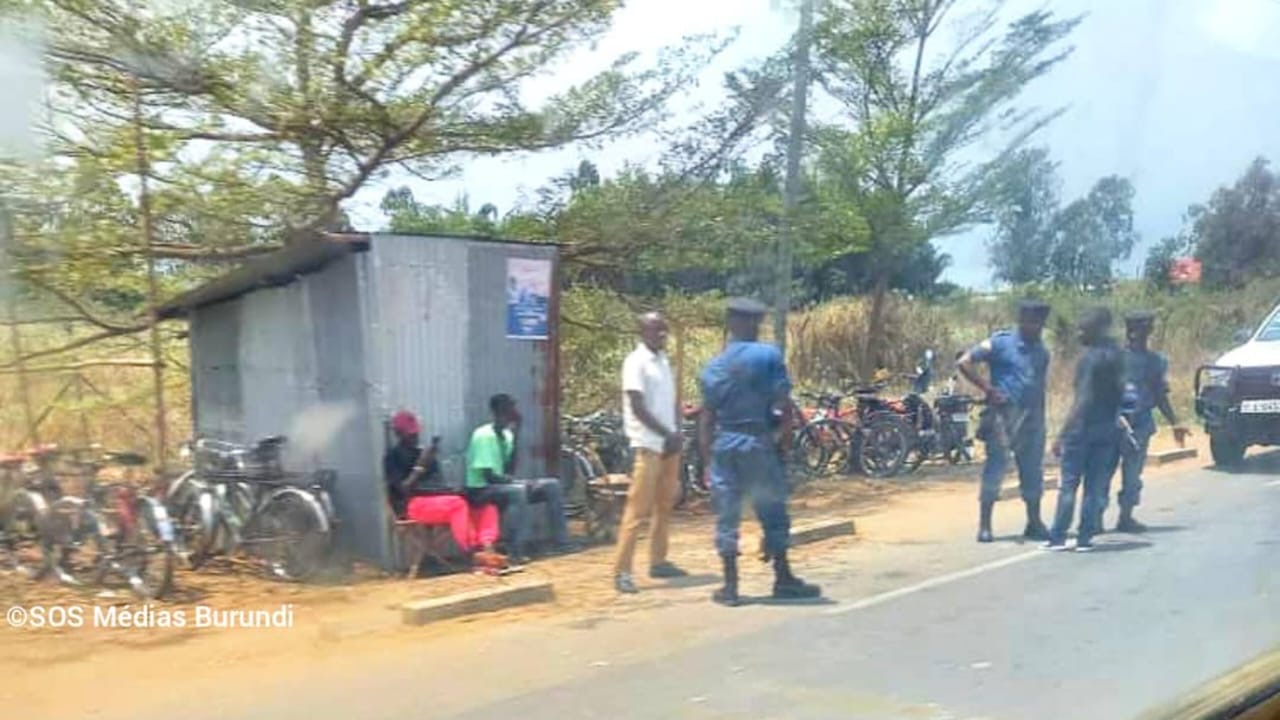
“We’re driving with a piece of paper” : Burundian drivers are running out of patience
SOS Médias Burundi
Bujumbura, October 20, 2025 — For several months, users of the Special Traffic Police (PSR) service have been facing a worrying situation : biometric driver’s licenses are no longer being issued, despite full payment of the required fees. According to several internal sources, the cause is a shortage of cards due to the initial supplier’s failure to meet his commitments.
This situation is fueling anger, frustration, and incomprehension among drivers, whether new applicants or renewing their licenses.
“Only a small piece of paper is given to us after payment,” said a driver interviewed outside the PSR offices.
This temporary solution, which, according to several users, poses serious reliability and recognition issues.
Concrete consequences on the ground
For carriers operating abroad, the situation is turning into a nightmare. Law enforcement in neighboring countries does not recognize this paper evidence of payment, resulting in fines and sanctions.
Faced with these complaints, PSR Commander Étienne Citegetse assures that his department is trying to prioritize cross-border drivers :
“This group is being prioritized to make their job easier, given the constraints they face,” he explains.
He nevertheless acknowledges the difficulties his institution is experiencing in meeting all requests, while promising improvements soon.
“A process is underway to identify a new supplier. Everything will soon return to normal,” he promises.
A temporary document deemed unreliable
In the meantime, drivers continue to drive around with this simple piece of paper, supposedly a driver’s license. A fragile document, often illegible after a few weeks.
“I’ve been waiting a year.” “I drive with this document every day,” complains a public transport bus driver.
Officially, the PSR maintains that this document is sufficient to avoid penalties within the country. But on the ground, witnesses report arbitrary checks and unjustified fines imposed on those without a biometric license.
Suspicions of corruption worsen the crisis
Several sources within the service also report disparities in the processing of applications. Those who allegedly pay bribes are given priority for their licenses.
While the official cost of the license is 100,000 Burundi francs, some claim to have paid up to 500,000 francs to speed up the process.
These alleged practices fuel a feeling of injustice among ordinary users, already exhausted by months of waiting.
“Here, everything has to be paid for.” “Even to have what already belongs to you,” says a bitter motorcycle taxi rider.
Between shortages, administrative delays, and suspicions of corruption, the biometric permit crisis once again illustrates the structural failings of a public service that is essential to the country’s daily and economic life.
You might also like
Uvira on the brink of conflict : military reorganization and violence against the Banyamulenge community
SOS Médias Burundi Uvira, January 19, 2026 — The city of Uvira and its surrounding areas remain gripped by significant security instability. This instability is occurring within the context of
Burundi : FDNB prepares to exhibit Red-Tabara rebels whose movement claims to have inflicted heavy losses on the Burundian army
At least 12 rebels from the Burundian armed group based in the province of South Kivu in eastern Congo have been detained in the central prison of Bujumbura called Mpimba

South Kivu : M23 rebels leave the Rusizi Plain and reposition in Katogota
SOS Mêdias Burundi Bukavu, May 12, 2026 — AFC/M23 rebels left several localities in the Rusizi Plain, in the Uvira territory of South Kivu, on Monday. According to local sources,