
DRC–South Kivu : under US pressure, the AFC/M23 announces a conditional withdrawal from Uvira
SOS Médias Burundi
Bujumbura, December 16, 2025 – Less than a week after the fall of Uvira to the M23, the Congo River Alliance/M23 (AFC/M23) has announced a unilateral but conditional withdrawal from this strategic city in South Kivu. This decision comes amid increased diplomatic pressure from the United States on Rwanda, which the UN, the DRC, and Burundi accuse of supporting the rebellion, while the security and humanitarian consequences are already being severely felt in the region, particularly in neighboring Burundi.
In a statement signed by its coordinator, Corneille Nangaa, the movement specifies that this withdrawal aims to support the Doha process, mediated by Qatar, presented as a framework for regional de-escalation. The AFC/M23, however, has set several conditions, including the demilitarization of Uvira, the protection of the civilian population, and the monitoring of the ceasefire through the deployment of a neutral force.
This announcement comes as US pressure on Kigali intensifies. Since the capture of Uvira on the night of December 9-10, Washington has issued numerous warnings to Rwanda. On Friday, December 12, before the UN Security Council, US Ambassador Mike Waltz stated that Kigali is “leading the region toward greater instability and toward war.” US Secretary of State Marco Rubio accused Rwanda of violating the peace agreement signed in early December in Washington, and the US Ambassador to the DRC, Lucy Tamlyn, indicated that her country is examining “all the tools at its disposal, including sanctions, to ensure that the commitments made are respected.”
The city of Uvira, which fell to the M23 on December 9, is located just a few kilometers from Bujumbura, Burundi’s commercial capital, where United Nations agencies and much of the central administration are concentrated. For more than three decades, the eastern DRC has been marked by a succession of armed conflicts involving numerous rebel groups.
Reactivated in 2021, the M23, composed primarily of Congolese Tutsis, now controls several cities in North and South Kivu, including Uvira, as well as several other strategic areas rich in minerals. Kinshasa accuses Kigali of supporting the movement, while Rwanda denounces the support given by the DRC and Burundi to the FDLR, a Rwandan Hutu armed group whose members are accused of participating in the 1994 genocide against the Tutsis. Burundi, for its part, has deployed more than 10,000 soldiers to the DRC since 2023 to support the FARDC and the local Wazalendo militias, further complicating the conflict.
On the diplomatic front, a Washington-mediated agreement was signed on December 4 between the DRC and Rwanda, with Burundi represented by its president, Évariste Ndayishimiye, as an observer. This agreement notably provides for the disarmament of the FDLR, which Congolese President Félix Tshisekedi describes as a “residual force reduced to banditry,” as well as commitments aimed at reducing regional tensions.
In this context, UN experts, whom Kigali calls “imposters,” recently claimed that Rwanda had deployed between 5,000 and 7,000 troops in support of the M23.
The statement announcing the withdrawal from Uvira was signed by Corneille Nangaa, former president of the Independent National Electoral Commission (CENI) and current coordinator of the AFC/M23, which advocates for the establishment of a federal state in the DRC. The Congo River Alliance was launched in December 2023 in the same Nairobi, Kenya hotel that, a few years earlier, had hosted the formation of the political coalition between Félix Tshisekedi and Vital Kamerhe. In 2018, Kamerhe withdrew from the presidential race in favor of Tshisekedi in exchange for the promise of becoming Prime Minister. Since the creation of the AFC, the M23 has been integrated into this alliance, giving it a major political and military dimension.
The security and humanitarian repercussions are already being felt in neighboring Burundi, which has received more than 40,000 Congolese refugees since the beginning of December alone, including Congolese soldiers, Congolese militiamen, and Rwandans. In addition to these arrivals, there have been successive troop withdrawals via Lake Tanganyika, as the land crossing at Uvira has become impassable since the city fell to the rebels.
The announced withdrawal from Uvira now constitutes a crucial test for the credibility of the Doha process and for regional stability, in a context of high security tensions with cross-border consequences.
You might also like
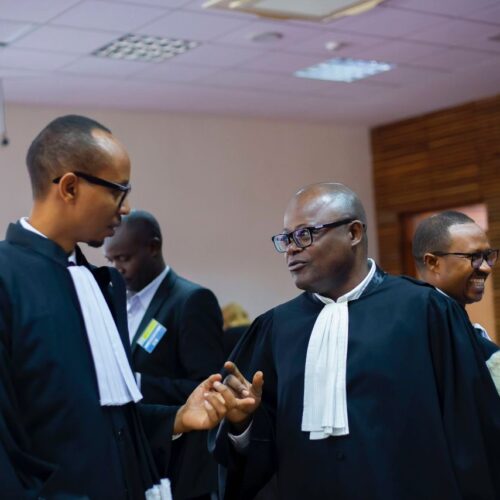
Arusha (Tanzania) : DRC takes Rwanda to the EAC Court of Justice
On Thursday, the East African Community Court of Justice began hearing parties concerned by complaints filed by the DRC against Rwanda. Kinshasa accuses Kigali of supporting a rebel movement (M23)
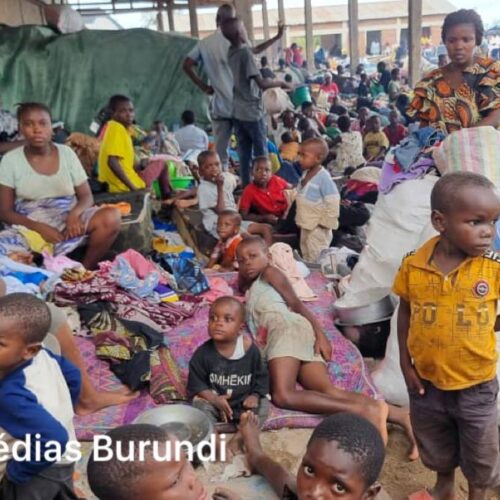
Repatriation of Congolese refugees : Kinshasa and Gitega launch a sensitive return program amid a still fragile security context in eastern DRC
SOS Médias Burundi Bujumbura, April 22, 2026 — The Burundian government, in partnership with the United Nations High Commissioner for Refugees (UNHCR), announces the official launch of voluntary and assisted
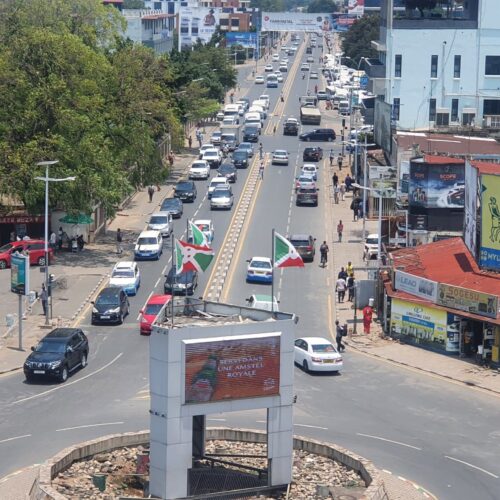

Bujumbura : three journalists arrested during a European commissioner’s visit
SOS Médias Burundi Bujumbura, February 18, 2026 – Three journalists were arrested Wednesday in Bujumbura, Burundi’s commercial capital, while covering the visit of Hadja Lahbib, European Commissioner for Equality, Preparedness