
Burundi : tens of thousands of Congolese refugees stranded, deprived of independent housing and unable to return
SOS Médias Burundi
Bujumbura, December 22, 2025 – Since the resumption of fighting in eastern DRC, tens of thousands of Congolese have crossed the border into Burundi. According to humanitarian sources, the small east African nation has already taken in more than 70,000 Congolese refugees since the beginning of December, adding to more than 100,000 other refugees who have been living in Burundi for several years, some of them for decades. Burundian authorities have forced even those who wanted to rent houses or stay temporarily with relatives to go to transit centers and temporary camps, while some simply wanted to wait for a lull in the fighting to return to the DRC. The humanitarian situation is becoming critical.
Refugees left with no choices
While many of these displaced people fled in haste, some had the financial means to find temporary refuge in Bujumbura, Burundi’s commercial capital located a few kilometers from the land border with the Congo, by renting houses or staying with relatives. Their goal was not to settle permanently as refugees, but to wait for a lull in the violence before returning to the DRC.
However, the recent publication of a statement by the Burundian Ministry of the Interior, requiring all refugees to go to transit centers before being transferred to camps in the interior of the country, has disrupted this situation. Now, even those who had found independent housing solutions are forced to leave the capital.
Testimonies
Sulemani, a Congolese national living in Bujumbura, recounts :
“I had rented a house with my own money. My intention was simply to wait for the situation to calm down in Uvira before returning.” I didn’t want to go to a refugee camp. But now I’m being forced to go to the Cishemere transit center. I have no choice.
Like him, many families say they have been deprived of their freedom of movement despite their ability to temporarily provide for their needs.
Meanwhile, some refugees want to return to the DRC, but the closure of the Burundi-Congo border crossing at Gatumba makes a direct return almost impossible. Faced with this situation, some are attempting alternative routes via Tanzania and Rwanda to reach Kamanyola and Uvira.
“At the embassy, they first required me to buy a consular card. Then, to apply for a passport replacement, I had to pay again. In total, I spent $75 on the two documents,” recounts another refugee.
“On top of that, there are transportation costs through three countries. All this just to get home.”
Between the obligation to return to the camps, the impossibility of returning directly to the DRC, and the high cost of the procedures, the refugees find themselves trapped. Many of them are calling on the Burundian and Congolese governments to establish a voluntary return corridor to allow for a dignified return.
Three durable solutions are recognized for ending the refugee status : voluntary return to the country of origin, local integration in the host country, or resettlement in a third country.
Tense regional context
These refugees are fleeing clashes between the Congolese army (FARDC), supported by more than 10,000 Burundian soldiers and local militias backed by Kinshasa, the Wazalendo, and the M23 armed group. Reactivated in 2021, the M23, composed mainly of Congolese Tutsis, now controls several towns in North and South Kivu, including Uvira, as well as several mineral-rich areas. Kinshasa accuses Kigali of supporting the movement, while Rwanda denounces the support of the DRC and Burundi for the FDLR, a Rwandan Hutu armed group accused of participating in the 1994 genocide against the Tutsis.
These cross-accusations persist despite the Washington agreement, signed on December 4, 2025, under the US mediation with Burundi as an observer, intended to facilitate the regional de-escalation. Kigali continues to deny its support for the rebels despite the report by UN experts, whom Rwandan authorities have dismissed as “imposters,” which confirms the presence of 5,000 to 7,000 Rwandan soldiers alongside the M23.
The M23 is now part of the Congo River Alliance (AFC), a political and military movement hostile to Kinshasa, led by Corneille Nangaa, former president of the Congolese Independent National Electoral Commission (CENI), which advocates for a federal state in the DRC. Burundi has deployed more than 10,000 soldiers to South Kivu to support the FARDC (Armed Forces of the Democratic Republic of Congo) and the Wazalendo auxiliary group.
You might also like
Pre-election tensions in Cibitoke : the opposition under pressure
SOS Médias Burundi Cibitoke, May 28, 2025 – One week before the legislative and district elections, Cibitoke province (northwestern Burundi) is becoming the scene of intimidation and targeted violence against

DRC (Kalehe) : the Prime Minister brought support to victims of the Kalehe floods
The Prime Minister of the Democratic Republic of Congo, Sama Lukonde went this Saturday evening to the territory of Kalehe, in the province of South Kivu, after more than three
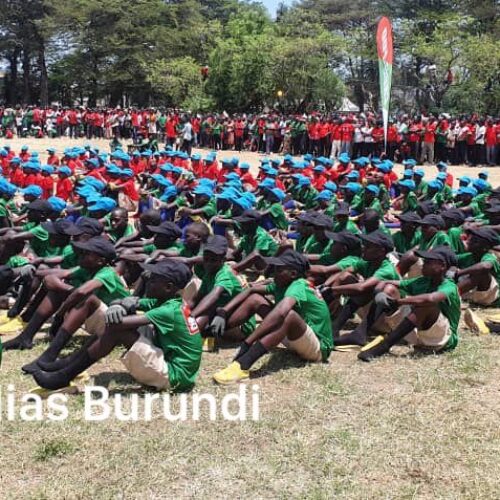

Burunga : pupils kidnapped at night to serve CNDD-FDD political activities
SOS Médias Burundi Makamba, January 25, 2026 – Pupils at the Makamba Agricultural Technical Middle School (ETMA), the town center of Burunga province in southern Burundi, are denouncing disturbing practices