Buhumuza : 22 Congolese refugees die in a single day at Busuma camp
SOS Médias Burundi
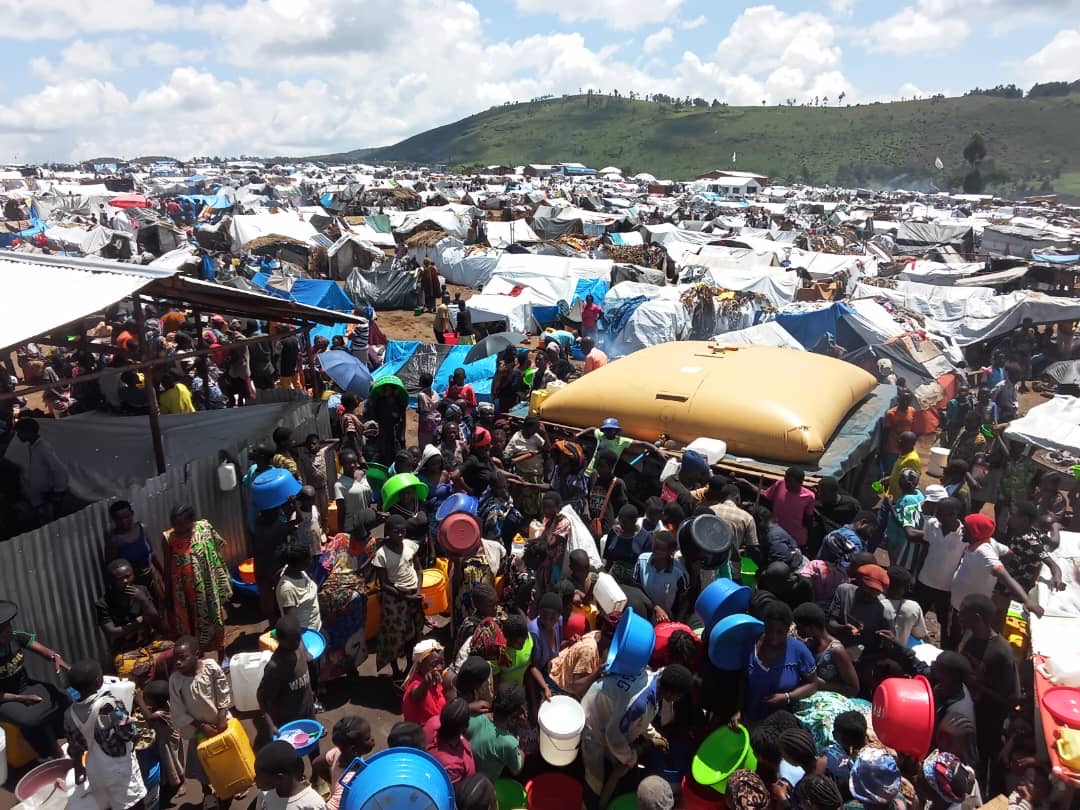
Ruyigi, January 31, 2026 – The humanitarian situation at the Busuma refugee camp in Buhumuza province, eastern Burundi, has reached a critical level. Twenty-two Congolese refugees lost their lives in a single day, Friday, January 30, 2026, according to local sources. The majority of the victims were children, women, and the elderly.
These deaths add to an already dramatic toll. Since the camp opened, 426 refugees have reportedly died at Busuma, according to the same sources.
The refugees, mostly from eastern Democratic Republic of Congo, live in extremely precarious conditions. Lack of food, a shortage of drinking water, the absence of adequate medical care, and widespread unsanitary conditions are among the main causes of this alarming mortality rate.
A Congolese refugee, speaking on condition of anonymity, described a situation of extreme distress :
“We came here to save our lives, but now we are dying slowly. Children and the elderly are the first victims. Every morning, we wake up fearing that a neighbor has died during the night. We bury people every day.”
The refugees fled the deteriorating security situation in several towns and villages in South Kivu province, in eastern DRC, following clashes in December 2025 between M23 rebels and the Armed Forces of the DRC (FARDC), supported by pro-Kinshasa local militias, the Wazalendo, as well as Burundian troops.
More than a month after their arrival in Busuma, the refugees say they see no prospect of a lasting solution, while the death toll continues to rise. Several say they are ready to return voluntarily to the DRC, provided that a safe opening of the Gatumba-Kavimvira border is authorized.
“We’re not asking for luxuries, just to live. If we have to go home, we’re ready, but at least give us a choice,” confided another refugee, speaking on condition of anonymity.
Faced with this situation, Mafikiri Mashimango Martin, provincial coordinator of the New Congolese Civil Society (NSCC) in South Kivu, currently in Uvira, is calling for urgent humanitarian action. He is advocating for the immediate opening of a humanitarian corridor, or failing that, for the reopening of the Gatumba-Kavimvira border to allow for the safe and voluntary return of the refugees.
He points out that this measure was already implemented in December 2025 by Burundian authorities for their citizens living in Uvira, arguing that the same humanitarian gesture should be extended to Congolese citizens currently in distress. He also warns of the growing despair among refugees, who may take matters into their own hands in the face of persistent inaction.
To date, the Busuma camp shelters more than 70,000 Congolese refugees.
The violence that triggered this exodus pits the FARDC (Armed Forces of the Democratic Republic of Congo), supported by local Wazalendo militias and Burundian troops, against the M23 rebels, who were reactivated in late 2021 and are now part of the Congo River Alliance (AFC), led by Corneille Nangaa, former president of the Independent National Electoral Commission (CENI).
The M23 controls several strategic areas in eastern Congo, including Goma and Bukavu, the respective capitals of North Kivu and South Kivu, as well as the Rubaya mining site, one of the world’s largest deposits of coltan, a key mineral for the electronics industry and new technologies.
According to an internal report from the Congolese Ministry of the Interior and Security, consulted by SOS Médias Burundi, the small east African nation deployed more than 29,000 soldiers in eastern DRC between August 2022 and December 2025. Kinshasa accuses Rwanda of supporting the M23, while Kigali denounces DRC and Burundi’s support for the FDLR, a Hutu armed group whose members are accused of participating in the 1994 genocide against the Tutsis.
Diplomatically, the Washington Agreement, signed on December 4, 2025, under the US mediation between the DRC and Rwanda, failed to stem the violence on the ground. Burundi participated as an observer, represented by President Évariste Ndayishimiye.
A report by the UN Group of Experts, published in 2025, indicated the presence of 5,000 to 7,000 Rwandan soldiers alongside the M23 rebels, findings that Rwandan authorities dismissed as a “sham.”
You might also like
“We want to go home” : Congolese teachers abandoned in Cishemere as the start of the school year approaches
SOS Médias Burundi Cibitoke, August 27, 2026—With the start of the school year scheduled for early September, Congolese teachers who have taken refuge at the Cishemere transit center in the
Giheta: discovery of a corpse
A decomposing body of a man was discovered last Saturday in the Nyambeho valley separating the communes of Gitega and Giheta in the province of Gitega (central Burundi). It has

DRC : Burundian soldiers sent to their deaths — a hidden war, without compensation or truth
SOS Médias Burundi Bujumbura, January 4, 2026 – While Burundian authorities continue to justify Burundi’s military presence in the Democratic Republic of Congo (DRC) through alleged “regional solidarity,” the Secretary