
Bujumbura: Deadly explosions, suspicious silence and an official version under challenge
SOS Médias Burundi
Bujumbura, April 1, 2026 — Violent explosions rocked the economic capital of Burundi, plunging residents into panic. While authorities point to a simple electrical short circuit, many grey areas remain, raising doubts about the true cause of the incident and a death toll that may be far higher than reported.
Uncertainty continues to surround the explosions that occurred Tuesday night in Burundi’s economic capital, Bujumbura. So far, only a partial toll has been released by the Mugere commune administration, in the southern part of the city where the incident took place: 8 dead and around thirty injured.
At the central government level, silence prevailed. Army and police spokespersons refused to comment, including on the national radio. The governor of Bujumbura, Major General Aloys Ndayikengurukiye, said he was waiting for consolidated reports from all affected communes before making any statement.
On the ground, the situation remained tense and opaque. A few journalists who attempted to cover the events were prevented from working. According to several consistent testimonies, members of the Imbonerakure, the youth league of the ruling CNDD-FDD party, dispersed reporters and spent the night from Tuesday to Wednesday and throughout Wednesday clearing the site, removing debris and erasing traces of the explosions.
Meanwhile, non-official sources reported a much higher death toll, estimating nearly 80 victims. Among the dead are inmates from Bujumbura’s central prison, known as Mpimba, located just 100 to 150 meters from the camp where the explosions originated.
The Mugere commune administrator, Adélaïde Hatangayo, confirmed the deaths of two inmates at Mpimba, without providing further details.
What really happened?
The spokesperson of the Burundi National Defence Force (FDNB), Brigadier General Gaspard Baratuza, stated in a WhatsApp group bringing together government communicators and local media officials that a short circuit caused the incident.
According to him, a serious electrical accident in a munitions depot of the FDNB based in Musaga triggered the explosions. He called on the population to remain calm and avoid the affected areas, assuring that relevant services were responding.
These claims were echoed by the governor of Bujumbura on national radio, without further details.
However, several sources close to the matter challenged this explanation. A former storekeeper who managed the stock said such facilities are not electrified.
“Unless that changed after I left, but I don’t believe it,” he said.
An officer who recently fled the country expressed a similar view. He explained that in other strategic military camps he knows well, notably in Mwaro (central) and Cankuzo (east), weapons depots — commonly called shelters — are not electrified and are usually built underground within excavated hills.
However, he noted that Bujumbura’s geography, being a low-lying plain, makes underground construction difficult due to shallow groundwater. Still, unconfirmed information suggests that part of the stock may have been stored underground.
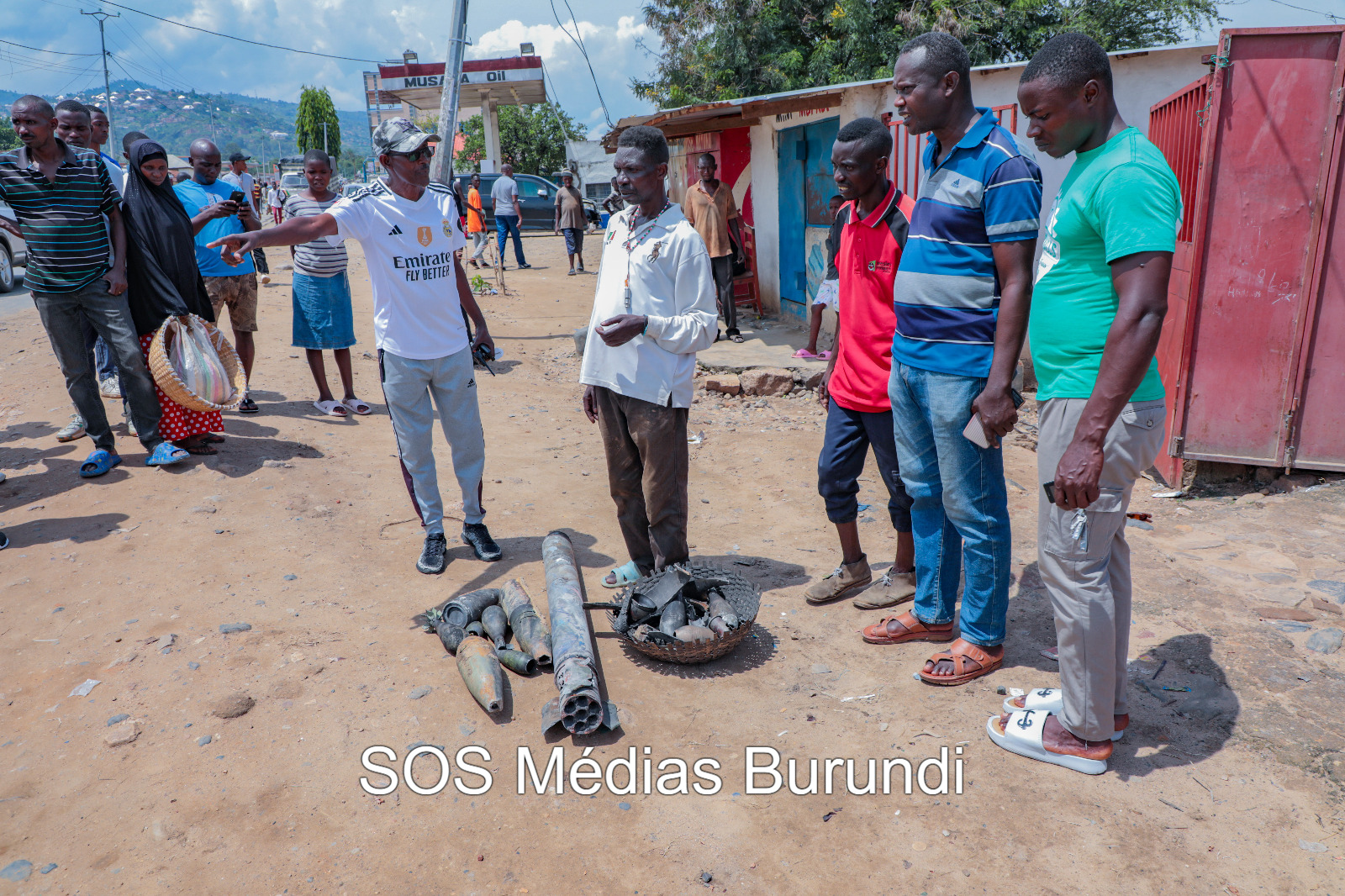
Residents of Musaga stand near the debris left by the explosions, observing the damage the day after the incident. © SOS Médias Burundi
Relocated stock and multiple theories
A colonel from the FDNB who recently deserted stated that the stock was previously located in the Gasekebuye neighborhood, near Camp Base. He said it was moved after Burundian authorities allocated land to civilians in that area following the CNDD-FDD’s rise to power in 2005, after the 2000 Arusha Agreement.
Other unconfirmed sources suggested a sophisticated drone attack. No official source has confirmed or denied this claim.
A resident reported seeing “something descending like lightning” just before the explosions, initially thinking it was a plane crash.
The presence of unexploded or scattered munitions in northern neighborhoods far from Musaga fueled fears of coordinated attacks. However, military sources described this as a normal effect of powerful explosions.
“The larger the blast, the farther the projectiles can be thrown. There is nothing unusual,” they said.
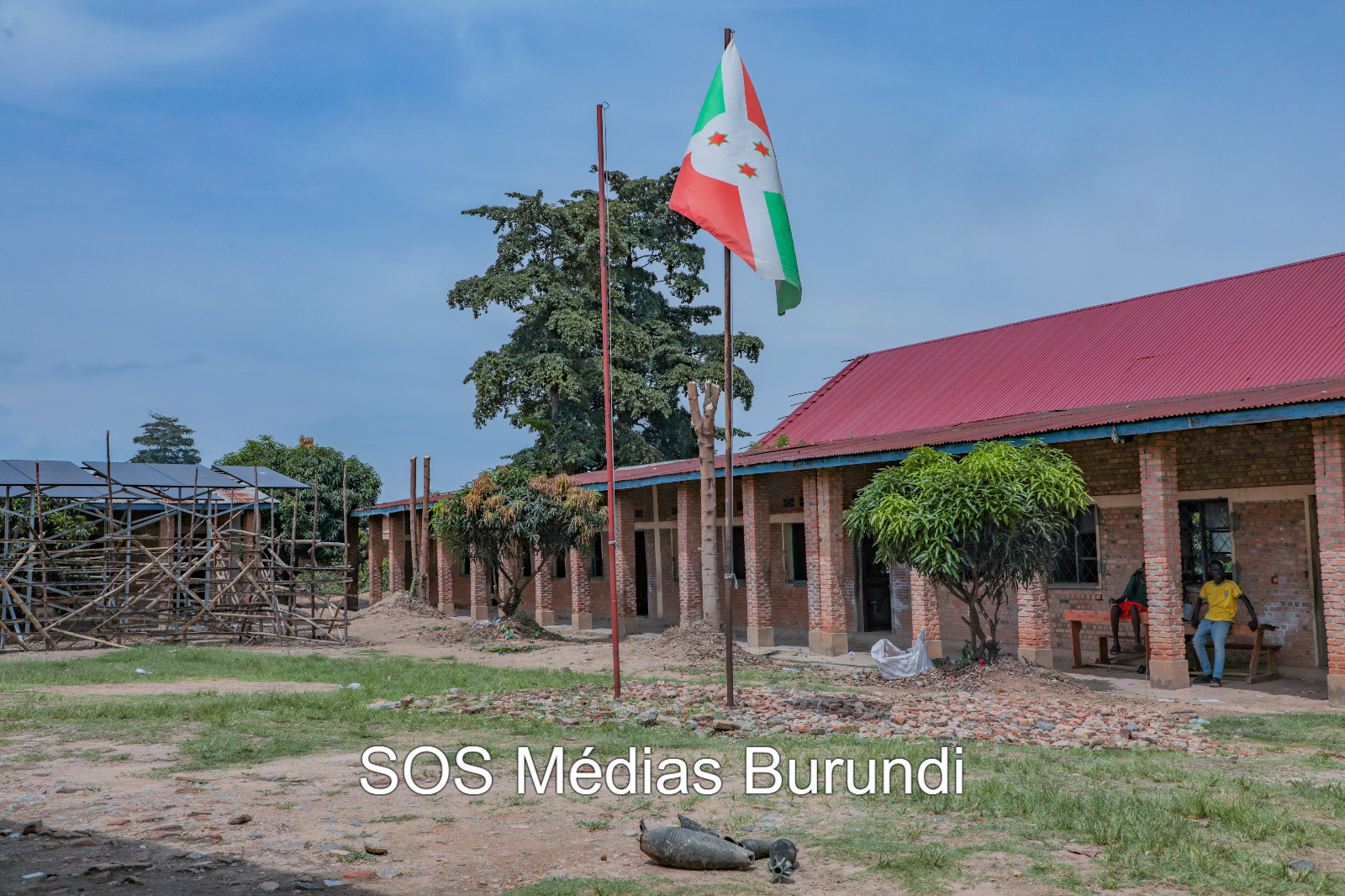
Bomb debris was found in the courtyard of a secondary school in Musaga on Wednesday, while Imbonerakure carried out cleanup operations at the site following the explosions. © SOS Médias Burundi
A strategic stockpile tied to regional operations
According to several unconfirmed sources, the stock recently received munitions from Tanzania and a European country. These were intended for deployment in eastern Democratic Republic of Congo, particularly in South Kivu, where Burundian forces are fighting alongside the FARDC and Wazalendo militias against the M23.
A witness reported seeing at least a dozen Tanzanian military trucks crossing the Kobero border the previous week, loaded with military equipment.
Camp Base: a key logistical hub
Camp Base, also known as the military logistics base, plays a central role in supplying Burundi’s armed forces. It provides uniforms, shoes, medicines, and food, except beans, to other military camps across the country.
The site also includes a fuel station for military vehicles and a large tailoring workshop.
According to witnesses, part of the stocks of medicines and food supplies was destroyed in the explosions.

A street in Musaga where shops and homes were affected by Tuesday night’s explosions. Residents remain in shock, April 1, 2026. © SOS Médias Burundi
Uncertain toll and controlled communication
In this context of restricted communication and conflicting information, many questions remain about the exact cause of the explosions, the true scale of casualties, and potential responsibility.
The death toll remains difficult to verify. The FDNB spokesperson promised a press briefing later on Wednesday.
Regarding Mpimba central prison, SOS Médias Burundi confirmed the death of at least one female inmate, according to her relatives.
Several missing children have been found, and families who fled their homes have returned on Wednesday.
Authorities continued to urge residents to avoid areas where unexploded devices remain.
Within the diaspora, messages of solidarity poured in.
Burundian President Évariste Ndayishimiye stated Wednesday evening on his X account (formerly Twitter):
“On behalf of the Burundian people, I wish to express my gratitude to all those who, near or far, have shown solidarity following the fire at one of the logistics stockpiles at the Musaga military base. I also want to reassure you that the situation is under control.”
____________________________________________
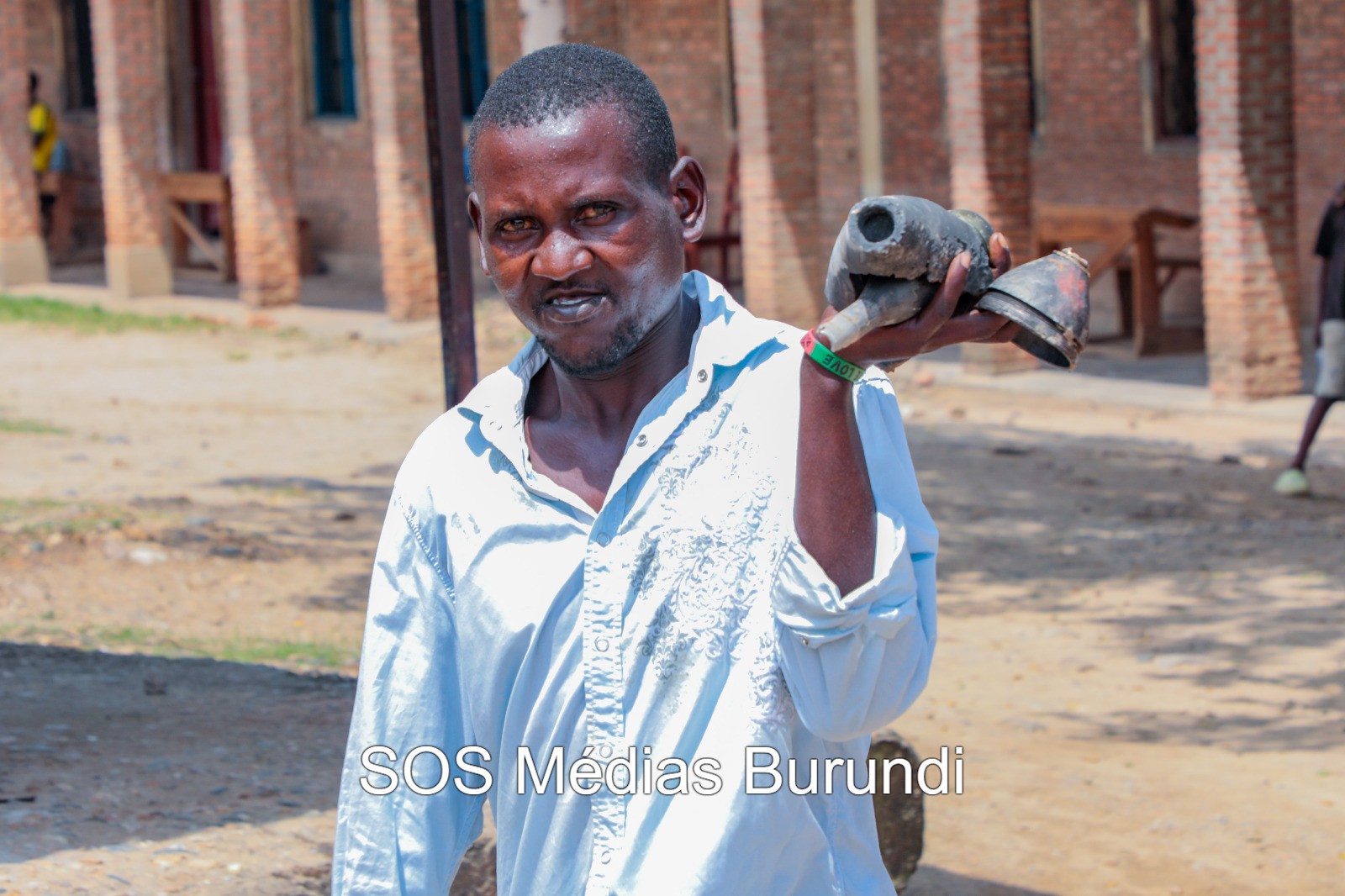
Photo : A man holds bomb debris in his hands in Musaga, while Imbonerakure carried out cleanup operations at the site on Wednesday, April 1, following the explosions. © SOS Médias Burundi
You might also like
Masisi (DRC) : the city of Kitshanga fell into the hands of the M23
Since Thursday evening, M23 rebels have taken control of the city of Kitshanga located some 80 kilometers northwest of the city of Goma, capital of the province of North Kivu
Rugombo : Imbonerakure accused of murder arrested
Members of the youth league of the ruling CNDD-FDD party, known as Imbonerakure, were arrested by the Intelligence Service of the province of Cibitoke, located in northwest Burundi. These young

Ngozi: a watchman of the Catholic cathedral of Ngozi killed
The watchman was killed during the night of this Thursday at his home at the Catholic cathedral of Ngozi (northern Burundi). The police say they have arrested the “criminals”. INFO