
Burundi : the uncertain future of refugees following the announcement of the suspension of food assistance
SOS Médias Burundi
Bujumbura, July 8, 2025 – The United Nations High Commissioner for Refugees (UNHCR) and the World Food Program (WFP) recently informed the Burundian government of their decision to completely suspend food assistance to refugees living in Burundi starting November 2025. This announcement has caused panic in the camps, where thousands of refugees depend entirely on this aid for their survival.
Since the beginning of the year, refugees have already been receiving only 50% of their usual food rations, due to the decline in funding allocated to the UNHCR and the increase in the number of people fleeing conflict in the eastern Democratic Republic of Congo. The consequences are already visible : acute malnutrition, reduced access to healthcare, school dropouts, lack of clean water… and today, growing despair.
“We only eat once a day, sometimes nothing at all. We even have sleepless nights. Knowing that food aid is going to stop is terrible. It’s like waiting to die in silence.”
— Clarisse, refugee for over 15 years in Burundi
The majority of refugees have neither arable land nor any source of income. In the rural areas where the camps are located, informal work opportunities are extremely limited, and movement restrictions complicate any attempt at self-sufficiency.
“We live solely on this aid. When it stops, we’ll die of hunger. The little we receive isn’t even enough to feed our family for a week.” »
— Masumbuko, father of 10 children
“A humanitarian catastrophe waiting to happen”
One of the community leaders in the Kinama camp, in the northeast of the country, is sounding the alarm. Speaking on condition of anonymity, he describes an increasingly untenable situation :
“There are already many cases of malnutrition. If assistance stops completely, it will be a humanitarian catastrophe.“
He also denounces the severe restrictions on freedom of movement:
“Movement is very limited. If you’re caught more than 5 km from the camp without authorization, you’re immediately arrested. Yet, the Burundian law and international conventions ratified by Burundi stipulate that refugees have the right to move freely within the municipality where their camp is located. But here in Burundi, there is no work for refugees. Even to look for work in the city, you need authorization… and nothing is guaranteed.”
An emergency appeal from the Burundian government
Given the gravity of the situation, Interior Minister Martin Niteretse launched an emergency appeal to international humanitarian partners in June 2025. The UNHCR estimates humanitarian needs for the current year at $76.5 million to guarantee a minimum subsistence level for refugees living in Burundi.
But on the ground, despair prevails. Deprived of food, livelihoods, access to education, health care, and freedom of movement, refugees face an increasingly uncertain future.
Burundi currently hosts more than 90,000 refugees, over 90% of whom are from the Democratic Republic of Congo. The others come from Rwanda, Sudan, Uganda, and the Central African Republic.
You might also like
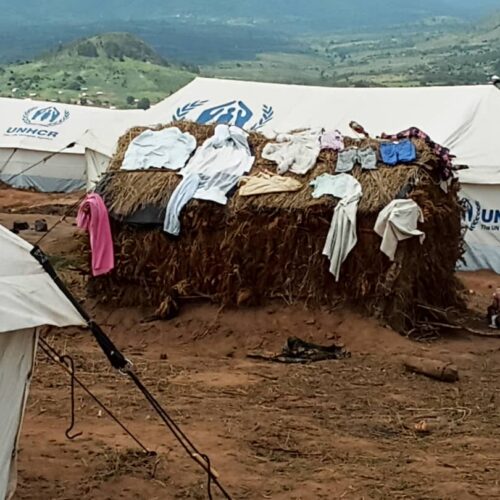
Busuma : attempts to return to DR Congo, Congolese refugees arrested and forcibly returned to the camp
SOS Médias Burundi Ruyigi, January 28, 2026 — In recent days, several Congolese refugees from the Busuma camp, located in the district of Ruyigi, Buhumuza province, in eastern Burundi, have
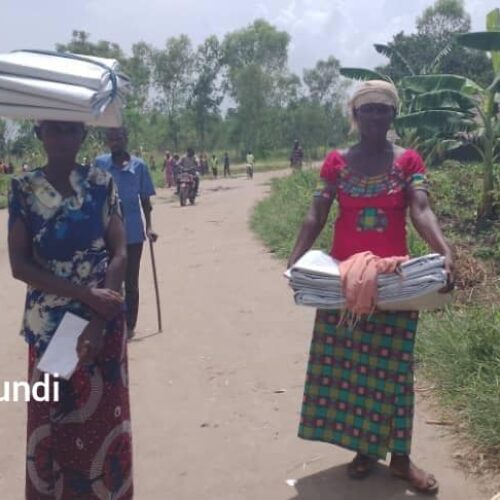
Mulongwe (DRC) : the UNHCR distributes tents to Burundian refugees
Refugees in Mulongwe camp received tents. It is in the province of South Kivu in the east of the DRC. The beneficiaries thank the UNHCR for the assistance. INFO SOS
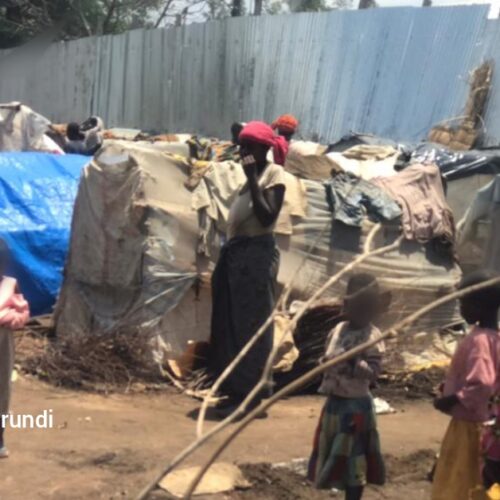

Photo of the week : more than 8,000 Burundians, including former returnees, requested asylum in the DRC in two months
According to figures provided by the National Commission for Refugees in Uvira in the province from South Kivu (eastern DRC), eight thousand two hundred Burundians were registered in less than